iWorld
‘nexGTv aspires to replicate Netflix’s global success in India:’ GD Singh

MUMBAI: Mobiles and smartphones are no longer about calling and messaging, instead they have manifested as personal lifestyle and attitude statements owing to their growing integration in our lives as engagement and entertainment gadgets.
The discerning, internet savvy generation, especially between 15–35 years, is fast embracing multi-platform media consumption, leading to an increasing demand for anytime, anywhere access to content. They are also the ones who are shaping content viewing decisions including growing relevance of HD, as well as access to exclusive yet vast variety of content.

With aspirations of establishing itself as a digital industry pioneer and India’s biggest subscription-driven video entertainment destination, Digivive Services’ nexGTv plans to strategise itself as per the preferences and behaviour of the consumer.
Speaking to Indiantelevision.com, Digivive Services director and CEO GD Singh says, “With over 27 million profiles, we are best placed to understand, analyse, interpret and create really unique content and flavours for the new-age mobile customer that jack up their entertainment quotient. We initiated creating India’s first ‘mobiserial’ – the first of-its-kind, premium celebrity-led original content for mobile in India, which will elevate the level of programming currently seen in this space.”
Speaking on the content strategy Singh asserts, “While we continue strengthening our leadership in the Live TV space, which is something that our consumers identify and know us for, we are also mining our vast library of data to distil trends and gain insights about consumers’ consumption habits and preferences. User generated and specific community oriented content appears to be the next big consumption driver.”
Digital will be the primary medium through which the venture wants to penetrate itself to the mass. “Like our consumers, our business is primarily digital and so is our marketing. From a customer convenience perspective, we are tightly bundled with all telcos, which saves our consumers needless hassles of re-charging repeatedly,” informs Singh.
nexGTv is exploring alliances and partnerships actively as it is a great way to win new customers as well as friends. Singh further briefs, “We are also debating the need for a physical touchpoint and if necessary, we shall explore new and captivating ways including retail, to make ourselves present in front of our customer.”
The subscription-driven video entertainment destination, follows a ‘freemium’ model, which combines access to both free and paid content. A significant portion of content on nexGTv is available free for viewers and is tagged appropriately. The rest of it, including premium and exclusive content is available only to subscribers, at extremely affordable price points for daily/weekly/monthly viewing. With the rising smartphone penetration and improving network coverage, the entire proposition of mobile entertainment is available to the customer at Rs 125 per month for the choicest, unlimited content.
Speaking on revenue model, Singh explains, “We offer multiple billing options for subscribers including telco-billing, which accounts for a lion’s share of our subscribers, primarily owing to its convenience. However, there also exist additional payment options via Credit and Debit cards as well as wallet integrations including those with PayTM that have been recently added.”
Irrespective of the fact that India’s digital infrastructure is yet to meet the necessary requirements of the OTT ecosystem, a huge number of players are coming into the fray. Foreign players are also making inroads to explore the lucrative Indian market. The number poses threat of the same content – different channels scenario and staying distinguished and ahead of the others will be the key in long run.
“The trick lies in ensuring that as the leader in our category, we remain constantly on our toes, stay engaged with customers and adapt and reinvent ourselves continuously to stay ahead of the curve. Our strategy is to expand our differentiation by being disruptive and one of the fundamental ways of doing that is by producing our very own content and map customer touch-points,” Singh opines.
Advertisers are yet not certain on the reach and visibility of brands when it comes to the digital players and hence the medium is failing to emerge as the primary medium of marketing. “nexGTv’s appeal lies in the universality of its content driven by a consumer base that primarily ranges from 15-35 years. This base is the hotbed of activity for virtually all marquee brands and hence, nexGTv presents itself as an ideal next-generation app or a new generation entertainment platform that appeals to all brands, which are anchoring for a share of the mind and wallet of this segment,” says Singh.
Singh is of the opinion that nexGTv has enough and more content to appeal to consumers of all age-groups (8 – 80 years of age). Throwing light on the target group (TG), he says, “Our biggest consumers are young men and women from 15-35 years, which incidentally is the same age group that is driving the growth of internet in India. While we have a pan-India consumer presence on the app, a substantial percentage of it comes from the top 10 metros and mini-metros.”
“Given the industry we are in and the speed of its evolution, we can never be certain on what’s around the bend? As a young and ambitious company, we aspire to replicate the global success of Netflix in India and our business focus and priorities are aligned to reinforce that objective. Hence, while on the one hand, we’re engaged in transforming ourselves from content aggregators to creators and publishers of original content, on the other, we’re working hard on our UX/UI to facilitate easy discoverability of content on nexGTv. In other developments, while we further fine-tune our customer analytics on one side, we’re also tightening our focus on our content and marketing strategies. Our attempt is to create the future,” concludes Singh.







e-commerce
Instamart gold dig event at Hussain Sagar goes viral
Hyderabad activation ties to gold price lock offer ahead of Akshaya Tritiya
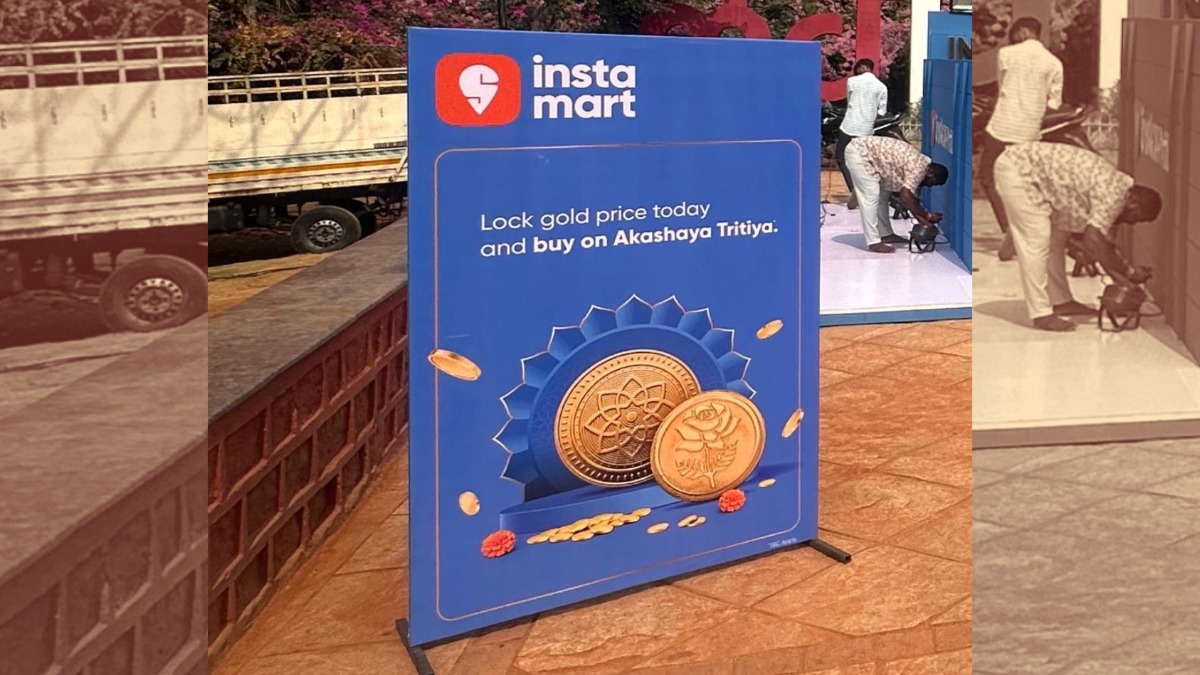
MUMBAI: All that glitters isn’t just gold, it’s also great marketing. A quirky on-ground activation by Instamart at Hussain Sagar Lake has turned into a viral spectacle, with videos of people digging for gold coins flooding social media feeds this week. The campaign, executed in collaboration with Moms, transformed a patch of the city’s iconic lakefront into what online users quickly dubbed a “mini gold rush”. Armed with spades, participants dug through a mud-filled pit in search of hidden gold coins, an activity that drew crowds, cameras and plenty of commentary online, ranging from amused disbelief to outright fascination.
At the heart of the frenzy was a promotional push for Instamart’s ‘Gold Price Lock’ feature, which allows users to secure prevailing gold rates between April 10 and April 16 and complete their purchase later during Akshaya Tritiya, a period traditionally associated with high gold buying. The mechanic cleverly blended physical participation with digital conversion, turning curiosity into a potential transaction.
Branded as ‘Gold Diggers’, the activation leaned into gamified engagement. Those who struck lucky walked away with coins, those who didn’t were nudged with a simple message: lock the price now, buy later. The result was a steady stream of footfall and a surge in user-generated content, as onlookers and participants alike documented the spectacle.
The timing is significant. India remains one of the world’s largest consumers of gold, with demand peaking around Akshaya Tritiya. Data from the World Gold Council suggests the festival alone accounts for roughly 25–30 tonnes of gold purchases annually, making it a high-stakes window for brands looking to tap into consumer sentiment.
As the ‘Gold Price Lock’ feature remains live until April 16, the campaign has already done its job turning a simple product feature into a citywide moment. Because sometimes, the quickest way to get people talking about gold isn’t to sell it, it’s to make them dig for it.