News Broadcasting
News9 Global Summit unites global leaders for insight and inspiration

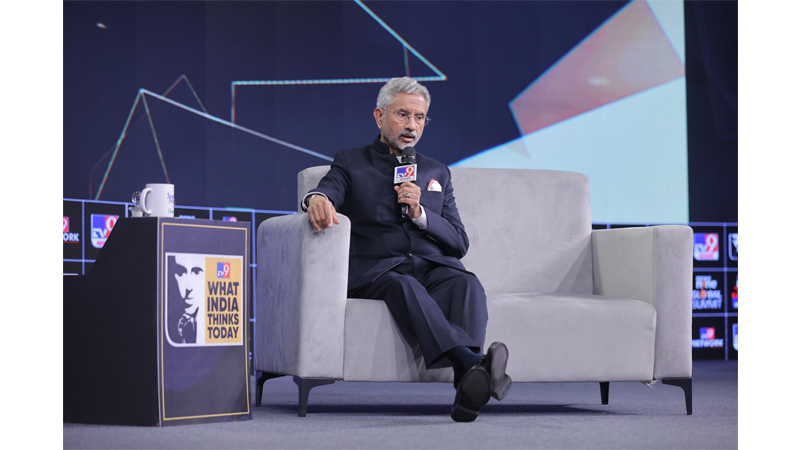
Mumbai: The much-anticipated News9 Global Summit commenced on 26 February 2024, hosting a gathering of eminent personalities, thought leaders, and industry experts from over 20 countries across the globe. The summit, part of the prestigious TV9 What India Thinks Today (WITT) summit, kicked off with a series of insightful discussions and keynote addresses, setting the stage for robust dialogues on critical issues facing India and the world.
The day began with a warm welcome address by TV9 Network MD and CEO Barun Das who extended his greetings to all attendees, emphasising the significance of the decadal momentum and geopolitical moment that seem to be in India’s favour.
The day’s first keynote address, titled ‘From Asia-Pacific to Indo-Pacific: Reframing Regional Relations’, delivered by former prime minister of Australia, Tony Abbott, captivated the audience’s attention, shedding light on the evolving dynamics of regional geopolitics and the need for strategic partnerships in the Indo-Pacific region.

Praising India as a leader of the global south, Tony Abbott said, “After several decades of ‘License Raj’, India is now roaring down the runway to economic take-off”.
The first-panel discussion, ‘Not an Era of War: India as a Global Peace Catalyst’, featured distinguished speakers including Velina Tchakarova, Mariya Ahmed Didi, and Syed Akbaruddin, exploring India’s role as a harbinger of peace and stability in the global arena.
Also conducted was a panel on ‘AI: The Promise and Pitfalls’, featuring experts like Samsung research director Alok Shukla, Stanford Prof. Anurag Mairal, Reliance Jio AI/ML chief data scientist Shailesh Kumar, Microsoft executive director Samik Roy and entrepreneur and film producer Jonathan Bronfman, discussing the promise and pitfalls of AI technology. The panel examined the transformative potential of AI in various sectors while addressing concerns related to ethics, privacy, and job displacement.
This was followed by a panel discussion on ‘Startup, India: Scale up and Sustain’, which saw 108 capital founding partner Sushma Kaushik, Mamaearth co-founder Ghazal Alagh, NoBroker co-founder Akhil Gupta and Amul MD Jayen Mehta discuss the startup boom in India, and the many challenges that lie ahead for these young firms in their bid to stand on their own two feet.
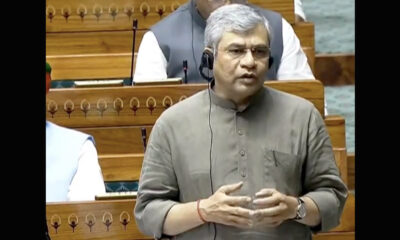
Subsequent sessions included keynote interviews with Union Ministers like Smt. Smriti Irani on ‘Naari Shakti’, Ashwini Vaishnaw on ‘Infra, Investment and IT’ in India, and Dr S. Jaishankar on ‘Rise of the Global South’.
Praising the ground India has managed to cover in terms of women’s emancipation across the last decade, union minister Smriti Irani said, “What India does today, the world does tomorrow. What India has done significantly for gender is make a case for women who are emancipated across all walks of life”.
Union minister Ashwini Vaishnaw was also confident about the trajectory the nation is taking, and talked about the need to make technology available to the masses, saying, “Technology has to be democratised. It should be available to every Indian citizen”.
Speaking about the leadership of the global south that India has displayed, external affairs minister Dr S Jaishankar said, “When we spoke to the G20, we were not only speaking on behalf of India … we also had 125 countries who said ‘speak for us’. ”
Interspersed among these interviews were fireside chats with eminent personalities, including youth icon Ayushmann Khurrana, BharatPe chairman Rajnish Kumar, Zydus Wellness CEO Tarun G. Arora, Maruti Suzuki chairman R. C. Bhargava, Mahindra and Mahindra MD Dr Anish Shah, actress Kangana Ranaut and with Dr Vivek Lall, chief executive of General Atomics Global Corporation.
Discussing the untapped potential of corporate India in a panel on ‘Creating an Equitable Boardroom’ were supreme court advocate Menaka Guruswamy, Shardul Amarchand Mangaldas managing partner Pallavi Shroff, TeamLease co-founder Rituparna Chakraborty and policy researcher and corporate advisor Dr Srinath Sridharan.
Shortly after, American sociologist Salvatore Babones, author Vikram Sampath, former minister of external affairs Salman Khurshid and Penguin Random House Sr VP Milee Ashwarya engaged in a round table discussion on the narratives about the new India and India of the past, in ‘Setting the Record Straight’.
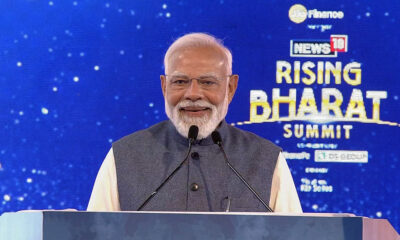
Delivering the summit keynote address on the theme of ‘India: Poised for the Next Big Leap’ was prime minister Narendra Modi, who graced the occasion and spoke about the strides India has taken in the decade gone by, and those he hopes India will take in the run-up to its centennial anniversary of independence.




News Broadcasting
Kamlesh Singh receives Haldi Ghati Award from MMCF
India Today Group editor honoured for three decades of journalism at Udaipur ceremony.
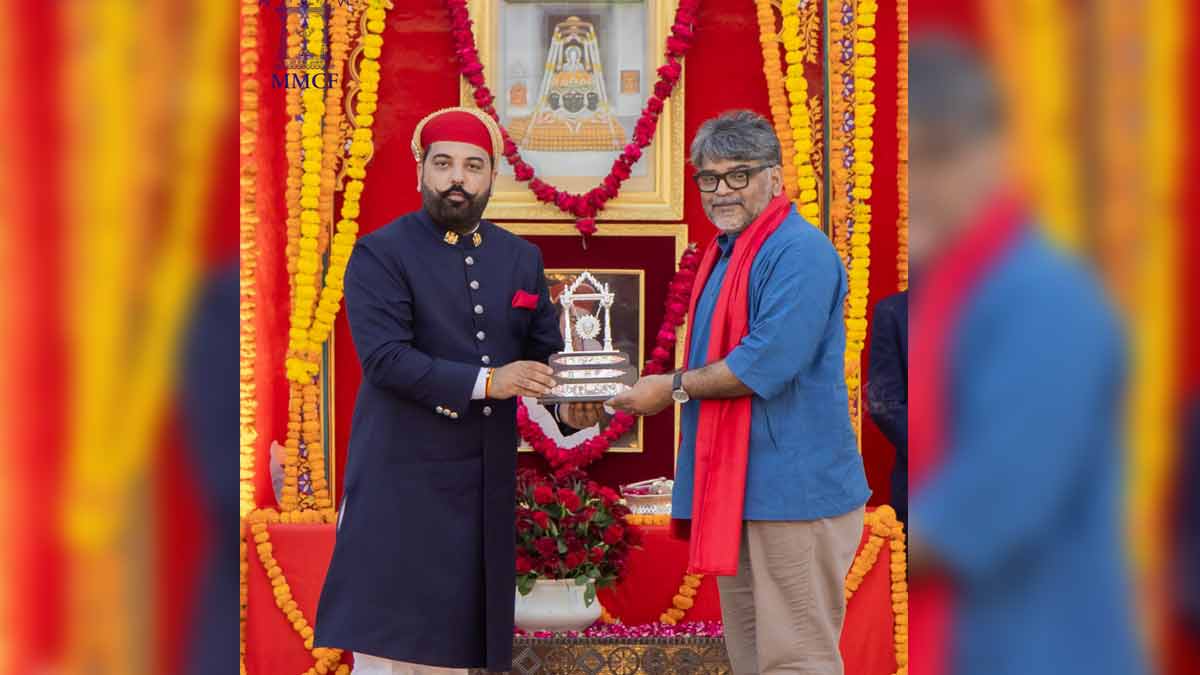
MUMBAI- Kamlesh Singh just turned a lifetime of sharp words into a shiny shield because when journalism wakes up a society, even the Maharana of Mewar wants to pin a medal on it.
The Maharana of Mewar Charitable Foundation (MMCF) conferred its prestigious Haldi Ghati Award on Kamlesh Singh, a senior editor at the India Today Group, during a ceremony in Udaipur on 15 March 2026. The national award, instituted in 1981-82, recognises “work of permanent value that initiates an awakening in society through the medium of journalism.”
Singh, who leads several editorial initiatives including Aaj Tak Radio, the Teen Taal community and The Lallantop, was presented the honour by Lakshyaraj Singh Mewar, Managing Trustee of MMCF. The citation highlighted his three decades of contributions to Indian media, innovations in digital journalism, mentoring young reporters, and his popular podcast persona “Tau” on Teen Taal, which fosters thoughtful public discourse.
The Haldi Ghati Award, named after the historic Battle of Haldighati symbolising valour and resilience, is one of four national awards given annually by MMCF. Past recipients include Tavleen Singh, Piyush Pandey and Raj Chengappa.
Other honourees this year included Padma Vibhushan Pt Hari Prasad Chaurasia, Vedamurti Devvrat Rekhe, Treeman of India Marimuthu Yoganathan, Vir Chakra Capt Rizwan Malik, and US-based researcher Molly Emma Aitken, who received the Colonel James Tod Award for contributions to understanding Mewar’s spirit and values.
In an era where headlines often shout louder than substance, the MMCF quietly reminded everyone that real journalism isn’t about noise, it’s about the quiet, persistent work that stirs society awake, one thoughtful story at a time.







