News Broadcasting
News market still has much room for growth: panel


MUMBAI: News is here to stay and the market still has the capacity to absorb new entrants in a sector that has been witnessing explosive growth – and that applies to both print and television.
That was the pivotal point that came through at the special interactive panel discussion held in Mumbai yesterday by CNBC TV-18 in association with DNA .
The panel comprised Tam India CEO LV Krishnan, DNA editor-in-chief Gautam Adhikari, Broadcast News editor-in-chief Rajdeep Sardesai, Star News CEO Uday Shankar and MindShare South Asia CEO Vikram Sakhuja.

Moderated by CNBC TV-18 anchor Anuradha Sengupta, the panel discussion titled – ‘News v/s News: Will Indian consumers get the best of both worlds?’ – had a certain amount of chutzpah and commanded the audiences’ rapt attention.
The debate covered the manifold changes that had taken place over the media scenario in India over the last few months. A stark reality today is that with 16 news channels and 55,780 newspapers, Indians are flooded with information like never before. Gone are the days of the daily 9 pm news bulletin on pubcaster Doordarshan. The 24×7 news factor has set in the country and competition is hotting up.
With the plethora of new players entering the media market and a vigorous marketing blitz (as seen in the case of DNA) announcing the new arrivals, the media scene has built up expectations of the reader and viewers to a great extent.
But the fact of the matter remains that the market has not yet reached its saturation point. DNA’s Adhikari said that it would take at least another 10 to 15 years for the television news space in the country to cross the saturation point.
Shankar, on the other hand said, “There are close to 30+ applications for news channels uplinking permission pending with the Information and Broadcasting (I&B) ministry today. Yet the time has not come for a flooding in the news channels’ space. It’s just a trickle. Three years ago Aaj Tak, Zee News and Star News were there in the market. At that time, the top two headlines on the channels were more or less same, but that’s where the similarity ended. Channels today have to position themselves more aggressively to survive in this industry.”
Shankar also stressed on the fact that the regional space was one to look out for. Speaking about the recently launched Star Ananda’s success story, Shankar said, “We were market leaders in the Bengali news channels space in the first month itself. The audience was created overnight and we saw them lapping it up. There was this need gap that needed to be serviced and the demand was met by Star Ananda.” He also stressed on the fact that viewers didn’t want more news channels but wanted the kind of news that they were interested in.
Adhikari said that the Indian economy was at an infant stage of growth. “The Indian economy is growing at the rate of seven per cent and at that rate, it can take in a lot of new activity and that includes newspapers. We are in the initial stage of development and there has been a spurt in not just in newspapers but media activities. The market in Mumbai has changed and I feel that there is space for two or three more newspapers here. The only thing that will make the newspapers different from each other is competition itself.”
Talking about the much hyped and expensive marketing campaign of DNA and pondering over the question whether the paper would be able to live up to the hype, Adhikari said, “DNA is a fresh newspaper, which looks different and is more in-tune with citizens’ concerns. We are not trying to live up to the hype of our media campaign but to satisfy the curiosity, need and demand of the reader in a place where the demographics are very interesting.”
The number crunching Krishnan began by saying that today the news channels in the country had an overall viewership of seven per cent. “India is one of the largest free news markets in the world with a whole lot of news channels and newspapers. The fact is that 45 per cent of homes in India read the newspaper and 50 per cent of individuals are able to get a cable connection. Hence there is a lot of scope and untapped market. Also there has been a good amount of growth in the advertising spends on news channels. In 2002, there were about 1700 brands advertising, today there are more than 2500 brands advertising on news channels,” he said.
Talking about the fight between newspapers and news channels regarding breaking news first, he said that the fight is only a portrayed one and that they actually work in tandem. “When Sonia Gandhi resigned, 85 per cent of people who saw the headline in the newspaper that day spent an hour watching television news channels. On normal days, they don’t spend more than 15 minutes on news channels on an average,” he said.
He also pointed out that a good time to launch a news channel in a particular place was just before elections. He cited examples of Star Ananda launching just before the municipal elections in Kolkatta and TV9 launching in Andhra Pradesh prior to the assembly elections. Both channels were launched at the opportune time and were doing well, Krishnan said.
Speaking on the race among news channels to ‘break news first’, Krishnan said, “It’s not important to break news first. It is important to cover the news well. The advantage lies with the channel that gives the event the best coverage.”
Sakhuja brought in a marketers’ perspective to the discussion. “Three years ago the amount spent on news channels in terms of advertising was Rs 4.5 billion. Last year the figure was Rs 7.5 billion and by the end of this year it is likely to reach Rs 8.5 billion. The print medium is also seeing an increase as the number of new markets and editions are coming up. But there is still scope for more. Both newspapers and news channels are growing well and print is acting as a catalyst to news channels. There is a constant need in people to be informed and hence new products will be lapped up well. The drivers in the news channels space will however, be the regional markets and the new advertisers will be seen on national channels such as retail houses, educational institutions and real estate sector.”
He further added that while English news channels garner only 10 per cent of the total eyeballs, they grab a disproportionate one-third of the revenue. As far as the Hindi news channels were concerned, Sakhuja said that each of them did have a personality differentiating factor but stressed on sensationalism of news more than anything else.
Sakhuja concluded by saying, “The bottomline is that we are backing this bull-run but anyone who wants to enter this space better have a good proposition. The market place couldn’t get better so people should get their thinking caps on.”
The last speaker of the day, Sardesai, who is readying for the launch of his new news channel in collaboration with CNBC TV-18, started by saying that he was not going to hype the launch of his channel by a marketing blitz anywhere similar to that of DNA. “I would rather let our brand speak for itself. The consumer today is satisfied in terms of the quantity of news channels in the country but not in terms of the quality of content on these news channels,” he said.
Speaking about NDTV’s foray into the news segment in 1994-95 with a half hour news based programme on DD, Sardesai said that the industry had moved forward since then to a market where there were a number of players. “A private company started the revolution then by breaking the government’s monopoly on news. Today the first phase of that revolution is coming to an end,” he said.
Throwing light on the difference between Hindi and English news, he said, “Hindi news brought robustness, which English news lacked. It’s time to marry the two. The time has come to get your hands dirty because people don’t want journalists reporting from air when there are floods. They want them to be on the ground with them facing the reality. Specialisation is going to be the way forward by exploring new boundaries and hence bringing in new viewers.”
Concurring with Adhikari, Sardesai too stressed on the fact that competition was always good in the space. “There is nothing like competition, which will give the Indian viewer what he wants – choice, expertise, involvement and exploring areas that affect him (‘glocalisation’ of news). Another way forward for the news channels will be in providing alternate platforms of news like Internet and mobile telephony. There is an enormous opportunity out there, which is waiting to be tapped.”
While the industry at large still ponders over the overkill of news channels in the country (add to that the impending launch of the Times Now and Broadcast News channels this year)and newspapers in Mumbai; the verdict among the experts on the panel was clearly that there is still room for more.






News Broadcasting
CNN-News18 rolls out Battle for the States ahead of key polls
Multi-format election coverage tracks voter mood across five battleground states
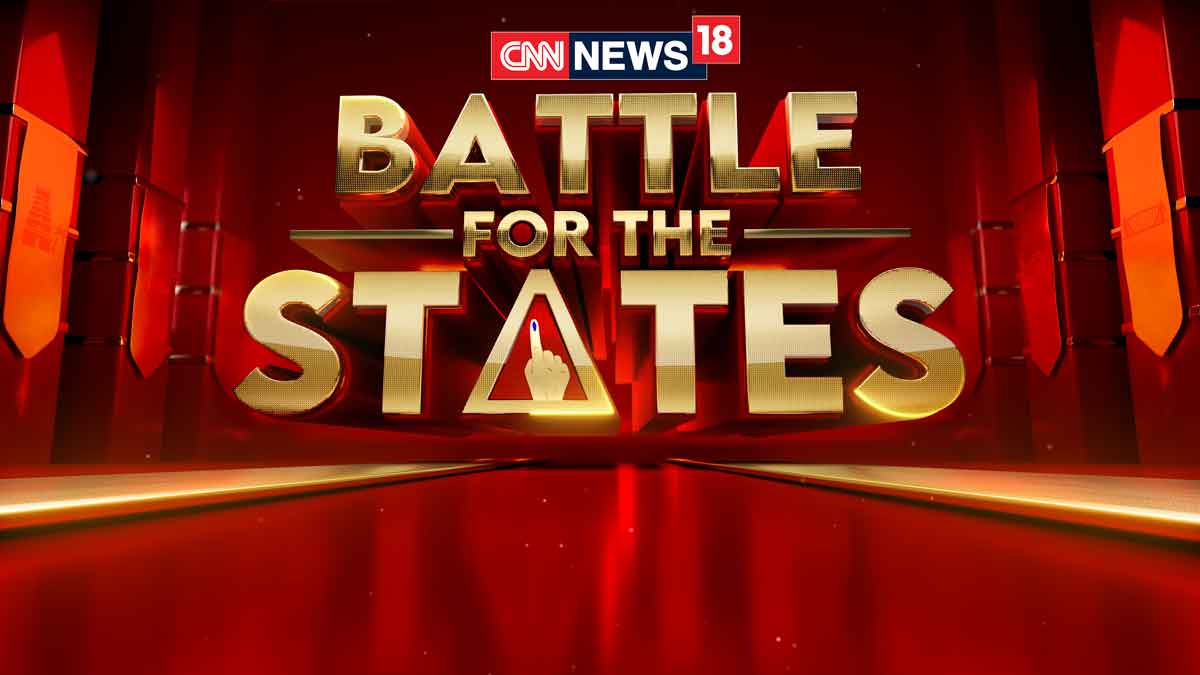
NEW DELHI: CNN-News18 has launched a special election programming initiative titled Battle for the States, as India gears up for high-stakes Assembly elections across West Bengal, Tamil Nadu, Kerala, Assam and Puducherry.
Built around the theme ‘Road to Power’, the multi-format coverage aims to follow the entire electoral journey, from campaigning and polling to results and government formation. The network is leaning into on-ground reportage and data-backed storytelling to decode voter sentiment across regions where local issues often shape the narrative.
The programming line-up includes ‘Vote Tracker’, a three-part series developed in collaboration with survey agency Vote Vibe. The show blends survey insights with expert commentary and field reporting, using augmented reality graphics to present complex electoral data such as vote share, seat projections and leadership preferences in a more accessible format. It will air every Monday evening until April 6.
Adding a cultural lens to political reporting is ‘So Saree!’, a ground-driven segment where women anchors travel across constituencies dressed in traditional handwoven sarees from each state. The format uses attire as a storytelling device, highlighting regional identity while capturing grassroots voices.
Meanwhile, ‘Unfiltered Kaapi’ and ‘Chai-Niti’ bring a more conversational tone, drawing inspiration from everyday political discussions in tea stalls and coffee corners. These segments aim to break down key issues through candid, fast-paced exchanges between anchors and reporters, tailored to regional sensibilities.
For viewers seeking deeper insights, the weekend docuseries ‘Reporters Project’ takes a longer view, with correspondents travelling across constituencies to map voter concerns and political shifts on the ground.
“Elections are about people, their aspirations, identities and the issues that matter to them, and every state tells a different story,” said CNN-News18 editorial affairs director Rahul Shivshankar. He added that the initiative focuses on understanding “the sentiment on the ground and what’s driving voter choices”.
Echoing the emphasis on credibility, Network18 CEO – English and business news Smriti Mehra said the network aims to combine on-ground reporting with data-led insights to deliver clear and timely coverage as the elections unfold.
With a mix of data, culture and grassroots reporting, CNN-News18 is positioning Battle for the States as a comprehensive window into one of India’s most closely watched electoral cycles, where every vote carries a story waiting to be told.