News Broadcasting
News channels, govt welcome BARC; no to weekly ratings


NEW DELHI: News television channels have welcomed the formation of the independent, media-run rating agency, Broadcast Audience Research Council (BARC), saying competition will be good. However, they also insist that this will be meaningless unless weekly ratings stop.
The government, meanwhile, says competition in the rating sector will be good, provided the BARC partners are serious about implementing their stated goal.
Currently, Television Audience Measurement (Tam) gives weekly ratings of channels, and it also provides programme ratings each Friday, and this, according to one editor, is “what is polluting television news.”

BARC is a combined effort of the Indian Broadcast Foundation (IBF), Advertising Agencies Association of India (AAAI) and Indian Society of Advertisers (ISA). Over the next two years, it will invest Rs 900 million to set up 500,000 peoplemeters across the country, with a mix of urban-rural households.
IBN 7 managing editor Asutosh says, “Broadbasing the households is going to be good and we shall get a much clearer picture. If they are going to bring in those many boxes and spread across the country, that will have a positive impact.”
However, he adds, “So long as the Friday blues remain, there will be unnecessary competition and chasing TRPs will remain as usual, so that has to be done away with.”
Asked whether the channels have taken the issue of weekly rating up with Tam Media Research, one editor said, “No we have not, because we have only recently figured this out, and this is the real polluter.”
Aaj Tak news director QW Naqvi says, “The core issue is weekly ratings, and I do not see why it should be like that because if that remains, there will be no change in the scenario.”
Naqvi wants staggered rating announcements, arguing, “The newspapers are not judged daily, and the NRS just comes out once a year, stating simply how much each paper sold and what was the market share.
“This is a must, but look at us; we are judged weekly, programme-wise and even story-wise, and whatever clicks becomes a holy grail to be chased by the rest, so it spoils the whole ethos.”
“Even if someone does credible work, like a report on the possibility of life on Mars, and next Friday’s report says that was a hit, everyone will start going to Mars and Jupiter, distorting the whole scientific issue, and this is what is spoiling news television,” adds Naqvi.
B.A.G Films & Media Ltd MD Anurradha Prasad, who launched Hindi news channel News 24 last November, says, “It is good that a second currency is coming up, and I agree that weekly ratings is a big problem, but we cannot have just an annual report on ratings and channels share.”
She stresses while the weekly rating system must go, there could be monthly reports, saying that even a biannual rating announcement would be too long.
While Trai is scheduled to hold a meeting on rating system on 7 March and finalise its recommendations latest by April third week, sources said that the I&B ministry is happy with BARC being formed. “Let there be competition, that is good,” said I&B officials.
Tam had remained absent at the meeting with a Parliamentary Committee on broadcasting that met in Mumbai last year, and the officials said that this was not looked upon kindly by the ministry.
Though admitting that weekly ratings end up skewing the news television scenario, officials say that the ministry itself was not doing anything; it has left the issue for Trai’s recommendations, expected next month.
In the meanwhile, officials added that once there is competition, “even Tam will start behaving like a good boy”.
But they also asked, “Is BARC a serious thing? We had heard of this company in a meeting here at the ministry itself, but this is the first time something has actually come out of it.”
They added, “If the channels and advertising agencies have got together and if they are serious, this will be a very positive thing.”





News Broadcasting
CNN-News18 to host Fury in the Gulf conclave on West Asia crisis
Three-hour summit to unpack geopolitical fallout and impact on India
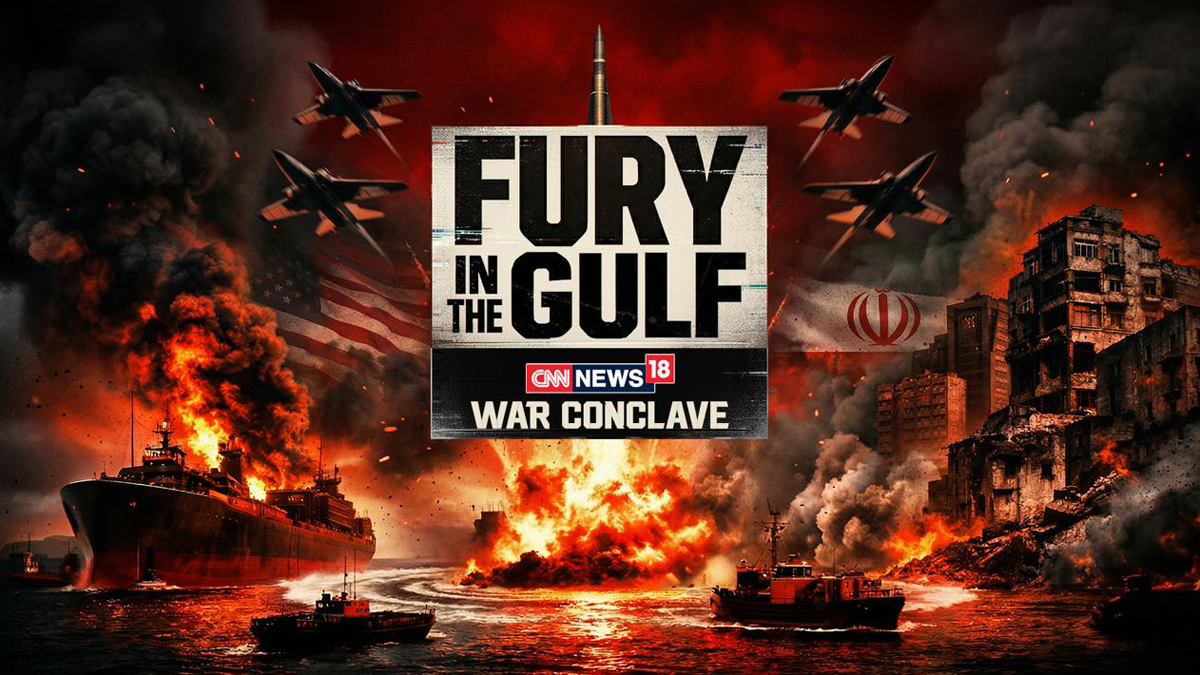
MUMBAI: CNN-News18 is set to host a special three-hour broadcast, Fury in the Gulf – War Conclave, on April 7, aiming to decode the escalating West Asia crisis and its far-reaching implications for India.
Scheduled from 4:00 PM to 7:00 PM, the conclave comes at a time when tensions between Iran and the United States are reshaping global geopolitics and triggering economic uncertainty. With India’s deep energy ties, trade links and large diaspora in the Gulf, the developments carry significant domestic relevance.
Built around the theme ‘Conflict, Consequences, and The Future,’ the programme will feature six curated sessions combining one-on-one interviews and panel discussions. The focus is to cut through the clutter and offer viewers a clearer understanding of the fast-evolving situation.
Key sessions include ‘Diplomacy in Times of War’ featuring Shashi Tharoor, and ‘World After the Iran Conflict’ with voices such as Ram Madhav, Reuven Azar, representatives from the European Union and the Iranian Deputy Envoy. Another session titled ‘Another Dunkirk?’ will bring together K. J. S. Dhillon and Jitin Prasada among others.
CNN-News18 editorial affairs director Rahul Shivshankar said, “In times of war, clarity becomes the most powerful tool. Fury in the Gulf – War Conclave brings together credible voices to address the questions and confusion that arise amid an overwhelming influx of information.”
He added that the initiative is aimed at delivering “facts, perspective, and insight” at a time when misinformation can easily cloud public understanding.
Echoing the sentiment, CNN-News18 CEO– English and business news Smriti Mehra said the conflict marks a defining global moment, with consequences that extend well beyond the region. She noted that the conclave seeks to present the crisis with “depth, nuance and responsibility” so audiences can better grasp its real-world impact.
As geopolitical tensions continue to dominate headlines, the conclave positions itself as an attempt to bring order to the noise, offering viewers a structured, insight-led look at a complex and rapidly shifting global situation.






