News Broadcasting
News channels eye elections

MUMBAI: Back in the eighties, veteran journalists Dr Prannoy Roy and Vinod Dua took the nation by storm when they co-anchored the first-ever election analyses programs on the then sole television channel, Doordarshan.
Nearly three decades and the cable and satellite TV explosion later, journalists and news television channels of all hues continue to romance the elections with the same (if not greater) fervour.

With ongoing elections in four states in North India and one in the North East, and general elections due in the first half of 2014, there couldn’t have been a better time for news channels to engage in a bit of one-upmanship with respect to news and programs around the polls. Indiantelevison.com takes a look…
India News is airing a campaign called Kissa Kursi Ka showcasing ground events across Madhya Pradesh, Chattisgarh, Rajasthan and Delhi. Citizens are part of the live debates on this program.
Urdu news channel, Aalami Samay, features a show called Mukhyamantri ke paanch saal which looks at the five years of Members of Parliament and what they’ve done towards roadways, power supply, safety and security among other causes. Another show titled Aapke numainde..unke wade assesses whether these MPs have succeeded in keeping the promises they made before getting elected to office.
ABP News is well known for its show, Kaun Banega Mukhyamantri while India TV is looking at building a strong team under the supervision of QW Naqvi, who has newly joined the channel as editorial director, to make their coverage of this election a talking point for the general elections coming up next year. “These assembly elections are a build-up to the general elections in 2014; the focus is on capturing viewership now and to be their first choice for news coverage, analyses and insights on elections right till the general elections,” says India TV MD and CEO Ritu Dhawan.
Elections are a bonanza of sorts for news channels, which expect viewership to head north during that time. For instance, India News and Aalami Samay expect their viewership to go up by 15- 20 per cent while ABP is confident of garnering an almost 50-100 per cent increase, largely due to the main shots slated for prime time viewing although election programming is scheduled for the whole day right through the elections.
India News and News X plan live election coverage from 43 locations, including 16 live OB vans and 16 live units. “Elections are like festivals for every news channel,” says India News and News X CEO R K Arora.
Not only are elections significant in grabbing eyeballs, they are also important for news channels to make their mark. “Elections should not only be seen as an eyeball prospect, but also as an area where media can contribute in the process of nation building,” says Dhawan.
While News Nation CEO Shailesh Kumar says: “This poll will also reflect the mood of the nation and take of the people at a crucial juncture when two big leaders (Narendra Modi and Rahul Gandhi) are being projected as the future of this country. A very decisive poll, which has the capacity to shape the geo-political contours of the nation.”
Advertisers too are part of this gold (read election) rush. For India TV, advertisers come in the categories including Automobile, Cement, Hosiery, Food processing and FMCG.
Says Dhawan: “The rule ‘Eyeball:Price’ is definitely applicable.”, India News and News X have got on boards brands such as Mircrosoft, Renault, Mahindra, Tata Motors, Idea cellular, Honda Motorcycles, Godrej and Whirlpool on their lists.
With channels eyeing elections as a good ‘squeeze’ in terms of viewers and advertisers, most of them have also planned exit polls at the end of the elections.
Coming to the anchors, be it a Deepak Chaurasia or Rajat Sharma or any of your favourite hosts, they are all busy trying to get the best news bytes from specialists, politicians and the public to grab the most number of eyeballs.





News Broadcasting
CNN-News18 to host Fury in the Gulf conclave on West Asia crisis
Three-hour summit to unpack geopolitical fallout and impact on India
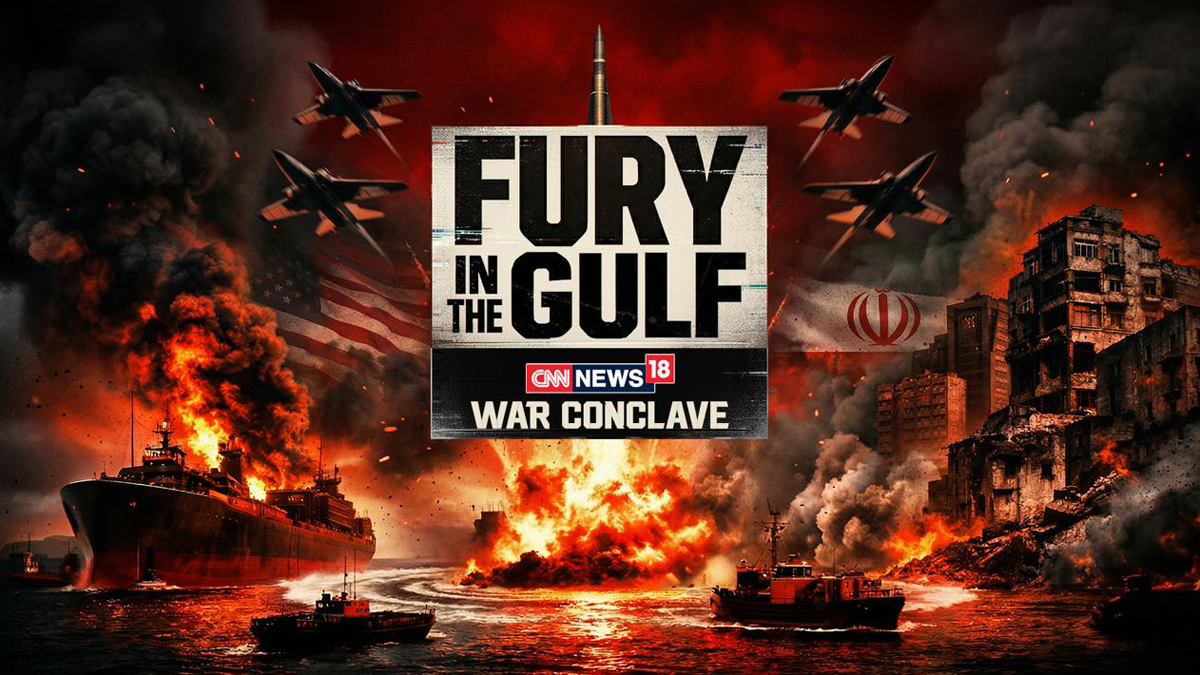
MUMBAI: CNN-News18 is set to host a special three-hour broadcast, Fury in the Gulf – War Conclave, on April 7, aiming to decode the escalating West Asia crisis and its far-reaching implications for India.
Scheduled from 4:00 PM to 7:00 PM, the conclave comes at a time when tensions between Iran and the United States are reshaping global geopolitics and triggering economic uncertainty. With India’s deep energy ties, trade links and large diaspora in the Gulf, the developments carry significant domestic relevance.
Built around the theme ‘Conflict, Consequences, and The Future,’ the programme will feature six curated sessions combining one-on-one interviews and panel discussions. The focus is to cut through the clutter and offer viewers a clearer understanding of the fast-evolving situation.
Key sessions include ‘Diplomacy in Times of War’ featuring Shashi Tharoor, and ‘World After the Iran Conflict’ with voices such as Ram Madhav, Reuven Azar, representatives from the European Union and the Iranian Deputy Envoy. Another session titled ‘Another Dunkirk?’ will bring together K. J. S. Dhillon and Jitin Prasada among others.
CNN-News18 editorial affairs director Rahul Shivshankar said, “In times of war, clarity becomes the most powerful tool. Fury in the Gulf – War Conclave brings together credible voices to address the questions and confusion that arise amid an overwhelming influx of information.”
He added that the initiative is aimed at delivering “facts, perspective, and insight” at a time when misinformation can easily cloud public understanding.
Echoing the sentiment, CNN-News18 CEO– English and business news Smriti Mehra said the conflict marks a defining global moment, with consequences that extend well beyond the region. She noted that the conclave seeks to present the crisis with “depth, nuance and responsibility” so audiences can better grasp its real-world impact.
As geopolitical tensions continue to dominate headlines, the conclave positions itself as an attempt to bring order to the noise, offering viewers a structured, insight-led look at a complex and rapidly shifting global situation.






