News Broadcasting
News broadcasters finally surf the wave as Chennai drowns


MUMBAI: A natural disaster in Mumbai or Delhi even if not too severe in nature immediately gets the Indian broadcast news media in overdrive mode. “Breaking News” updates are pushed to the viewers every hour if not every few minutes. Everything else takes a backseat as television journalists and cameramen scamper through water or rubble… whatever the case may be.
But sadly, only the Indian metros of Mumbai and Delhi command that kind of a clout from the Indian news channels, specially the English ones.

As one of the most senior Indian journalists Rajdeep Sardesai recently said in a blog post, Indian news channels need to know that there is an India that exists beyond the Vindhyas.
With incessant rains in Chennai over the last few weeks, the situation there is glum to say the least. However, English news channels have only just woken up to this natural disaster. It was only when news poured in of the Chennai airport shutting down due to water logging on the runway, did many realise the gravity of the situation down south.
The natural calamity has left more than 250 people dead and thousands have been rendered homeless.
After waiting for some kind of push, news channels are now also participating in aiding the victims who have been stranded in the most inundated areas across the rain-battered Tamil Nadu. News channels are attempting to provide the nation with timely updates about the torrential rains of Chennai… albeit a tad too late in the day.
In his blog, Sardesai discussed the issue and blamed the lack of coverage by national news channels on the “tyranny of distance.” Since most national bureaus are located in Delhi, news around the national capital gains prominence than those in other parts of the country. According to him, the only solution behind this ignorance by the national media towards such a serious incident was by combining local and national content i.e by giving space to local news in the national news channels. “Maybe we need to have two national bureaus, one in Delhi and one south of the Vindhyas,” he suggested.
News channels have evidently shown the divide between the coverage of news from the north to south of India. Indiantelevision.com tried to get hold of a few news channels that have invested some efforts in reporting the incident.
Take a look…
CNN-IBN
CNN-IBN has sent two of their senior editors Karma Paljor and Shreya Dhoundial to cover the Chennai rains. The channel has also dispatched a group of five reporters who are there at the ground zero in Chennai. The other journalists on ground are Anna Isaac, Deepa Balakrishnan and Jude Sannith who are continuously bringing the latest update of the rains, the damage caused and the difficulties that the people of Chennai are facing.
Speaking on the Chennai rains, CNN-IBN managing editor Radhakrishnan Nair said that the entire emphasis of the channel right now is on helping Chennai and connecting the needy and the good samaritans. He added that till normalcy is restored, CNN-IBN will keep the focus on ‘Help Chennai.’
The channel has been flashing helpline numbers and email ids where people can contact for any kind of assistance. CNN-IBN has tied up with Twitter for people to reach out to their loved ones in Chennai and those who are looking for help. Their social media handles are also posting regular updates about the rains and regarding all the help that can be provided to the people stranded in the city.
India TV
The news channel has deployed three senior reporters covering the floods extensively in Tamil Nadu, which includes the bureau chiefs from Hyderabad and Bangalore and a senior defence correspondent from Delhi. Apart from this, the channel is continuously getting information and news from their local stringer network.
India TV is also carrying out continuous coverage with regular updates on rescue operations, updates from the MET Department, Indian Army, NDRF and from government officials. The channel is covering the floods by way of regular and special programmes in a bid to inform viewers about the situation in Tamil Nadu. The channel’s correspondents, along with the rescue teams are going on aerial surveys to show the extent of devastation and the ground realities.
NDTV 24×7
The channel has its resident editor – South Uma Sudhir in Chennai from the day Tamil Nadu was hit by the torrential rains. The channel has also deployed five reporters to cover the entire incident.
“The Chennai Floods have been NDTV’s main focus since the time the state was hit by the natural calamity and still remains the focus of all our bulletins, including prime time programming, both Left, Right and Centre and The Buck Stops Here have done Chennai related stories. We are also passing on all requests for help to relief officials,” informs NDTV 24×7 managing editor Manika Ahirwal Raikwar.
Times Now
Times Now has its senior editor Vivek Narayan spearheading the coverage in Chennai. The channel has also sent a team of eight reporters covering and reporting minute details about the situation in Chennai. The reporters are spread across the city, reporting from districts like Thiruvallur and Cuddalore.
Additionally, the reporters are also trying to get messages of distress across to the relief teams in a bid to salvage the situation. The channel has also tied up with Twitter and leading news portal of south India News Minute to ensure that these messages reach officials as quickly as possible. “Times Now has been broadcasting non-stop coverage of the situation and has dedicated several hours of programming to the floods in Tamil Nadu,” adds a senior spokesperson from Times Network.
As Sardesai rightly points out, hopefully such situations wouldn’t take a flood for national media channels to discover the India that exists beyond the Vindhyas. The entire nation hopes that this geographical division would not affect our motherland in the future.






News Broadcasting
CNN-News18 to host Fury in the Gulf conclave on West Asia crisis
Three-hour summit to unpack geopolitical fallout and impact on India
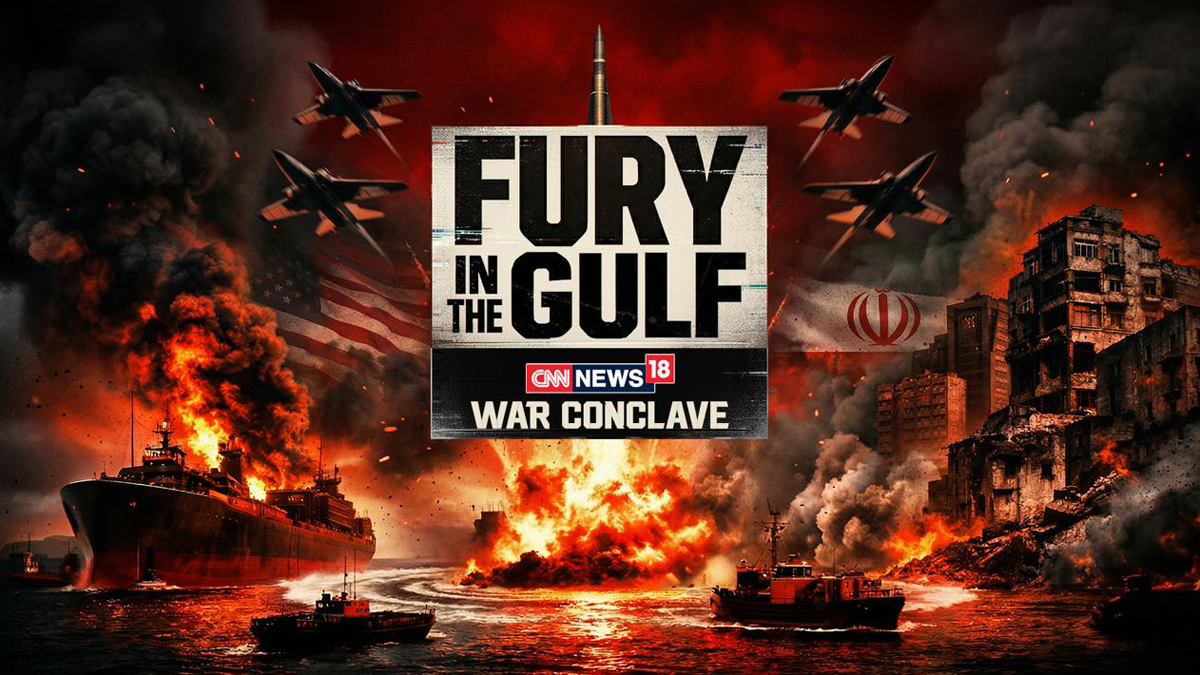
MUMBAI: CNN-News18 is set to host a special three-hour broadcast, Fury in the Gulf – War Conclave, on April 7, aiming to decode the escalating West Asia crisis and its far-reaching implications for India.
Scheduled from 4:00 PM to 7:00 PM, the conclave comes at a time when tensions between Iran and the United States are reshaping global geopolitics and triggering economic uncertainty. With India’s deep energy ties, trade links and large diaspora in the Gulf, the developments carry significant domestic relevance.
Built around the theme ‘Conflict, Consequences, and The Future,’ the programme will feature six curated sessions combining one-on-one interviews and panel discussions. The focus is to cut through the clutter and offer viewers a clearer understanding of the fast-evolving situation.
Key sessions include ‘Diplomacy in Times of War’ featuring Shashi Tharoor, and ‘World After the Iran Conflict’ with voices such as Ram Madhav, Reuven Azar, representatives from the European Union and the Iranian Deputy Envoy. Another session titled ‘Another Dunkirk?’ will bring together K. J. S. Dhillon and Jitin Prasada among others.
CNN-News18 editorial affairs director Rahul Shivshankar said, “In times of war, clarity becomes the most powerful tool. Fury in the Gulf – War Conclave brings together credible voices to address the questions and confusion that arise amid an overwhelming influx of information.”
He added that the initiative is aimed at delivering “facts, perspective, and insight” at a time when misinformation can easily cloud public understanding.
Echoing the sentiment, CNN-News18 CEO– English and business news Smriti Mehra said the conflict marks a defining global moment, with consequences that extend well beyond the region. She noted that the conclave seeks to present the crisis with “depth, nuance and responsibility” so audiences can better grasp its real-world impact.
As geopolitical tensions continue to dominate headlines, the conclave positions itself as an attempt to bring order to the noise, offering viewers a structured, insight-led look at a complex and rapidly shifting global situation.






