iWorld
New Telugu OTT platform Aha bullish on its growth and expansion


KOLKATA: In the sea of moody blues and ebony blacks, the orange OTT platform Aha stands out – but that alone is not enough for the fledgling brand. It is gearing up to win over audiences that are already spoiled for choice in a market saturated with streaming services. With its sights set on the Telugu regional space for now, Aha’s promoters are very bullish on its expansion plans and promise to offer local yet premium content.
The platform entered the market in early 2020 but due to unprecedented Covid2019 crisis it had to push back some of its plans. With production resuming in September, Aha is back on track to lure one of the largest entertainment markets in India. From the beginning, it has opted for a subscription plan priced at Rs 365 per year. While the company has no plans to make the streaming service ad-based in near future, it might not overlook advertising revenue from other sources like branded content.
It is not easy to sustain in a cash-burning business that demands huge investment but does not offer immediate profit. However, Aha management has emphasised that they will not compromise on content quality and user experience. Although the production cost may not reach the level of Hindi shows, the company claimed it is pumping money into the venture, without divulging any number.

The market for the newly launched platform is as big as 50 million Telugu speaking internet users who are already consuming online videos, shared Aha promoter Ramu Rao Jupally. As for paying propensity, CEO Ajit Thakur said that they believe this entire market will be ready to pay in future, but 25 per cent – that’s around 12 million users – are already willing to shell out cash for premium content. Aha is owned by Arha Media & Broadcasting Private Ltd, a joint venture by Geetha Arts and My Home Group.
The management is excited with the initial growth – Aha has garnered five million downloads and 18 million unique visitors within a few months of the launch. Moreover, the platform has already clocked 2X subscribers compared to the target set initially.
But in the end, content is king. Rao stated that they already have 52 shows lined up for the next one year. They plan to release five shows during the Diwali season. While production was halted during the Covid2019 crisis, the platform still offered one fresh show every week to prevent subscriber churn. Initially, they had opted for acquisition aggressively, but going forward the ratio of original and acquired will be 70:30.
At the moment, major international and domestic players are gradually increasing investment in the regional markets which could increase the competition for the new entrant. However, Thakur appeared confident while delineating Aha’s frequency, volume of content, sharply curated content including films, best creative minds working for the platform would talk in their favour.
“On the distribution strategy, we have been a bit conservative. We have positioned ourselves wherever the audience has touch points like LG, Sony, Roku, Firestick, Samsung. But we have not pursued aggressive partnerships with other aggregators yet. Once we do that, our organic growth will get affected. We want to test the potential of how far we can get an audience on our own. So we are available across all platforms but we have not really pursued aggregators’ strategy.”
As for tie-ups with broadband providers, Aha has sealed the deal with ACR Fibernet only, “because we were able to do it on equal terms,” added Thakur.
The road to profitability is a long and winding one for an OTT platform due to the high cost required for content, marketing, and product. However, Rao is optimistic Aha would be able to break even within three-four years post debut, though it’s still early days to make a definite projection.







iWorld
Meta plans 8,000 layoffs in new AI-led restructuring wave
First phase from May 20 may cut 10 per cent workforce amid AI pivot.
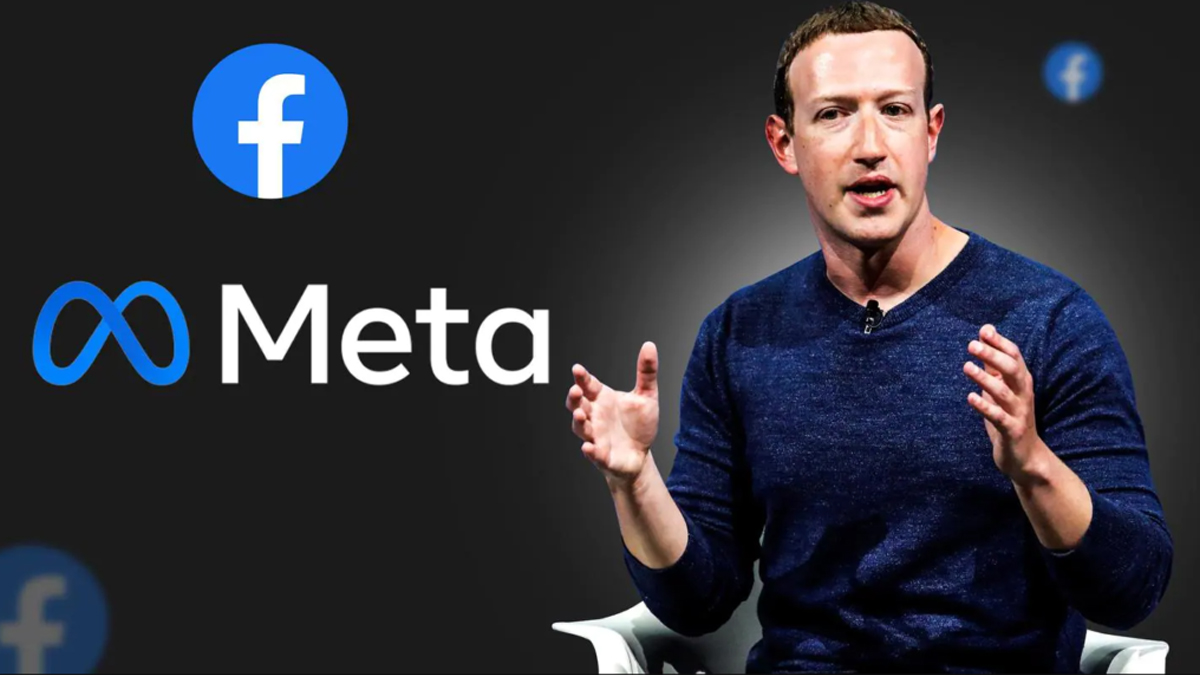
MUMBAI: At Meta, the future may be artificial but the cuts are very real. The social media giant is reportedly preparing a fresh round of layoffs, with an initial wave expected to impact around 8,000 employees as it doubles down on its artificial intelligence ambitions. According to a Reuters report, the first phase of job cuts is slated to begin on May 20, targeting roughly 10 per cent of Meta’s global workforce. With nearly 79,000 employees on its rolls as of December 31, the move marks one of the company’s most significant workforce reductions in recent years.
And this may only be the beginning. Sources indicate that additional layoffs are being planned for the second half of the year, although the scale and timing remain fluid, likely to be shaped by how Meta’s AI capabilities evolve in the coming months. Earlier reports had suggested that total cuts in 2026 could reach 20 per cent or more of its workforce.
The restructuring comes as chief executive Mark Zuckerberg continues to steer the company towards an AI-first operating model, committing hundreds of billions of dollars to the transition. Internally, this shift is already visible: teams within Reality Labs have been reorganised, engineers have been moved into a newly formed Applied AI unit, and a Meta Small Business division has been created to align with broader structural changes.
The trend is hardly isolated. Across the tech sector, companies are trimming headcount while investing aggressively in automation. Amazon, for instance, has reportedly cut around 30,000 corporate roles nearly 10 per cent of its white-collar workforce citing efficiency gains driven by AI. Data from Layoffs.fyi shows over 73,000 tech employees have already lost jobs this year, compared with 153,000 in all of 2024.
For Meta, the move echoes its earlier “year of efficiency” in 2022–23, when about 21,000 roles were eliminated amid slowing growth and market pressures. This time, however, the backdrop is different. The company is financially stronger, generating over $200 billion in revenue and $60 billion in profit last year, with shares up 3.68 per cent year-to-date though still below last summer’s peak.
That contrast underlines the shift underway. These layoffs are less about survival and more about reinvention. As Meta restructures itself around AI from autonomous coding agents to advanced machine learning systems, the question is no longer whether the company will change, but how many roles will be left unchanged when it does.







