News Broadcasting
Network18 joins forces with Truecaller to combat women harassment


Mumbai: Network18, in partnership with Truecaller, has launched #ItsNotOk campaign to raise awareness on why it’s important for women to call out harassment issues. The campaign was unveiled on 8 March to mark the occasion of International Women’s Day.
A survey conducted by Truecaller suggests that one in every three women receives sexually inappropriate calls or messages and eight out of ten women receive harassment and nuisance calls in India. While most women block these callers or phone numbers on Truecaller, very few report their harassers to authorities and the rest suffer in silence.
Through the campaign, Network18 and Truecaller are espousing that policy makers, social support systems and media platforms have a collective responsibility to stop women harassment in our country. The key focus of the campaign will be on what women can do at an individual capacity and what our society can do collectively to curtail harassment of women.

The initiative will bring together all stakeholders including state police, NGOs, counsellors, legal help and government representatives to talk about how society can work together for a safer environment, where women feel empowered.
The campaign will see minister of state for women and child development Dr Munjpara Mahendrabhai Kalubhai deliver the keynote session. On the other hand National Commission for Women (NCW) chairperson Rekha Sharma and Truecaller co-founder Nami Zarringhalam will be part of Network18’s stream-athon on Facebook and Twitter, where they will share their views on how can women stop harassment.
The campaign will also see engagement from multiple influencers from various fields, including the likes of Jwala Gutta, PV Sindhu, Aditi Rao Hydari and Neeti Palta. While Jwala Gutta will be part of streamathon, tweetathon and Twitter spaces activity on 8 March. PV Sindhu and Aditi Rao Hydari will also be a part of a Insta live session, while Neeti Palta will be part of a tweetathon and engaging on Twitter Spaces. Twitter Spaces will be hosted on News18 India, CNN-News18 & News18 Gujarati handles.
Others including social activist Ranjana Kumar, special commissioner Shalini Singh, DCP KPS Malhotra, Psychiatrist Dr Anjali Chhabria, Yogita Bhayana of PARI foundation, lawyer Aaliya Waziri, Vineet Kumar of Cyber Peace Foundation, UN Women Representative for India Susan Ferguson will also join the discussion to talk about the various aspects of women harassment including trauma, counseling, legal recource, and police initiatives.
“Through this campaign Network18 and Truecaller aim to push for providing a safer digital environment for women,” said Network18 CEO business news cluster Smriti Mehra. “We believe that it is crucial for policy makers, social support systems and media platforms to increase awareness around all aspects of women safety.”
“This International Women’s Day, we want to reiterate that the safety of women is critical and we all need to come together to put an end to harassment in digital communication,” said Truecaller India chief product officer and managing director Rishit Jhunjhunwala. “Every woman has the power to achieve a lot more when empowered to #callitout. The campaign #ItsNotOk was launched in 2017 with the aim to support women and ensure a safe environment. This year, with support of Network 18, we are taking a new path and urging women to come forward to #callItOut and take action against unwanted communication.”






News Broadcasting
CNN-News18 to host Fury in the Gulf conclave on West Asia crisis
Three-hour summit to unpack geopolitical fallout and impact on India
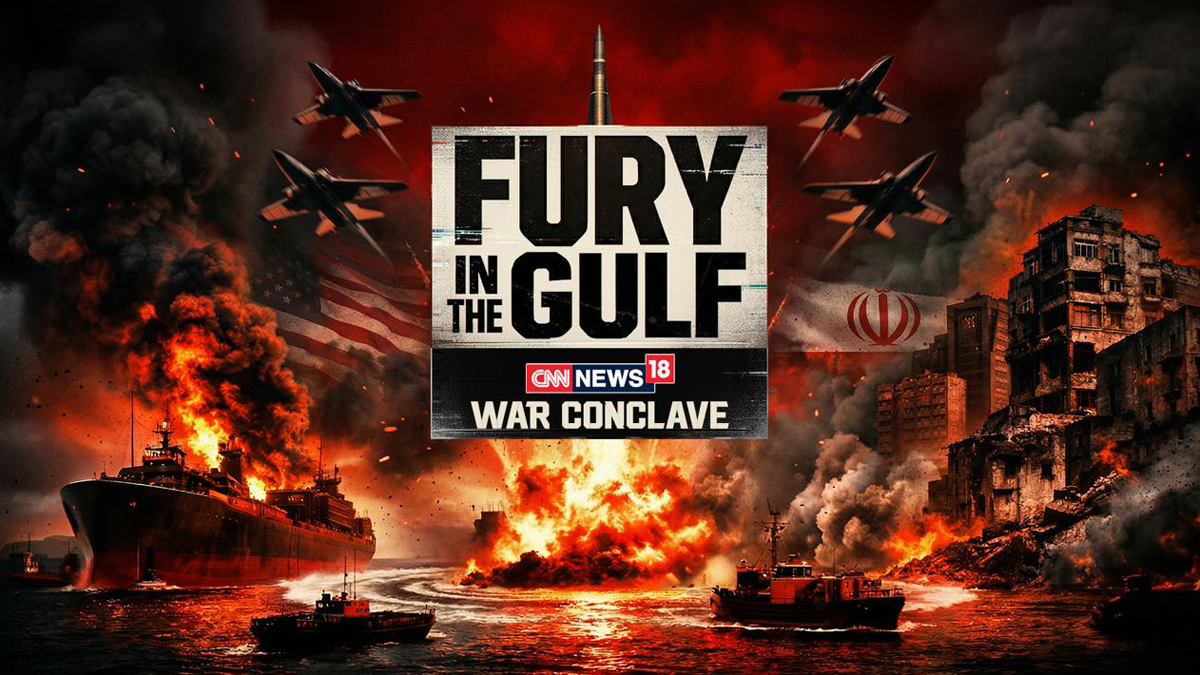
MUMBAI: CNN-News18 is set to host a special three-hour broadcast, Fury in the Gulf – War Conclave, on April 7, aiming to decode the escalating West Asia crisis and its far-reaching implications for India.
Scheduled from 4:00 PM to 7:00 PM, the conclave comes at a time when tensions between Iran and the United States are reshaping global geopolitics and triggering economic uncertainty. With India’s deep energy ties, trade links and large diaspora in the Gulf, the developments carry significant domestic relevance.
Built around the theme ‘Conflict, Consequences, and The Future,’ the programme will feature six curated sessions combining one-on-one interviews and panel discussions. The focus is to cut through the clutter and offer viewers a clearer understanding of the fast-evolving situation.
Key sessions include ‘Diplomacy in Times of War’ featuring Shashi Tharoor, and ‘World After the Iran Conflict’ with voices such as Ram Madhav, Reuven Azar, representatives from the European Union and the Iranian Deputy Envoy. Another session titled ‘Another Dunkirk?’ will bring together K. J. S. Dhillon and Jitin Prasada among others.
CNN-News18 editorial affairs director Rahul Shivshankar said, “In times of war, clarity becomes the most powerful tool. Fury in the Gulf – War Conclave brings together credible voices to address the questions and confusion that arise amid an overwhelming influx of information.”
He added that the initiative is aimed at delivering “facts, perspective, and insight” at a time when misinformation can easily cloud public understanding.
Echoing the sentiment, CNN-News18 CEO– English and business news Smriti Mehra said the conflict marks a defining global moment, with consequences that extend well beyond the region. She noted that the conclave seeks to present the crisis with “depth, nuance and responsibility” so audiences can better grasp its real-world impact.
As geopolitical tensions continue to dominate headlines, the conclave positions itself as an attempt to bring order to the noise, offering viewers a structured, insight-led look at a complex and rapidly shifting global situation.






