iWorld
Netflix revises Warner Bros deal to all-cash structure

California: Netflix has rewritten the script on its proposed takeover of Warner Bros. Discovery, amending the deal to an all-cash transaction in a move designed to boost certainty, accelerate approvals and underline the streamer’s financial firepower.
Under the revised agreement, Netflix will acquire Warner Bros. Discovery at $27.75 per share in cash, unchanged from the earlier structure. WBD shareholders will also receive additional value through shares in Discovery Global, which will be spun off ahead of the transaction’s close. The deal will be funded through cash on hand, existing credit lines and committed financing.
The streamlined structure clears a faster path to a shareholder vote, now expected by April 2026. To support the accelerated timeline, Warner Bros. Discovery has filed its preliminary proxy statement with the US Securities and Exchange Commission.

David Zaslav, president and ceo of Warner Bros. Discovery, said the revision brought the companies “even closer to combining two of the greatest storytelling companies in the world”. He added: “By coming together with Netflix, we will combine the stories Warner Bros. has told for more than a century and ensure audiences continue to enjoy them for generations to come.”
Ted Sarandos, co-ceo of Netflix, said the WBD board continued to unanimously support the transaction. “Our revised all-cash agreement provides greater financial certainty at $27.75 per share in cash, plus the value from the planned separation of Discovery Global,” he said. “Together, Netflix and Warner Bros. will deliver broader choice and greater value to audiences worldwide.”
Greg Peters, co-ceo of Netflix, said the amendment reinforced the company’s long-held view that the deal was “pro-consumer, pro-innovation, pro-creator and pro-growth”. He added that the structure preserved Netflix’s balance sheet strength while maintaining its investment-grade ratings. “This transaction will further fuel growth and investment in film and television in the US and abroad,” he said.
Samuel Di Piazza, chair of the Warner Bros. Discovery board, said the shift to cash consideration reflected a sharp focus on shareholder interests. “It allows us to deliver the value of this combination with greater certainty, while enabling stockholders to participate in the strategic potential of Discovery Global’s iconic brands,” he said.
As previously outlined, Warner Bros. Discovery will split into two publicly listed companies, Warner Bros. and Discovery Global, a process expected to take six to nine months and to be completed before the Netflix transaction closes. The deal has been unanimously approved by both boards and remains subject to regulatory clearances and shareholder approval.
Netflix and WBD have filed under the Hart-Scott-Rodino Act and are engaging with regulators in the US and Europe. Closing is still expected within 12 to 18 months of the original merger agreement.
Netflix has chosen certainty over complexity. Cash talks, and this deal now moves faster.





iWorld
Bill Ackman makes a $64bn bid for Universal Music Group
The hedge fund boss wants to list the world’s biggest record label in New York and thinks he knows exactly what ails it
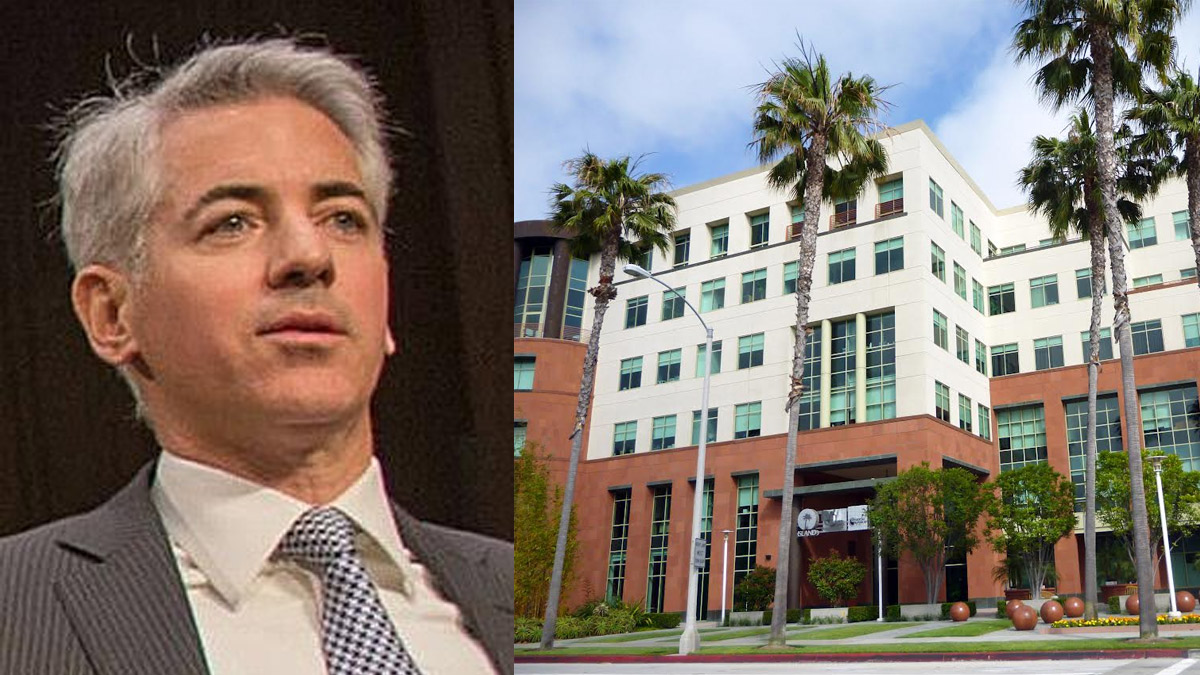
NEW YORK: Bill Ackman wants to buy the world’s biggest record label. Pershing Square Capital Management, the hedge fund run by the billionaire investor, submitted a non-binding proposal on Tuesday to acquire all outstanding shares of Universal Music Group in a business combination transaction worth roughly $64.4 billion (around 55.8 billion euros).
Under the terms of the offer, UMG shareholders would receive 9.4 billion euros in cash, equivalent to 5.05 euros per share, plus 0.77 shares of a newly created company, dubbed New UMG, for each share held. Pershing Square values the total package at 30.40 euros per share, a 78 per cent premium to UMG’s closing price on April 2.
The deal would see UMG merge with Pershing Square SPARC Holdings, with the combined entity incorporating as a Nevada corporation and listing on the New York Stock Exchange. New UMG would publish financial statements under US GAAP and become eligible for S&P 500 index inclusion. Pershing Square says the transaction is expected to close by year-end, with all equity financing backstopped by Ackman’s firm and its affiliates, and all debt financing committed at signing. The transaction would cancel 17 per cent of UMG’s outstanding shares, leaving New UMG with 1.541 billion shares outstanding.
Ackman has a long history with UMG. Pershing Square first bought approximately 10 per cent of the company from Vivendi in the summer of 2021 for around $4 billion, around the time of UMG’s listing on the Euronext Amsterdam exchange. He has since trimmed that position, raising around $1.4 billion from the sale of a 2.7 per cent stake in March 2025, and resigned from UMG’s board in May 2025, citing new executive and board obligations arising from recent investments.
His diagnosis of UMG’s troubles is blunt. The company’s stock has fallen around 33 per cent over the past twelve months on the Euronext Amsterdam exchange, and Ackman lays out six reasons why. These include uncertainty around the Bolloré Group’s 18 per cent stake in the company, the postponement of UMG’s US listing, the underutilisation of UMG’s balance sheet, the absence of a publicly disclosed capital allocation plan and earnings algorithm, a failure to reflect UMG’s 2.7 billion euro stake in Spotify in its valuation, and what Ackman calls suboptimal shareholder investor relations, communications and engagement.
The Bolloré stake has long cast a shadow over the company. Cyrille Bolloré stepped down from UMG’s board in July 2025 as the Bolloré Group battled the French financial markets regulator over its stake in Vivendi, which holds a further capital interest in UMG. UMG had confidentially filed a draft registration statement with the US Securities and Exchange Commission in July 2025 for a proposed secondary listing in America, but put those plans on hold in March 2026, citing market conditions.
Ackman has kind words for UMG’s management, at least. “Since UMG’s listing, Lucian Grainge and the company’s management have done an excellent job nurturing and continuing to build a world-class artist roster and generating strong business performance,” he said. But he made his diagnosis plain: “UMG’s stock price has languished due to a combination of issues that are unrelated to the performance of its music business and importantly, all of them can be addressed with this transaction.”
In other words, Ackman believes UMG is a great business trapped inside a broken structure. If the board agrees, he intends to fix that, loudly and in New York.






