eNews
Nepal tunes into Akashvavi as AIR’s popularity soars in neighbouring countries


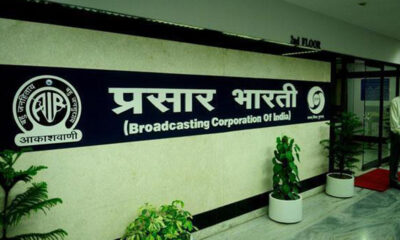
Mumbai: In what’s indicative of AIR’s increasing popularity in neighbouring countries, Nepal has entered the top 10 list for the first time grabbing the last spot, while Pakistan (at the sixth position) continues to be among the top list for the second consecutive month, according to the latest ranking of top countries where AIR live-streams are most popular. The rankings are based on data from 1 to 28 February.
United States was at the top place, followed by the UK and Canada. Apart from India, Australia, UAE, Singapore, Saudi Arabia, and Germany were other countries dominating the list.
Country-wise ranking of top All India Radio streams (excluding India) reveal that the most heard All India Radio services in Pakistan are Vividh Bharati National, AIR Mumbai VBS, World Service 1, FM Gold Delhi, FM Rainbow Delhi, AIR Suratgarh, FM Rainbow Mumbai, FM Gold Mumbai, AIR News 24×7 and FM Rainbow Lucknow.

In Nepal are Vividh Bharati National, AIR Ooty, FM Rainbow Delhi, AIR News 24×7, VBS Delhi, FM Rainbow Mumbai, FM Gold Mumbai and AIR Shimla, top the charts.
Top All India Radio streams on NewsOnAir App in rest of the world include Vividh Bharati National, AIR Odia, AIR Kochi FM Rainbow, AIR Punjabi, AIR Manjeri, AIR News 24×7, AIR Kerala, FM Gold Mumbai, AIR Chennai Rainbow, AIR Pune.
More than 240 Radio Services of All India Radio are live-streamed on NewsOnAir App, Prasar Bharati’s official App. These All India Radio Streams on NewsOnAir App have a large number of listeners not just in India, but globally, in more than 85 countries.





eNews
Piyush Thakur steps down as Inshorts’ chief revenue officer
Former vice president and cro says exit marks a new chapter after close to a decade of building revenue and partnerships at Inshorts Group.

NOIDA: Piyush Thakur has stepped away from Inshorts Group after nearly 10 years with the company, marking the end of a long tenure that culminated in his role as chief revenue officer.
In a farewell note, Thakur said he was “turning a new page” after almost a decade at Inshorts, calling it one of the hardest professional decisions he has made. He added that his exit was not driven by uncertainty about the future, but by reflection on a long association with the company.
Thakur joined Inshorts in October 2016 as vice president and spent around seven years in the role before being elevated to chief revenue officer in April 2024, a position he held until April 2026.
He said his tenure was defined by “thousands of mornings, late nights, product debates and breakthrough moments”, as the company evolved into a large-scale digital news platform used by millions.
In his note, Thakur emphasised that Inshorts’ growth was a collective effort across teams, adding that engineers, designers, sales teams and customer support staff all contributed to building the platform. He said the company’s success was not the result of individuals but of “everyone who stayed, passed through, and left their mark”.
Before Inshorts, Thakur worked across several digital media and business development roles. At ESPN, he served as senior regional manager from October 2015 to October 2016, focusing on growth initiatives, strategic opportunities and video distribution.
At Times Internet, he worked for nearly three years, including as head of business development from April 2015 to September 2015 and chief manager from January 2013 to March 2015. His responsibilities included monetisation of mobile platforms, managing media and developer partnerships, and driving revenue across digital properties such as The Times of India and The Economic Times.
Earlier, he worked at Brandmovers as head of business development from June 2012 to June 2013, handling digital, mobile and social media marketing solutions, client development and strategic consulting. During this period, he also worked on advertising revenue, brand strategy and CRM-based solutions.
At Inshorts, Thakur’s role focused on revenue strategy, mobile and media partnerships, and growth initiatives across platforms. His profile highlights experience in mobile product management, digital business models, partner ecosystems and revenue expansion in high-growth environments.







