News Broadcasting
Nepal lifts ban on Indian news channels

MUMBAI: The Nepalese government has lifted the ban on Indian news channels. The government took the decision in a cabinet meeting held on 8 June and the order was activated on 12 June.
Following the order, cable networks have now switched on news channels including Aaj Tak, Star News and Zee News.
The ban was imposed after the 1 February royal takeover by King Gyanendra. Apart from firing the government, the King had suspended civil liberties, blocked the country’s communication systems including internet and telephone and barred cable operators from airing Indian news channels. But the ban hadn’t affected international news channels including the BBC and CNN.

The King had justified his action by stating that the move was to crush an anti-monarchy Maoist revolt which has claimed almost 12,000 lives since 1996. Though India had appealed King Gyanendra to re-consider his decision earlier, it dropped the demand during a meeting between the King and prime minister Manmohan Singh in Jakarta in April.
Though the Nepal government’s decision comes as a relief for Indian news channels, another neighboring country Bhutan is still continuing its apathy towards Indian media. Last month, the Bhutan government had blocked some of the Indian news and regional channels on grounds that they have a “bad social and cultural” influence on its citizens. Networks including Aaj Tak and Sun are affected by the ban.






News Broadcasting
Kamlesh Singh receives Haldi Ghati Award from MMCF
India Today Group editor honoured for three decades of journalism at Udaipur ceremony.
MUMBAI- Kamlesh Singh just turned a lifetime of sharp words into a shiny shield because when journalism wakes up a society, even the Maharana of Mewar wants to pin a medal on it.
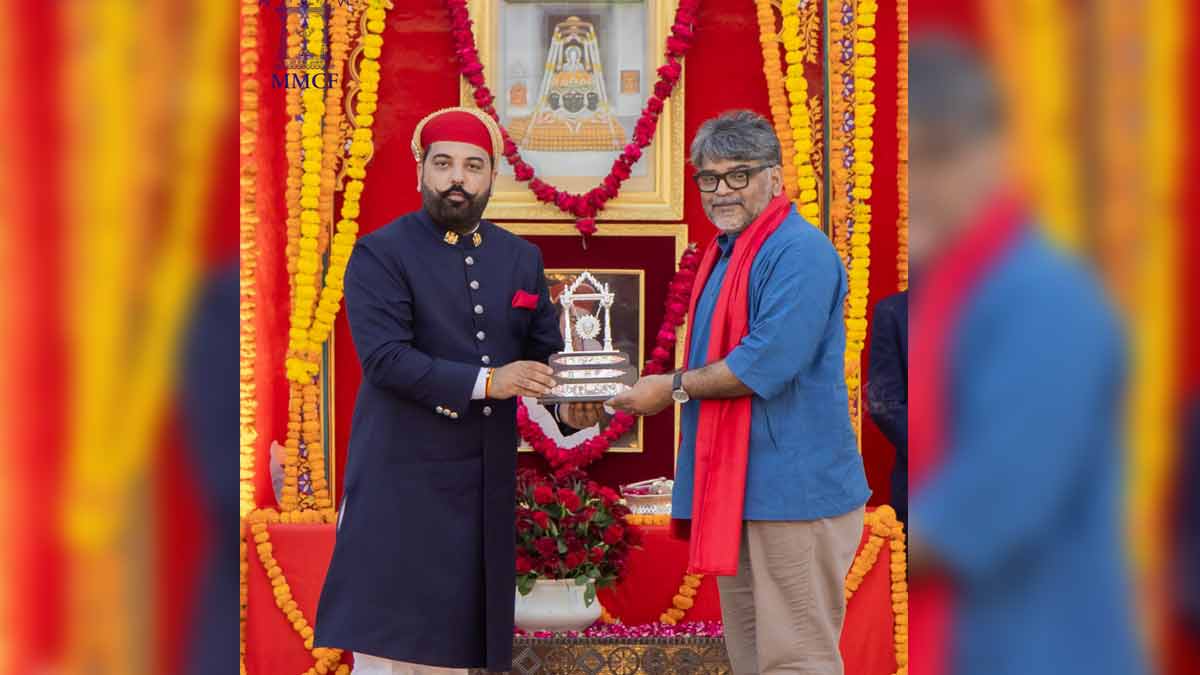
The Maharana of Mewar Charitable Foundation (MMCF) conferred its prestigious Haldi Ghati Award on Kamlesh Singh, a senior editor at the India Today Group, during a ceremony in Udaipur on 15 March 2026. The national award, instituted in 1981-82, recognises “work of permanent value that initiates an awakening in society through the medium of journalism.”
Singh, who leads several editorial initiatives including Aaj Tak Radio, the Teen Taal community and The Lallantop, was presented the honour by Lakshyaraj Singh Mewar, Managing Trustee of MMCF. The citation highlighted his three decades of contributions to Indian media, innovations in digital journalism, mentoring young reporters, and his popular podcast persona “Tau” on Teen Taal, which fosters thoughtful public discourse.
The Haldi Ghati Award, named after the historic Battle of Haldighati symbolising valour and resilience, is one of four national awards given annually by MMCF. Past recipients include Tavleen Singh, Piyush Pandey and Raj Chengappa.
Other honourees this year included Padma Vibhushan Pt Hari Prasad Chaurasia, Vedamurti Devvrat Rekhe, Treeman of India Marimuthu Yoganathan, Vir Chakra Capt Rizwan Malik, and US-based researcher Molly Emma Aitken, who received the Colonel James Tod Award for contributions to understanding Mewar’s spirit and values.
In an era where headlines often shout louder than substance, the MMCF quietly reminded everyone that real journalism isn’t about noise, it’s about the quiet, persistent work that stirs society awake, one thoughtful story at a time.