I&B Ministry
NBDSA cracks the whip: news channels caught in a spin over sensationalism


MUMBAI: The News Broadcasting & Digital Standards Authority (NBDSA) has been rather busy, doling out a series of rulings that have left several prominent Indian news channels with a bit of egg on their faces. It appears some broadcasters have been playing fast and loose with the facts, prompting the watchdog to flex its regulatory muscles.
In a decision that’s got everyone talking, ABP News found itself in the NBDSA’s crosshairs over one 7 September 2024, interview with the former BJP MP, Brij Bhushan Sharan Singh. The complainant, Indrajeet Ghorpade, wasn’t chuffed about the alleged “character assassination” of olympic wrestler Vinesh Phogat. The NBDSA, clearly not amused by the chuckles at Phogat’s expense, closed the complaint with an “observation to take care of the issue,” effectively telling ABP to mind its manners. It seems some interviews are more of a grapple than a chat.
Not to be outdone in the “oops” stakes, Times Now Navbharat received a stern talking-to for a broadcast from 5-6 September 2024, titled ‘अवैध मस्जिद’ पर महिलाओं ने मुसलमानों पर खुलकर सब बता दिया ! (Women openly tell everything about illegal mosques). Ghorpade, a busy chap indeed, also lodged this complaint, citing misleading thumbnails and a rather leading line of questioning about Shimla’s Muslim population. The NBDSA, advising broadcasters to ensure “tickers and thumbnails should conform to the actual version of the discussions/interviews,” has told Times Now Navbharat to snip, snip, snip that thumbnail from the video, if it’s still lurking online. A case of “don’t judge a broadcast by its cover,” perhaps.

Meanwhile, Zee News felt the heat over a quartet of programmes aired on 15 and 16 October 2024, all revolving around the rather unsavoury (and frankly, bizarre) concept of “thook jihad” and “urine jihad”. Utkarsh Mishra’s complaint highlighted how a perfectly sensible UP law about CCTV cameras in eateries was spun into a battle against “thook jihad,” seemingly legitimising “state-sponsored and legislative targeting based on one’s religious identity”. The NBDSA, clearly unimpressed by this “spitting image” of sensationalism, issued a warning to Zee News not to “repeat such violations.” They’ve also been told to scrub the offending videos from their digital presence. Looks like Zee News got a bit of a sticky wicket there.
Finally, Citizens for Justice & Peace landed Times Now Navbharat in hot water again, this time for 19 August 2024, programmes dissecting “teaching in Madrasas in Bihar”. The complaint alleged inflammatory language and selective reporting surrounding claims about “Pakistan-Published books” and “non-Muslims as ‘Kafir’”. The NBDSA, after a good long chinwag with both parties, concluded that the broadcasts had indeed fallen short of journalistic standards. They’ve directed the broadcaster to take down the objectionable segments and, in a polite but firm tone, told them to get their house in order.
In all four cases, the NBDSA emphasised the importance of factual integrity, responsible language, and a strong editorial spine. The verdicts serve as a wake-up call to India’s noisy newsrooms: shock and sensationalism may fetch eyeballs, but they won’t go unchecked.
For some broadcasters, it’s clearly time to trade outrage for oversight — or risk a growing pile of takedown notices.






I&B Ministry
IT Rules tweaks are clarificatory, not expansion of powers: MeitY
Govt signals flexibility as platforms push for clarity on user content rules
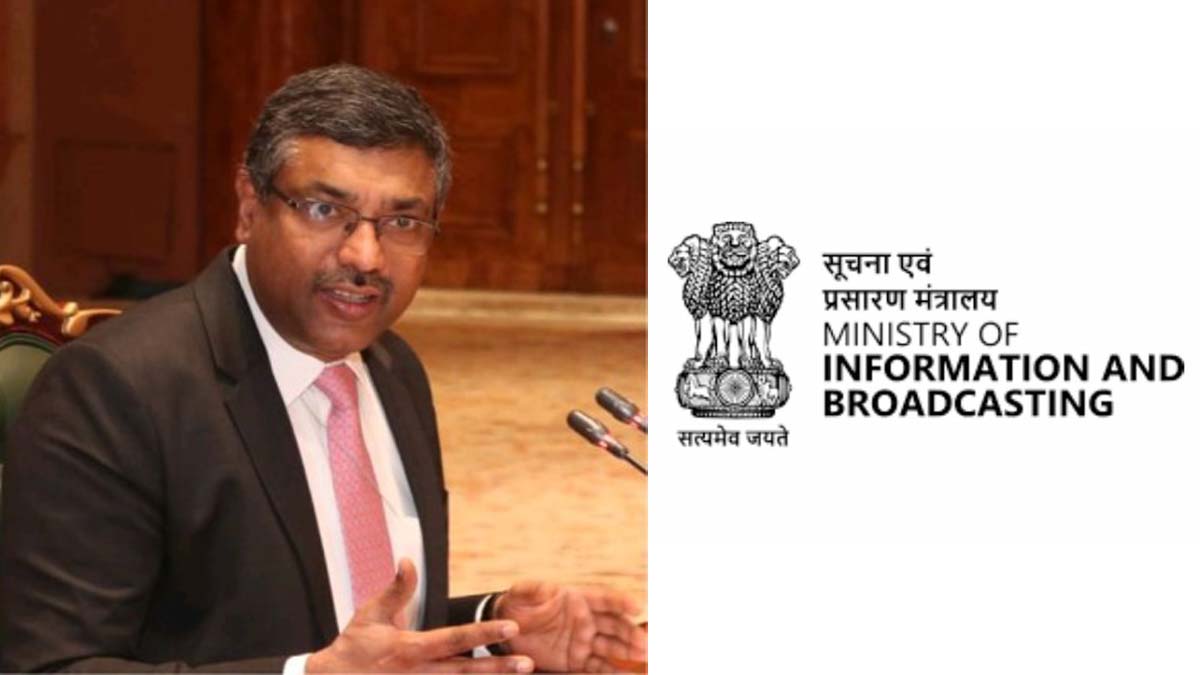
NEW DELHI: The Centre has sought to dial down concerns over its proposed amendments to the IT Rules, with Ministry of Electronics and Information Technology secretary S Krishnan asserting that the changes are intended as clarifications rather than an expansion of regulatory powers.
Pushing back against criticism from platforms and civil society, S Krishnan said the amendments “do not in any way actually give us wider powers” and are meant to remove ambiguity in how existing provisions are applied. He added that the trigger came largely from within the ecosystem, with intermediaries themselves seeking clearer guidance on compliance, takedowns and record preservation.
At the heart of the debate is the growing friction between platforms and policymakers over responsibility for user-generated content. Intermediaries have argued that they should not be treated on par with publishers, particularly when content is created and uploaded by users. Krishnan acknowledged this concern, noting that “a sharper distinction” between user content and publisher content is needed and is currently under examination.
The issue becomes more complex in enforcement scenarios. While registered publishers can be directly asked to modify or remove content, intermediaries often lack control over the original creator. “In such cases, the intermediary cannot direct those changes,” Krishnan explained, underlining the need for procedural nuance.
Another key proposal under discussion is to bring user-generated news and current affairs content within a more unified regulatory ambit, potentially under the Ministry of Information and Broadcasting. The move follows suggestions that a single authority should handle such content, regardless of whether it originates from a publisher or an individual user.
Even as the government frames the amendments as a tidy-up exercise, fault lines remain. Industry players have flagged concerns over compliance burdens, especially for smaller businesses, and questioned whether advisories could effectively become binding without explicit legislative backing. Krishnan said the government is mindful of these risks and is exploring ways to ease obligations, including possible relaxations under certain provisions.
The ministry is also considering consolidating multiple advisories and guidelines into a more structured framework, a step widely seen as addressing long-standing confusion over what platforms are expected to follow.
On takedowns, the government has reiterated that due process will remain unchanged. Krishnan stressed that actions will continue to be governed by established procedures, with reasons recorded and review mechanisms in place. He also pointed to the surge in deepfakes and synthetic media as a factor behind rising content disputes, calling it a “scale challenge” for regulators.
Interestingly, Krishnan also framed social media platforms as commercial entities rather than pure vehicles of free expression, hinting at a broader shift in regulatory thinking as platform economics come into sharper focus.
With stakeholders seeking more time and, in some cases, a rollback of the proposals, the government has kept the consultation process open-ended. Krishnan said further revisions remain on the table, signalling a willingness to adapt the draft based on feedback.
For now, the message from MeitY is clear: the rules may not be tightening in intent, but the effort to define them more clearly is well underway.






