News Broadcasting
NBA and IBF to approach govt bodies regarding broadcasting woes


MUMBAI: The broadcasting industry of India has been facing several issues right from carriage fees to the imposition of the ad cap. In order to reduce the burden on the broadcasters, the Indian Broadcasting Foundation (IBF) and the News Broadcasters Association (NBA) have now decided to unite and present their views to the highest authorities in India.
India TV chairman and editor in chief Rajat Sharma who is also the NBA president and the IBF vice president of strategic affairs, said that the two bodies will meet the Prime Minister Narendra Modi, the Finance Minister Arun Jaitley and the Information and Broadcasting Minister Prakash Javadekar to make them aware about the growing cancer called carriage fees. ”We will also show a revenue model that MSOs can adopt so that we don’t become dependent on carriage fees,” said Sharma.

Regarding ad cap he said that they will show the ministers the kind of revenue loss the channels will incur if the 10+2 minute ad cap is implemented. The case is currently being fought by the NBA in the Delhi High Court. “We will request for the 12 minute advertising cap to be removed from the licencing conditions,” he said. The NBA president added that no channel, be it a news channel or a GEC, wants to show more than five minutes of advertising but the revenue model forces them to do so. “None of us want to compromise on programming,” he said.
The new ratings system that will be applicable once BARC India starts its operations, should be transparent, he said. ”Till the time these issues are not addressed, the industry will keep suffering,” he opined.
While speaking to indiantelevision.com, Sharma said that the meeting is expected to happen in the next few days.
Sharma was addressing a keynote at the Seventh Indian News Television Summit, organised by indiantelevision.com where he discussed the role of a news channel and the challenges and hurdles that they face.






News Broadcasting
News18 India launches Command Centre war explainer with Arya
New show shifts from debates to decoding global conflicts and impacts
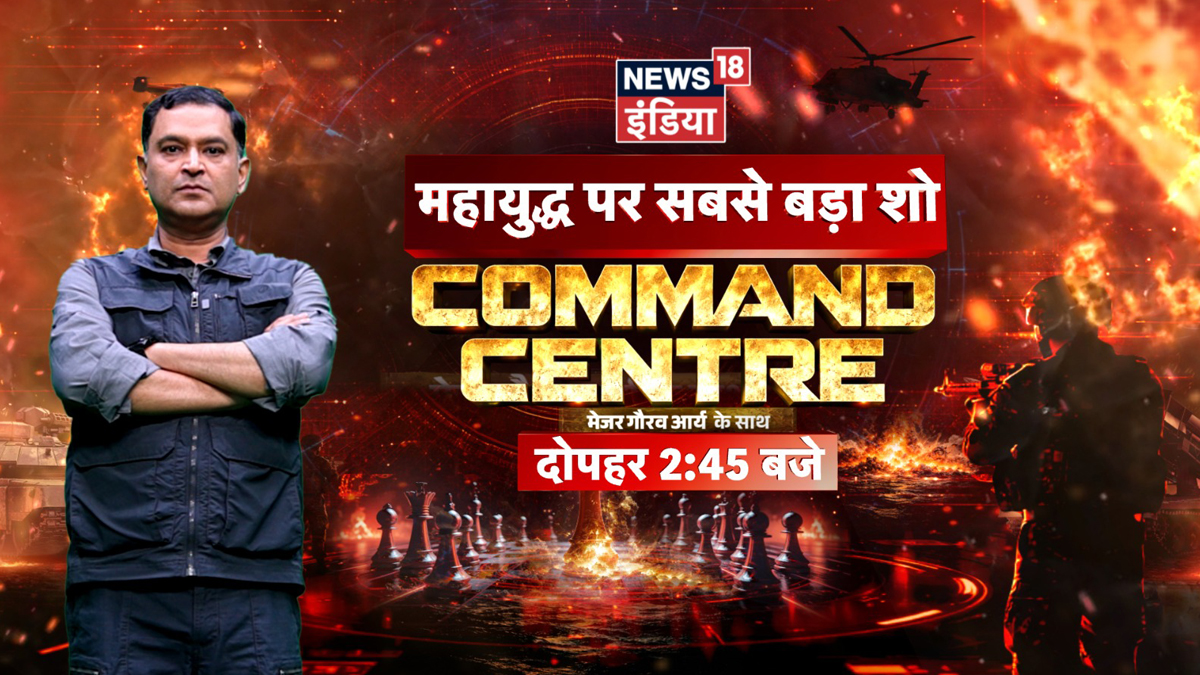
MUMBAI: News18 India has rolled out a new war-focused programme, Command Centre, featuring Gaurav Arya, as it looks to offer viewers a sharper, more grounded take on global conflicts amid rising tensions in West Asia.
Positioned as an “insider war room”, the show moves away from conventional panel debates and instead focuses on explaining military developments, decoding strategy and connecting global events to their everyday impact, from fuel prices to economic shifts.
The format leans heavily on visuals and data. The studio has been designed like a command hub, complete with large LED war maps, real-time graphics and an alert system to track developments as they unfold.
At the centre of it all is Arya, who brings his military background to simplify complex war strategies for viewers. His signature line, “Seedhi baat samjhiye”, anchors the show’s promise of clarity over noise.
News18 India managing editor Jyoti Kamal said, “Command Centre, featuring Major Gaurav Arya is designed to deliver accurate insights and a clear perspective on how evolving conflicts impact everyday life, from household budgets to national security. With expert voices analysing every development in real time, the show goes beyond headlines to decode what’s happening now, what it means, and what could come next.”
Echoing the intent, Gaurav Arya added, “In times of war, confusion is the biggest threat. With News18 India’s Command Centre, we are bringing viewers inside the war room, decoding strategies, tracking every escalation, and explaining, in the simplest terms, what it means for India and for every household. Seedhi baat samjhiye, this is where you understand not just what is happening, but what happens next.”
The weekday show will air in the afternoon slot and will also feature Gaurav Shukla, adding to its editorial depth.
With its mix of analysis, visuals and a clear focus on impact, the show reflects a broader shift in news consumption. Viewers are no longer just watching events unfold, they are looking to understand what those events mean for them.







