News Broadcasting
Narendra Modi delivers inspiring keynote address at News9 Global Summit 2024

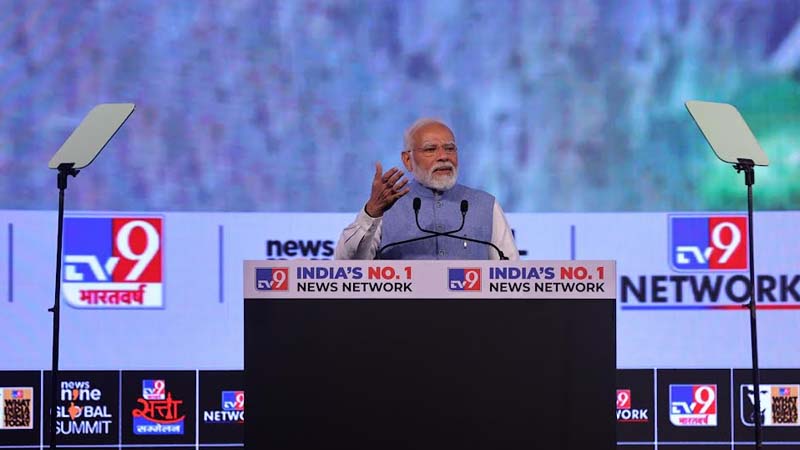
Mumbai: The News9 Global Summit 2024 reached its pinnacle as the PM of India, Shri Narendra Modi, delivered a keynote address that stirred hearts and minds alike. Embraced by a captivated audience comprising distinguished dignitaries, industry leaders, and intellectuals from across the globe, PM Modi’s address on the summit theme ‘India: Poised for the Next Big Leap’ resonated with a spirit of optimism and aspiration for the future of India.
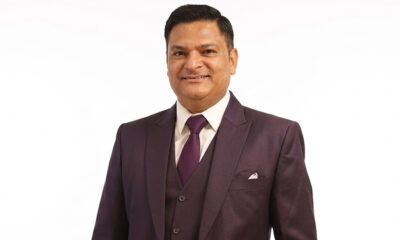
The stage was set for PM Modi’s address by TV9 Network managing director and CEO Barun Das who hailed the PM as not only the architect of a New India but also as someone who aspires to lay the foundation for the next thousand years. Sharing his own insights, Das elaborated on what he termed the three “Modi Mantras”: Return on Governance, Modi Multiplier, and Citizen DNA Reset, emphasizing their importance in shaping India’s trajectory towards progress and prosperity.
PM Modi commenced his address with the adage: “Mann ke haare haar, mann ke jeete jeet,” underscoring the theme of resilience and the indomitable spirit that has come to define India’s journey in recent years.

He was quick to laud the diversity of India, acknowledging the role of media outlets like TV9 in representing this diversity. He remarked, “I often talk about India’s diversity. This diversity is also represented in the TV9 newsroom and by TV9 reporters”, emphasizing the importance of inclusive narratives in shaping national discourse.
Asserting the need for the next big leap, PM Modi remarked, “It is imperative to shift gears for India to take ‘the next big leap’. India has been in ‘reverse gear’ for too long”.
He reflected on India’s remarkable economic growth, stating, “In just ten years, India has become one of the top five economies of the world. Laws are made and decisions are taken in an expedited manner in today’s India”, acknowledging India’s economic prowess and underscoring the transformative reforms undertaken by the government to accelerate growth and development.
Dispelling notions of bureaucratic hurdles and signalling a paradigm shift towards responsive and accountable governance, PM Modi asserted that government offices in India today are “not a problem, but a solution”.
Reflecting on India’s journey of progress, the PM remarked, “In 10 years, what circumstance changed that has brought to this space? It is a change of mindset, it is a change of trust & self-confidence, it is a change of good governance”.
He also commented on India’s role in the fourth industrial revolution, emphasising that while India was left behind in the first three industrial revolutions, the time has come for it to lead in the fourth industrial revolution.
Touching upon the visible surge in investor confidence, he said, “In 2014, Indians invested Rs 9 lakh crore in mutual funds. In 2024, over Rs 52 lakh crore has been invested in mutual funds. This is because people have faith in the progress of the nation”.
“From the abrogation of Article 370 to the construction of Ram temple in Ayodhya, we have prepared India for the coming decade”, PM Modi said, quipping that “We don’t believe in ‘rajneeti’, we believe in ‘rashtraneeti’.”
Looking ahead, PM Modi outlined India’s priorities in key sectors such as space exploration, semiconductor manufacturing, digital infrastructure, clean energy, and fintech, reaffirming India’s commitment to fostering a knowledge-based economy driven by innovation and technology.
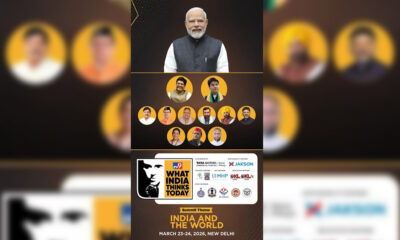
Concluding his address, the PM remarked, “Everyone is saying that India is the future. The times to come are extremely important. The next five years are very crucial”. His keynote address electrified audiences at the News9 Global Summit 2024 and served as a culmination of the many discussions that took place over two days of the TV9 What India Thinks Today summit.





News Broadcasting
CNN-News18 to host Fury in the Gulf conclave on West Asia crisis
Three-hour summit to unpack geopolitical fallout and impact on India
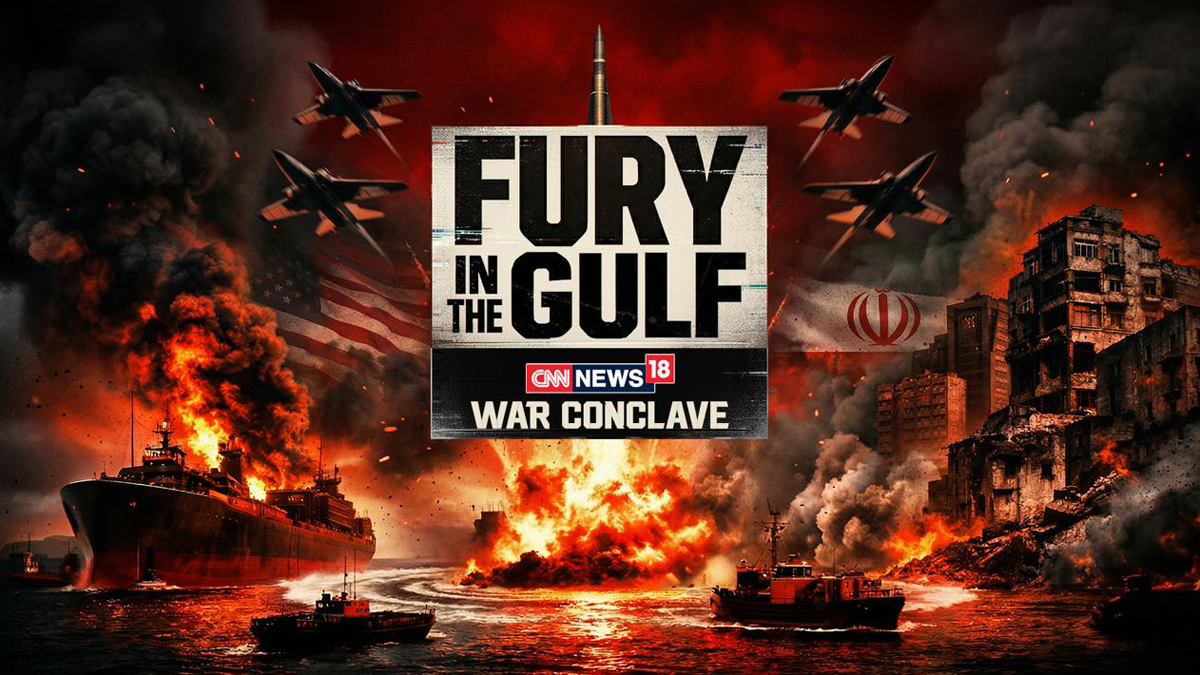
MUMBAI: CNN-News18 is set to host a special three-hour broadcast, Fury in the Gulf – War Conclave, on April 7, aiming to decode the escalating West Asia crisis and its far-reaching implications for India.
Scheduled from 4:00 PM to 7:00 PM, the conclave comes at a time when tensions between Iran and the United States are reshaping global geopolitics and triggering economic uncertainty. With India’s deep energy ties, trade links and large diaspora in the Gulf, the developments carry significant domestic relevance.
Built around the theme ‘Conflict, Consequences, and The Future,’ the programme will feature six curated sessions combining one-on-one interviews and panel discussions. The focus is to cut through the clutter and offer viewers a clearer understanding of the fast-evolving situation.
Key sessions include ‘Diplomacy in Times of War’ featuring Shashi Tharoor, and ‘World After the Iran Conflict’ with voices such as Ram Madhav, Reuven Azar, representatives from the European Union and the Iranian Deputy Envoy. Another session titled ‘Another Dunkirk?’ will bring together K. J. S. Dhillon and Jitin Prasada among others.
CNN-News18 editorial affairs director Rahul Shivshankar said, “In times of war, clarity becomes the most powerful tool. Fury in the Gulf – War Conclave brings together credible voices to address the questions and confusion that arise amid an overwhelming influx of information.”
He added that the initiative is aimed at delivering “facts, perspective, and insight” at a time when misinformation can easily cloud public understanding.
Echoing the sentiment, CNN-News18 CEO– English and business news Smriti Mehra said the conflict marks a defining global moment, with consequences that extend well beyond the region. She noted that the conclave seeks to present the crisis with “depth, nuance and responsibility” so audiences can better grasp its real-world impact.
As geopolitical tensions continue to dominate headlines, the conclave positions itself as an attempt to bring order to the noise, offering viewers a structured, insight-led look at a complex and rapidly shifting global situation.






