iWorld
MY FM launches new humour capsules – ‘Irshad-Na-Kaabil’ & ‘Baklol Samachar’

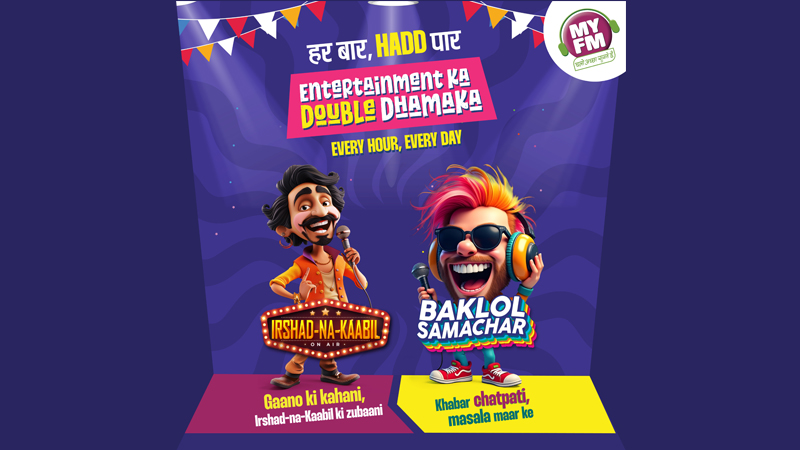
Mumbai: MY FM, the Radio arm of Dainik Bhaskar group unveils snacky humour capsules – ‘Irshad-Na-Kaabil’ & ‘Baklol Samachar’.
MY FM is ready with an exciting content lineup in the festive season bringing in even more reasons for listeners to tune in to our channel. We have recently transitioned from traditional long-format shows to a dynamic line-up of 10-12 short-format shows covering a wide array of topics with crisp, engaging content that enhances both value and entertainment.
Irshad-Na-Kaabil is an eccentric, whimsical character known for his nonsensical approach to storytelling. He is a self-proclaimed Bollywood enthusiast who creates imaginative backstories of iconic Bollywood songs to add fun and entertainment.

Baklol Samachar is all about a hilarious news anchor known for his distinct style and humorous take on current events and almost everything happening around us. He blends humour and satire with a flamboyant style that makes it an unforgettable experience. His unique perspectives and mannerisms make him a standout personality.
“We are staying true to our commitment to bring unique and entertaining content to our listeners. We are extremely excited to introduce the new sparklers,” said MY FM CEO Rahul Namjoshi.
Tune in to MY FM for a non-stop rollercoaster of laughter and let the fun begin!






iWorld
JioHotstar enters micro-drama space with 100 shows under Tadka banner
Short-form push targets 300M users as content meets commerce in new format
MUMBAI: JioStar has made a bold play in India’s fast-growing micro-drama space, rolling out over 100 short-form shows under its new Tadka banner on JioHotstar, timed with the massive viewership surge of the Indian Premier League 2026.
The scale of the launch signals clear intent. Rather than testing the waters, the company has dived in headfirst, releasing a wide slate of content on day one. Each show is designed for quick consumption, with episodes running 60 to 90 seconds in a vertical format tailored for mobile-first audiences.
The move comes as India’s micro-drama market, currently valued at around $300 million, is projected to grow tenfold to over $3 billion by 2030. Globally, the format has already proven its mettle, with China’s micro-drama sector recording explosive growth in recent years.
What sets this rollout apart is its built-in monetisation strategy. The shows are free to watch and ad-supported, with brand integrations woven directly into storylines from the outset. It reflects a broader shift where content and commerce are increasingly intertwined, rather than operating in silos.
The timing is equally strategic. With more than 300 million users already tuning in for IPL action, JioHotstar is effectively turning cricket’s biggest stage into a discovery engine for its new format.
The company is not entering an empty arena. Early movers like Kuku TV, MX Player and platforms backed by Zee Entertainment Enterprises have already laid the groundwork, building audiences and validating demand for snackable storytelling.
Now, with scale, distribution and advertiser interest aligning, the big players are stepping in. For JioStar, Tadka may well serve as a proving ground for the next evolution of digital entertainment, where every minute counts and every second sells.
If the bet pays off, India’s next big content wave might just arrive in under 90 seconds.






