News Broadcasting
Mumbai Police violated Supreme Court guidelines in Arnab Goswami’s arrest, says AIBA

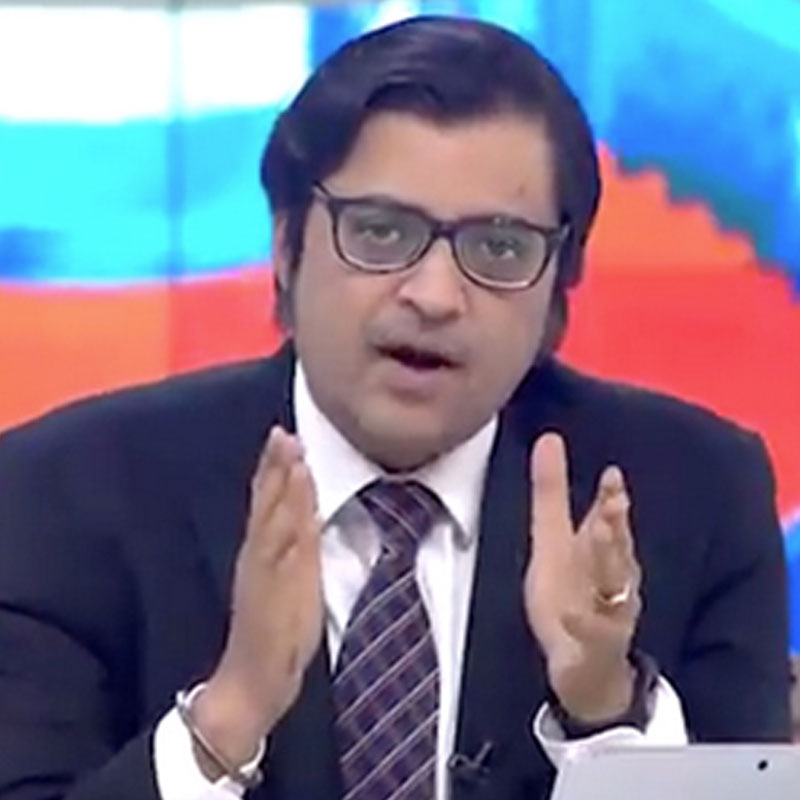
NEW DELHI: The arrest of Republic TV’s editor in chief Arnab Goswami has evoked a response from multiple sections of the industry.
Senior bureaucrats and news federations have condemned the arrest and called upon the chief minister of Maharashtra to conduct a free and fair investigation in the matter without exercising the authority of the government on media.
In the latest development, All India Bar Association (AIBA) has condemned the arrest of noted journalist Arnab Goswami by Mumbai Police as it has violated the landmark guidelines to protect the rights of arrestee as enumerated in judgment delivered by Hon’ble Supreme Court in D. K. Basu v. State of West Bengal (AIR 1997 SC 610).

In a letter to the governor of Maharashtra, AIBA chairman Adish C Aggarwala, senior advocate, appealed for immediate release of the journalist as it is blatant misuse of power by Maharashtra Govt. against Republic TV and Arnab Goswami. The illegal arrest is an attack on individual freedom and the fourth pillar of democracy.
The following guidelines of
honourable Supreme Court in the judgment passed in D. K. Basu v. state of
West Bengal (AIR 1997 SC 610), have been violated by Mumbai Police in
the matter of arrest of Arnab Goswami
Duties of Police Making
Arrest and Handling Interrogation: All Police personnel should wear name tags clearly indicating their name and designation.
Police must enter the complete details of police officials conducting interrogation in a register.
Arrest Memo: The police officer making
an arrest has to prepare an arrest memo that records details of the
arrest. The arrest memo must contain:
a. The signature of at least one witness, who can be a relative of the arrestee or a respectable person of the locality where the arrest is made.
b. The time, date, and place
of the arrest. The arrested person should sign the arrest memo after it is
properly prepared.
Inspection Memo: If the arrested person requests it, the arresting officer must record any minor/major injuries on his/her body in an inspection memo. The memorandum should be signed by the arrested person and the arresting officer. A copy of the Memo must be given to the arrested person.
Information About the Arrest & Detention: The arrested person has the right that his/her relative/friend is informed about the arrest. The police must contact and inform the relative/friend of the time and place of arrest, and the exact location where the arrested person is detained, at the earliest. If the relative / friend is in a different district / city, the concerned police station should be informed by telegraph within 8-12 hours of the arrest and then convey the information to the relative / friend. The information of the arrest should also be sent through the district legal aid committee.
Right to a Lawyer: The arrested person has the right to meet and consult a lawyer during his/her interrogation. The police cannot deny this.
Illaqa Magistrate: The Police must send one copy of all documents, relating to the arrest (including the Arrest and Inspection Memos) to the Illaqa Magistrate for his/her records.
Police Control Room: Police Control Rooms should be set up in all district and state headquarters. The arresting officer has the duty to inform the control room about the place of detention of the arrested person. This has to be done in all arrests.This information must be sent to the control room within 12 hours of the arrest. This information must be displayed clearly on the notice board of the Control Room. Duties of Police making arrest and handling interrogation:
These directions should be mandatorily followed. Refusal to do so results in the initiation of contempt of Court proceedings.
Departmental action should be initiated against police officials who have violated above safeguards guaranteed to the citizens of the country.







News Broadcasting
News18 India launches Command Centre war explainer with Arya
New show shifts from debates to decoding global conflicts and impacts
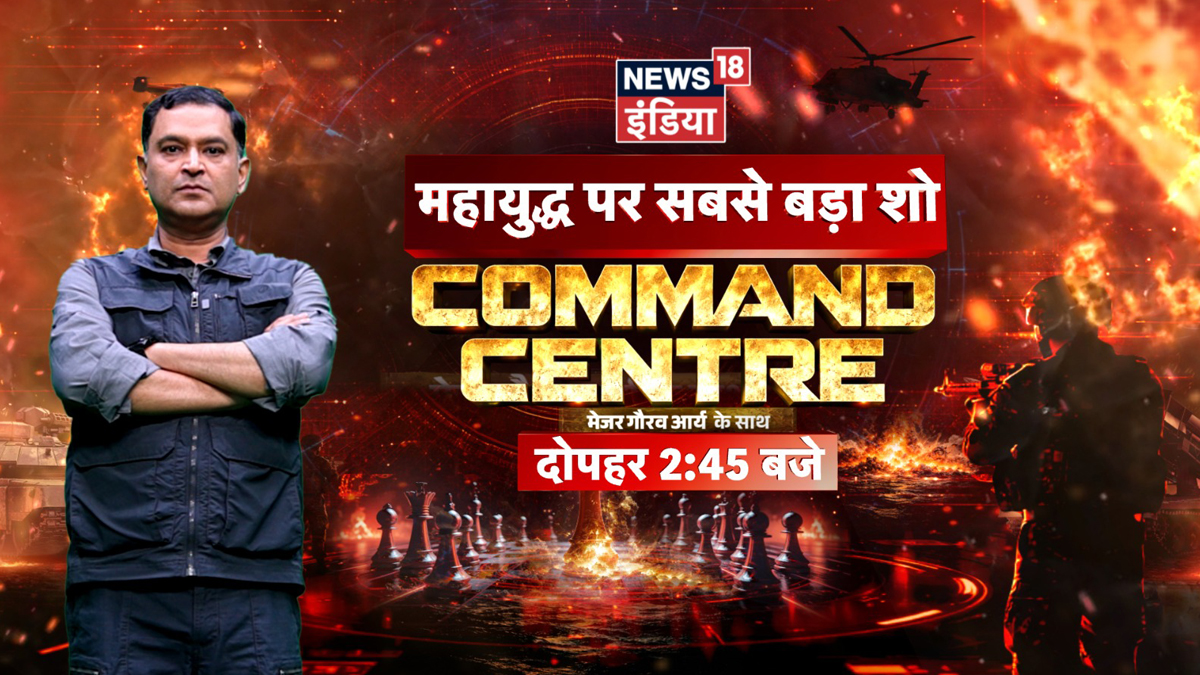
MUMBAI: News18 India has rolled out a new war-focused programme, Command Centre, featuring Gaurav Arya, as it looks to offer viewers a sharper, more grounded take on global conflicts amid rising tensions in West Asia.
Positioned as an “insider war room”, the show moves away from conventional panel debates and instead focuses on explaining military developments, decoding strategy and connecting global events to their everyday impact, from fuel prices to economic shifts.
The format leans heavily on visuals and data. The studio has been designed like a command hub, complete with large LED war maps, real-time graphics and an alert system to track developments as they unfold.
At the centre of it all is Arya, who brings his military background to simplify complex war strategies for viewers. His signature line, “Seedhi baat samjhiye”, anchors the show’s promise of clarity over noise.
News18 India managing editor Jyoti Kamal said, “Command Centre, featuring Major Gaurav Arya is designed to deliver accurate insights and a clear perspective on how evolving conflicts impact everyday life, from household budgets to national security. With expert voices analysing every development in real time, the show goes beyond headlines to decode what’s happening now, what it means, and what could come next.”
Echoing the intent, Gaurav Arya added, “In times of war, confusion is the biggest threat. With News18 India’s Command Centre, we are bringing viewers inside the war room, decoding strategies, tracking every escalation, and explaining, in the simplest terms, what it means for India and for every household. Seedhi baat samjhiye, this is where you understand not just what is happening, but what happens next.”
The weekday show will air in the afternoon slot and will also feature Gaurav Shukla, adding to its editorial depth.
With its mix of analysis, visuals and a clear focus on impact, the show reflects a broader shift in news consumption. Viewers are no longer just watching events unfold, they are looking to understand what those events mean for them.






