News Broadcasting
MRUCI elects Shashi Sinha as chairman, Shailesh Gupta as VC


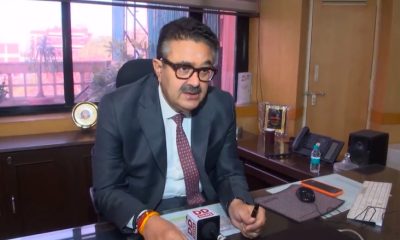
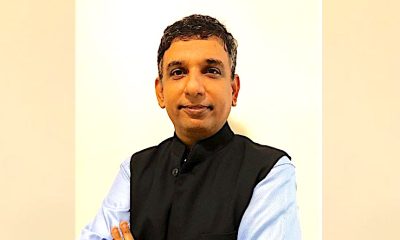
Mumbai: Mediabrands India CEO Shashi Sinha and Jagran Prakashan director Shailesh Gupta have been unanimously elected as chairman and vice-chairman of Media Research Users Council India (MRUCI), respectively, for the year 2021-22. The announcement was made at MRUCI’s board meeting which was held shortly after its AGM.
Sinha takes up the baton from Sakal Media Group chairman Pratap Pawar, who served as MRUCI’s chairman for two consecutive terms – from 2019-20 and 2020-21.
While passing the baton, Pawar thanked all the board members and stakeholders and congratulated Sinha and the new board members. “We faced some challenging times due to the global pandemic, but I am glad we are soon returning to normalcy. With the change in name from Media Research Users Council (MRUC) to Media Research Users Council India (MRUCI), and the modification of IRS questionnaire, we will not only further boost our national stature and representation, but also successfully meet the fast-evolving needs and expectations of our stakeholders,” he said.

New members have also been appointed to the board of governors:
1. Sakal Media Group, chairman, Pratap Pawar.
2. ABP Pvt Ltd, CEO, Dhruba Mukherjee.
3. MM Publications, executive editor & director, Jayant Mammen Mathew.
Sinha is actively involved in various industry bodies such as the Advertising Standards Council of India (ASCI), the Advertising Agencies Association of India (AAAI), Audit Bureau of Circulation (ABC), The Ad Club, Broadcast Audience Research Council India (BARC). He is an alumnus of IIT Kanpur and IIM Bangalore. An industry veteran with over 30 years of experience, where he has built a highly awarded team of professionals and organisations that today form the country’s leading media network.
Sinha in his vote of thanks said, “I thank Pawar for his selfless leadership and valuable guidance, especially in these unprecedented times. MRUCI has long played a very crucial role in providing the industry with reliable, robust and realistic data, and now more than ever, the industry looks toward us to meet their expectations in maintaining and propagating the highest possible standards of integrity, fairness, and reliability in media research. As our Country slowly resumes to normalcy, our priority will be to begin the IRS fieldwork at the soonest, in consideration with the ground realities.”
Over the last 25 years, Jagran’s Gupta has provided a new dimension to Jagran’s marketing strategy and has been at the heart of driving transformational change at the Jagran group.
He held several positions at leading industry bodies – elected as the youngest member of the managing committee of the Audit Bureau of Circulation for the year 2004-05, he was ABC chairman in 2012-13 and chairman of INS during 2019-20.





News Broadcasting
News18 India launches Command Centre war explainer with Arya
New show shifts from debates to decoding global conflicts and impacts
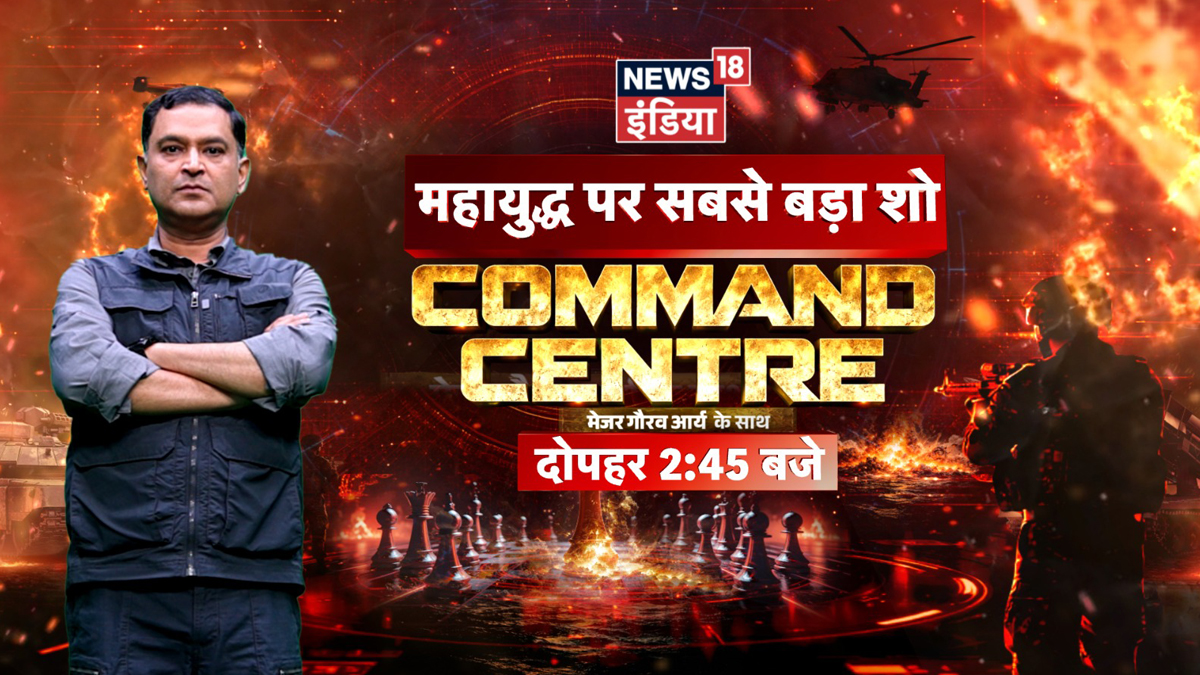
MUMBAI: News18 India has rolled out a new war-focused programme, Command Centre, featuring Gaurav Arya, as it looks to offer viewers a sharper, more grounded take on global conflicts amid rising tensions in West Asia.
Positioned as an “insider war room”, the show moves away from conventional panel debates and instead focuses on explaining military developments, decoding strategy and connecting global events to their everyday impact, from fuel prices to economic shifts.
The format leans heavily on visuals and data. The studio has been designed like a command hub, complete with large LED war maps, real-time graphics and an alert system to track developments as they unfold.
At the centre of it all is Arya, who brings his military background to simplify complex war strategies for viewers. His signature line, “Seedhi baat samjhiye”, anchors the show’s promise of clarity over noise.
News18 India managing editor Jyoti Kamal said, “Command Centre, featuring Major Gaurav Arya is designed to deliver accurate insights and a clear perspective on how evolving conflicts impact everyday life, from household budgets to national security. With expert voices analysing every development in real time, the show goes beyond headlines to decode what’s happening now, what it means, and what could come next.”
Echoing the intent, Gaurav Arya added, “In times of war, confusion is the biggest threat. With News18 India’s Command Centre, we are bringing viewers inside the war room, decoding strategies, tracking every escalation, and explaining, in the simplest terms, what it means for India and for every household. Seedhi baat samjhiye, this is where you understand not just what is happening, but what happens next.”
The weekday show will air in the afternoon slot and will also feature Gaurav Shukla, adding to its editorial depth.
With its mix of analysis, visuals and a clear focus on impact, the show reflects a broader shift in news consumption. Viewers are no longer just watching events unfold, they are looking to understand what those events mean for them.






