Hindi
Monsoon Shootout, Bombay Talkies to bookend 4th London IFF


MUMBAI: Amit Kumar‘s trigger happy Monsoon Shootout will be the red carpet UK premiere opening night film of the 4th annual London Indian Film Festival (IFF) to be held between 18-25 July, Together with O2. This film is a version of Sliding Doors meets a hyper-real cop thriller, which will have you on the edge of your seats. Closing the festival will be a special UK premiere of Bombay Talkies with four stories by acclaimed directors Karan Johar, Zoya Akhtar, Dibakar Banerjee and Anurag Kashyap exploring 100 years of Indian cinema, studded with top independent and Bollywood stars. Both films had a triumphant reception at the recent Cannes Film Festival and special guests are expected for both screenings.
 |
Now Europe‘s largest platform for Indian cinema, the London IFF returns to the Capital, celebrating the movement of Indian independent cinema and bringing to UK audiences a rare selection of cutting-edge films from some of India‘s hottest independent talents. Going way beyond Bollywood, the festival presents a kaleidoscope of new films that challenge, shock, generate debate and present a more realistic view of India and the subcontinent, in all its diversity. For the first time, the festival is going on tour to Bradford and Glasgow.
The centerpiece In conversation on Saturday 20 July at the BFI Southbank, will be with actor Irrfan Khan, one of the very few Indians to straddle Hollywood, British and Indian cinema, talking to award winning director of Senna, Asif Kapadia. Khan‘s memorable film roles include BAFTA winner, The Warrior and Oscar winners, Slumdog Millionaire and Life of Pi and Hollywood biggies like The Amazing Spider-Man, The Darjeeling Limited and The Namesake, and Bollywood hits Life In A Metro, Mumbai Meri Jaan, New York and Paan Singh Tomar.
 |
London IFF also has films and events for a wide range of audiences and includes industry events at BAFTA, exploring UK and Indian subcontinent co-productions. The winner of the annual Satyajit Ray short film competition will be announced at the end of the festival at The Nehru Centre in Mayfair.
The Major sponsors this year will include O2 International Sim, and the festival is also grant funded for the first time, by the BFI Film Festival Fund.

Festival director Cary Rajinder Sawhney comments, “We are delighted that the festival is growing from strength to strength. If you want to find out more about south Asian cinema come and soak yourself in a week of magnificent films in London, or catch the festival tour in Bradford and Glasgow.”




Hindi
Zee5 and Applause Entertainment team up for whodunnit ‘Everybody Loves Sohrab Handa’
Rajat Kapoor directs star-studded murder mystery streaming from 10 April.
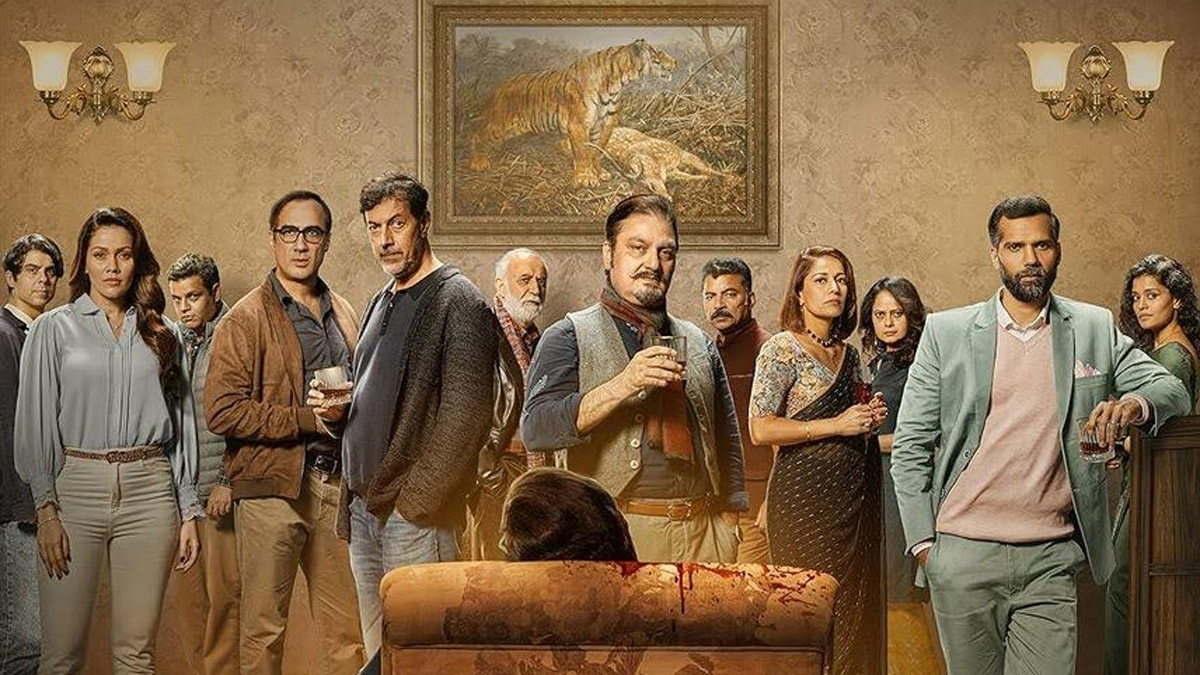
MUMBAI: Zee5 is serving up another killer collaboration and this time, the murder mystery comes with a generous side of dark humour and family dysfunction. The streaming platform has partnered with Applause Entertainment and Mithya Talkies to bring Everybody Loves Sohrab Handa, a fresh, twisted whodunnit written and directed by acclaimed filmmaker and actor Rajat Kapoor. The film will stream exclusively on Hindi Zee5 from 10 April.
The movie reimagines the classic murder mystery genre with a contemporary, darkly comic edge. It revolves around a group of friends and family who smile, drink, and celebrate together until the silence snaps and long-buried secrets spill out. The stellar ensemble cast includes Vinay Pathak, Ranvir Shorey, Waluscha De Sousa, Saurabh Shukla, Chandrachoor Rai, Neil Bhoopalam, Koel Purie, Palomi Ghosh, and Rajat Kapoor himself.
This latest offering continues the successful partnership between Zee5 and Applause Entertainment, which has previously delivered diverse hits such as Mithya, Bloody Brothers, and Jab Khuli Kitaab.
&TV Business Head of hindi Zee5 and chief channel officer Kaveri Das said, “Our collaboration with Applause Entertainment has consistently delivered distinct, high-impact storytelling. Everybody Loves Sohrab Handa is a natural progression, reinforcing our focus on genre-led content with a compelling whodunnit premise and a strong ensemble cast.”
Applause Entertainment business head for movies Sunil Chainani added, “This film adds yet another compelling layer to our slate with Rajat Kapoor’s unmistakable voice.”
Rajat Kapoor shared, “What interested me was not just the mechanics of a whodunnit, but the emotional violence that precedes physical violence. These are people who smile at each other, but there’s so much that is not said.”
The film promises razor-sharp writing, layered performances, and simmering tension, inviting viewers not just to solve the crime but to unravel the complex relationships at its heart.
If you love a good murder mystery served with wit and emotional depth, Everybody Loves Sohrab Handa looks set to be your next addictive watch. Mark your calendars, the whodunnit drops on Hindi Zee5 from 10 April.






