iWorld
Modi most popular, even as negative sentiments grow

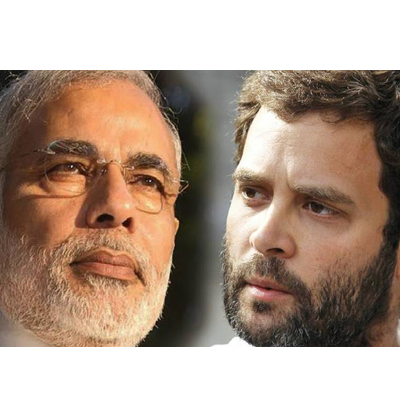
MUMBAI: The eighth phase of the elections just ended and with only one last phase left, the 16th Lok Sabha general elections are turning out to be something that India has not seen in a long time.
The media, especially the social media, has become a major part of these elections. Many even claim that the medium along with television has become a talking point amongst many and has been able to influence.

Social media has become such an important part for news channels that they need to use it to know what people have to say about the various issues cropping up this election – be it Narendra Modi’s road show in Varansi or Priyanka Gandhi entering the battlefield to defend her younger brother, Rahul Gandhi.
Various digital agencies have jumped on this golden opportunity and are trying to read and understand the trend as well as what creates Indians to log on to the virtual world and discuss.
To The New, an integrated digital services network, is one such agency that has launched a comparative study of politicians and top political parties of the two weeks (Week 1: 22 to 28 April; Week 2: 29 April to 5 May).
As per the report, as the elections come to its end the negative sentiments is what is gripping people. The report created on the basis of the analysis of digital conversations across various social platforms such as Twitter, blogs, forums and news sites, says that all the parties saw an increase in negative buzz compared to last week.
AAP topped the chart with highest number of negative mentions. The negative mentions doubled wherein in week 1 there were 33575 negative mentions, in week 2 it went as high as 66245. Congress followed it with an increase of almost 10,000 negative mentions (43793 as compared to last week’s 33824).
Bharatiya Janata Party (BJP) came in third with 45585 negative mentions as compared to previous week’s 38617. BJP’s prime ministerial candidate Narendra Modi’s negative sentiment has shot up drastically in week 2. The sentiments grew more than double for Modi with AAP’s Dr Kumar Vishwas coming second.
What is interesting is the fact that on similar notes, the positive sentiments too were the highest for Modi while AAP’s founder Arvind Kejriwal came second. However, the difference between the two was of many yards. Having said that, the positive sentiments saw a minor negative slide.
A lot of buzz was generated around Congress and AAP, whereas BJP witnessed a drop in this regard in week 2. Also, Modi was yardsticks ahead of others when it came to personalities. He, however, did see a decrease in the buzz around him. From 154,386 mentions it fell to 133,460 for Modi.
Meanwhile, Dr Kumar Vishwas and Rahul Gandhi saw an increase in buzz during week 2. But Arvind Kejriwal came in second amongst the top 10 personalities.
With just a week to go, the talks – good, bad or ugly – are only going to intensify as everyone waits with abated breath to see who will sit on the PM’s seat this time around.





iWorld
Hari Om OTT premieres Bhagwan Jhulelal Sai series
First devotional show on Jhulelal Sai streams in Sindhi and Hindi.
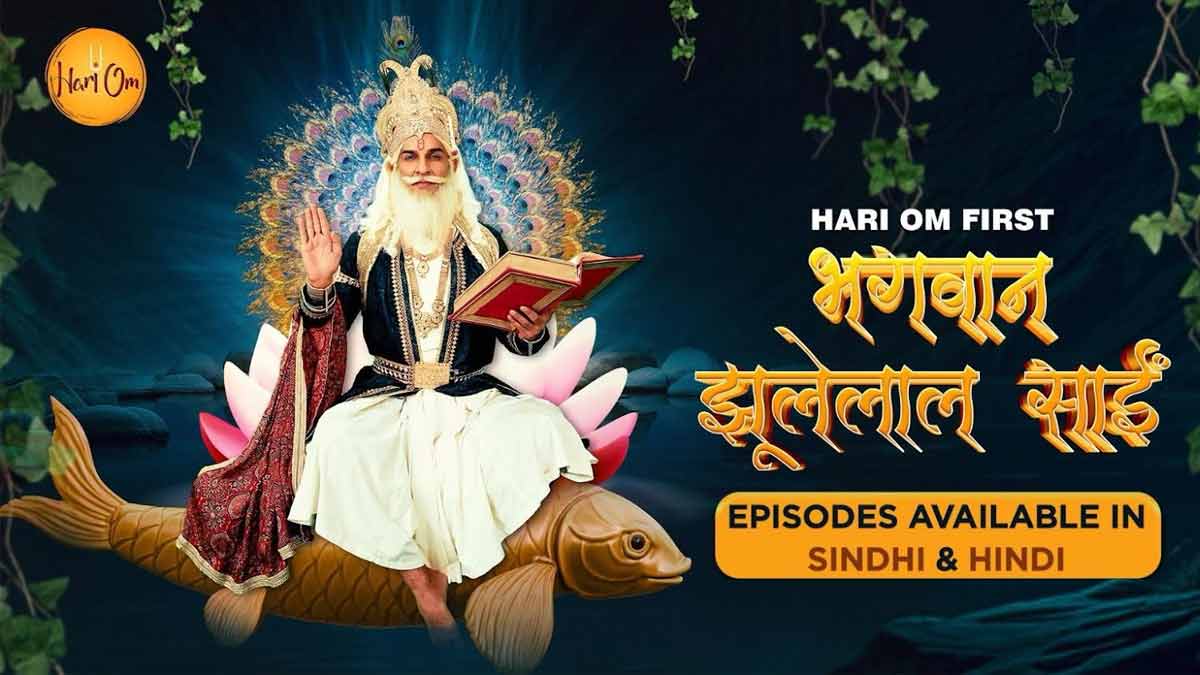
MUMBAI: Hari Om OTT just turned the tide for devotional dramas because when Jhulelal Sai steps onto the small screen, even the waves start streaming in two languages. Hari Om OTT, India’s leading devotional streaming platform launched in June 2024, has premiered Bhagwan Jhulelal Sai, a milestone series that marks the first-ever show dedicated to the revered deity of the Sindhi community. The show, starring Manish Raisinghani as Jhulelal Sai / Varun Dev and Parag Tyagi as Mirkh Shah, launched on Jhulelal Jayanti and is available in both Sindhi and Hindi.
The series chronicles the life, journey and teachings of Bhagwan Jhulelal Sai, blending mythology with historical elements to deliver an authentic and inspiring narrative for global audiences.
Manish Raisinghani said, “Portraying Jhulelal Sai and Varun Dev was not just a role, it was a spiritual journey and a moment of immense pride for my family and community. This one holds a special place in my heart, especially since the show is coming in our very own Sindhi language as well.”
Parag Tyagi added, “Jhulelal Sai is the first-ever show that beautifully blends mythology with history. Hari Om has achieved something truly special by bringing the stories of our gods and goddesses to audiences in their authentic language.”
Hari Om OTT CEO Avinash Dugar said, “With Bhagwan Jhulelal Sai, we’re excited to share this inspiring story with the Sindhi community and beyond. We will continue to showcase the stories of Indian culture and Sanatan Dharma to the world, presented in their own language.”
The premiere builds on Hari Om OTT’s track record of acclaimed devotional titles including Mata Lakshmi, Jai Jagannath, Shri Tirupati Balaji, Mata Saraswati and Chandra Dev, all focused on celebrating India’s cultural and spiritual legacy through high-quality storytelling.
In a streaming landscape crowded with fiction, Hari Om OTT is quietly proving that the most powerful stories aren’t made up, they’re the ones that have already inspired generations, now delivered straight to your screen in the language of devotion. Bhagwan Jhulelal Sai is now streaming on Hari Om OTT.