News Broadcasting
Modi Entertainment close to deal with Taj Sports?


“Everyone is talking to everyone.” That was all Lalit Modi, vice-chairman and president, Modi Entertainment Network, would offer other than a “no comments” when asked about a strong buzz in the industry that MEN was close to signing a deal as the distribution platform for the soon-to-be-launched Taj Entertainment Network (Ten) sports channel.
Ten is being launched by promoter of Sharjah cricket Abdulrahman Bukhatir through his company Taj Sports, and is expected to be unveiled on 6 April, just ahead of the start of the next tri-nation Sharjah cricket tourney. The kick-off date of the tournament involving Pakistan, Sri Lanka and New Zealand is 8 April.
MEN chief executive Rajan Kaaicker was equally noncommittal when asked to respond to industry reports that Ten would be offered as part of the MEN bouquet at an a la carte subscription rate of Rs 8 per month after an initial free trial period. The other channels on the MEN bouquet are DD Sports, Hallmark, FTV and MCM (the last two are French fashion and music channels respectively).

According to industry sources, there are three possible bouquets that Ten could hop aboard – MEN, Zee and Sony Entertainment. At this point MEN appears to have the best chance of signing the deal, the industry buzz goes.
This is quite a turnaround from what Bukhatir had late last year been quoted as saying that while he was negotiating with different bouquets for distribution and marketing, Zee was the preferred partner.
At this point it looks as if MEN is promising a larger subscriber number delivery than what Zee can guarantee because of the DD Sports reach. This appears to be the reason that the pendulum is swinging more MEN’s way.
Sony Entertainment cannot be ruled out of the equation either, especially after it bagged the India broadcast rights for International Cricket Council-promoted events for the next six years.
One network Bukhatir has ruled out though is the Murdoch-led Star TV because of the ESPN Star Sports connection. There is just too much overlap between the two in the kind of fare on offer.
Ten is expected to launch with a footprint spanning Australia to England. Taj Sports CEO Chris McDonald, earlier with ESPN Star Sports as senior V-P, advertising and integrated sales, was down in Mumbai recently with his full team looking into distribution and marketing issues, sources aver.
There is more to Ten than just cricket though. While cricket will dominate, it will also have wrestling, tennis, football and rugby. The company has rights for NBA and WWF events, Bukhatir has been quoted as saying.
Aside from Sharjah rights, Taj reportedly also has Sri Lanka cricket rights which was earlier with WSG Nimbus.




News Broadcasting
CNN-News18 to host Fury in the Gulf conclave on West Asia crisis
Three-hour summit to unpack geopolitical fallout and impact on India
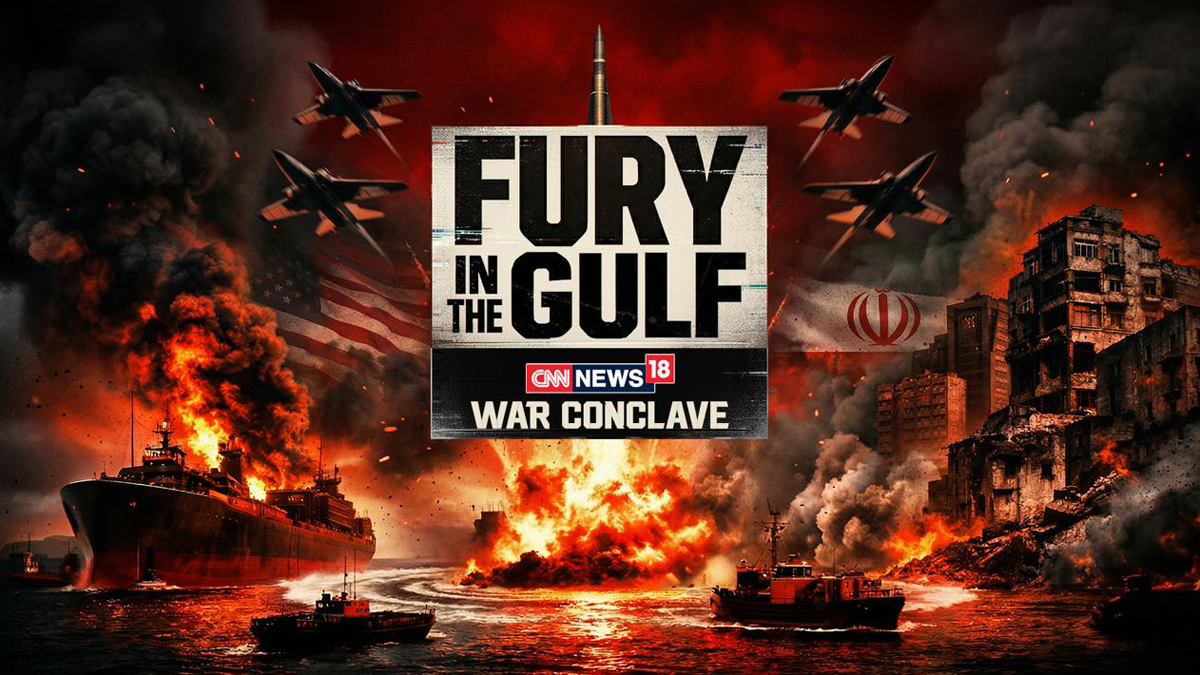
MUMBAI: CNN-News18 is set to host a special three-hour broadcast, Fury in the Gulf – War Conclave, on April 7, aiming to decode the escalating West Asia crisis and its far-reaching implications for India.
Scheduled from 4:00 PM to 7:00 PM, the conclave comes at a time when tensions between Iran and the United States are reshaping global geopolitics and triggering economic uncertainty. With India’s deep energy ties, trade links and large diaspora in the Gulf, the developments carry significant domestic relevance.
Built around the theme ‘Conflict, Consequences, and The Future,’ the programme will feature six curated sessions combining one-on-one interviews and panel discussions. The focus is to cut through the clutter and offer viewers a clearer understanding of the fast-evolving situation.
Key sessions include ‘Diplomacy in Times of War’ featuring Shashi Tharoor, and ‘World After the Iran Conflict’ with voices such as Ram Madhav, Reuven Azar, representatives from the European Union and the Iranian Deputy Envoy. Another session titled ‘Another Dunkirk?’ will bring together K. J. S. Dhillon and Jitin Prasada among others.
CNN-News18 editorial affairs director Rahul Shivshankar said, “In times of war, clarity becomes the most powerful tool. Fury in the Gulf – War Conclave brings together credible voices to address the questions and confusion that arise amid an overwhelming influx of information.”
He added that the initiative is aimed at delivering “facts, perspective, and insight” at a time when misinformation can easily cloud public understanding.
Echoing the sentiment, CNN-News18 CEO– English and business news Smriti Mehra said the conflict marks a defining global moment, with consequences that extend well beyond the region. She noted that the conclave seeks to present the crisis with “depth, nuance and responsibility” so audiences can better grasp its real-world impact.
As geopolitical tensions continue to dominate headlines, the conclave positions itself as an attempt to bring order to the noise, offering viewers a structured, insight-led look at a complex and rapidly shifting global situation.






