Gaming
Mobile games are the next big advertising frontier: GreedyGame’s Arpit Jain


NEW DELHI: Digital entertainment formats have become hugely popular across India, with the Covid2019 pandemic further accelerating the shift to online modes of pleasurable pastime. One of the prime beneficiaries has been the mobile gaming ecosystem. It is already amongst the top five globally and as per Statista, will be worth about $2.4 billion in 2020, up from $600 million in 2017. However, despite the marvellous growth it has been witnessing, there is still a lot of grey-space to be filled when it comes to advertising revenues. That’s where GreedyGame comes into the picture. Headquartered in Bengaluru, GreedyGame is a mobile-first native ads platform that helps app and game publishers monetise better and help acquire genuine users globally.
Founded by IIT Ropar alumnus Arpit Jain in October 2013, GreedyGame is solving the fundamental problem for mobile publishers and advertisers – how to run ads without disrupting the user experience.
With the backing of renowned investor institutions such as Times Internet and angel investors including Ankit Nagori from Curefit, Sujeet Kumar from Udaan, Ravi Garikipati from Davinta, Anuj Choudhary from Aalgro, etc, GreedyGame has been growing 100 per cent YoY since its inception in 2013, and has reportedly clocked more than 4X in this FY. It is currently helping more than 200 app/game publishers to monetise higher and acquire quality users across the globe, including Dream11.

Jain tells Indiantelevision.com, “We started GreedyGame with a mission to empower mobile developers to develop world-changing apps and build the most engaging games without constantly worrying about revenue. Hence, we created an end-to-end implementation, mediation and optimisation platform for ads.”
With its unique software development kit (SDK), GreedyGame enables app developers to run native ad units customised for their app experiences. It also helps app and game publishers increase their users globally by helping them with the right user acquisition strategies and optimising their campaigns on multiple mediums including Google and Facebook ads.
“Our strategy is simple, to first study the app in order to understand better and come up with an app-specific monetisation strategy. GreedyGame SDK, which is enabled with the ‘smart refresh’ feature, picks the best model for app monetisation customising to the developer’s needs. Our AI-enabled recommendation of dynamic ad unit templates also helps publishers of all sizes to implement native ads effortlessly. The cross-format support enables developers to try a variety of ad formats like banner, interstitial and native in single ad space and modify the ad format as they like. We help publishers implement native ads in their apps in a hassle-free manner, making sure that their revenues are optimised, without any policy violations, and also keeping the users happy,” he elaborates.
GreedyGame also has a dedicated team of marketers who run Google, Facebook, and other media campaigns for app publishers. “Currently, we are managing 50+ publishers Google Ad accounts. We are able to generate approximately three million+ installs at an optimum CPI,” he adds.
Jain notes that the Covid2019 pandemic has further created a flourishing environment for online and mobile gaming ecosystem and that has pushed more and more brands to utilise the space for advertising.
“Online gaming, primarily on mobile devices, has become massively popular in India. 50 per cent of mobile app users play games, second only to social media and communications apps in terms of time spent. During the months of lockdown, people spent significantly more time on their phones and there was a surge in the downloads of popular games such as Ludo King, PUBG, etc. If we look at the data, taking an example of IPL-related gaming apps, 88 per cent of audience profiles were playing on these apps during the recent IPL season. So, when the user base is that huge it definitely is something that lures the advertisers. Brands have started working on independent budgets for capturing gaming users and big brands like Oppo, Flipkart, Amazon are increasingly opting for mobile advertising considering the reach,” he shares.
Jain illustrates this with an example: streaming giant Netflix recently claimed that Fortnite, a popular multiplayer shooter game, is a bigger competitor than rival streaming platforms like HBO in the US. “Big brands like Cadbury, Tesco, Heineken, Flipkart, Amazon etc believe that it is easy and the ROI in gaming ads is higher. Brands like Unilever, Coca-Cola, and Ford invest heavily in mobile gaming, and many of the early-adopting brands look at mobile gaming as the new social media in terms of the opportunity to engage with consumers at scale. Molson Coors is another example of a brand advertiser that has been ramping its media investment in gaming and e-sports for many of its most popular brands like Miller Lite and Coors Lite.”
Today, ads are a major source of revenue for game publishers as only 0.25 per cent of total users pay for IAPs (In-App Purchases) in India, remarks Jain. “Rewarded ads are the biggest ad revenue-generating format in games. India is among the lowest eCPM (effective cost per thousand impressions) countries in the world, so LTVs are very low. Hence, the user base needs to be high to make sustainable revenues from ads and games need to generate organic traffic. Most successful games are localised – for example Ludo, cricket, card games etc – which is why they get organic traffic and are able to generate sustainable revenues.”
He believes that there await a plethora of opportunities in the in-game advertising industry and he is willing to capitalise on that, helping the publishers and advertisers alike to generate maximum ROI.
“GreedyGame intends to work with app/game publishers who are making money via ads and maximise their revenue through our SDK. Our plan is to become the market leader in the genre of mobile-first advertising through native ad formats. We aim to work with 1000+ publishers by the end of next year,” he signs off.




Gaming
Konami concludes successful eFootball India campaign
Campaign featuring Rinku Singh, Varun Chakravarthy and other stars boosts engagement ahead of FIFA World Cup 2026.
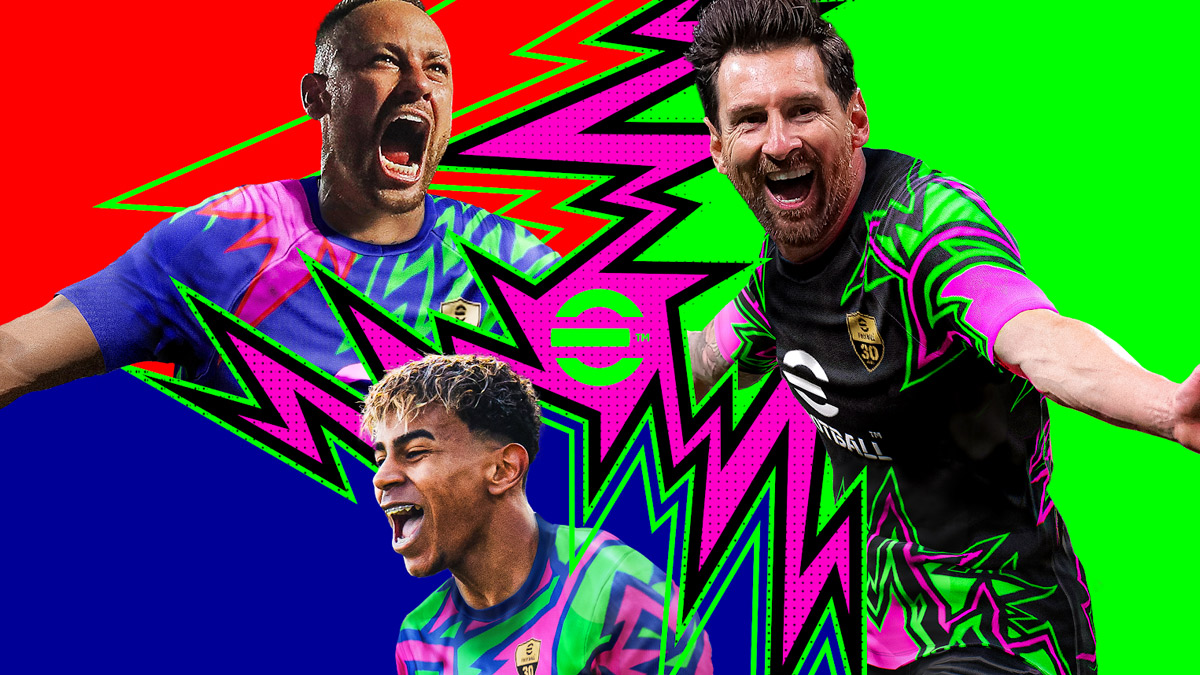
MUMBAI: When cricket meets football in the virtual world, even the biggest fans can’t help but score and Konami’s latest eFootball campaign in India has clearly hit the back of the net. Konami Digital Entertainment has successfully wrapped up its India campaign for eFootball, which brought together cricketers Rinku Singh and Varun Chakravarthy, actors Naslen Gafoor and Chandu Salim Kumar, and footballers Sahal Abdul Samad and Shubhasish Bose. The multi-star campaign generated strong excitement across gaming, football, and creator communities through social content, fan participation, and in-game engagement.
Building on the initial launch that featured a limited-time Lionel Messi card, the campaign united fan communities, lifestyle creators, football creators, and competitive eFootball influencers. It significantly expanded the game’s visibility and deepened engagement with fans across the country.
The campaign also saw thousands of entries submitted as part of its social media engagement challenge, reflecting high levels of community enthusiasm and active creator involvement.
Looking ahead, Konami plans to build on this momentum with more eFootball experiences for Indian fans as the FIFA World Cup 2026 approaches. With global attention on the tournament set to rise, India will remain a key market for deepening community engagement and bringing fans closer to the action.
In a country that lives and breathes sport, Konami has shown that mixing real-world stars with virtual thrills is a winning formula leaving fans eagerly waiting for the next goal.






