I&B Ministry
MIB yet to finalise new DTH policy; interim extensions granted

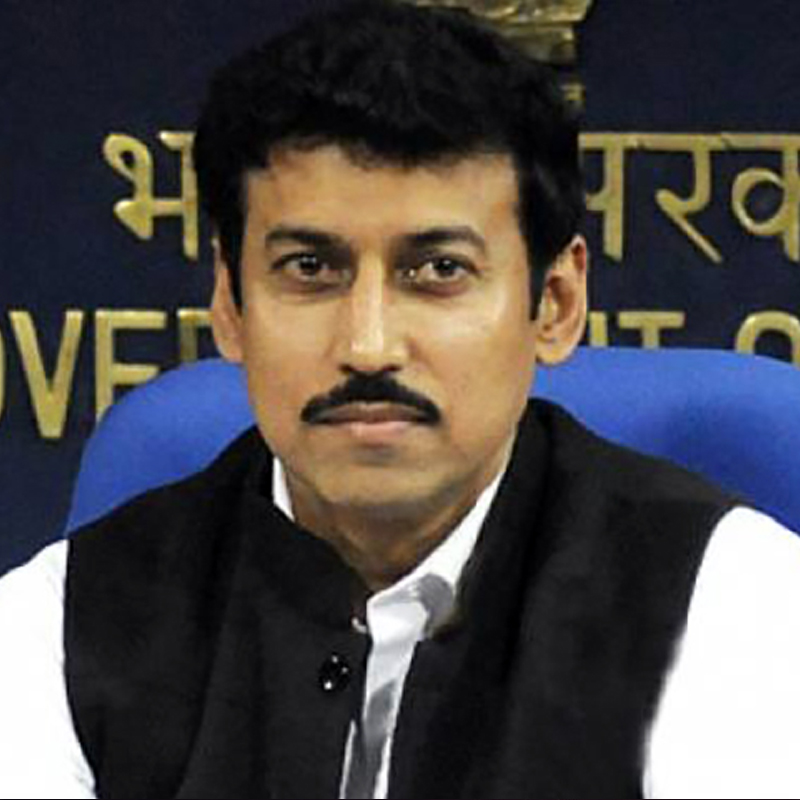
MUMBAI: Direct-to-home (DTH) operators of India will have to wait a while if they were expecting something from the Ministry of Information and Broadcasting (MIB) regarding new DTH policy guidelines. In response to a question in the Parliament, Minister of State for MIB Rajyavardhan Rathore said that the government hasn’t yet finalised the new DTH policy.
Rathore also added that the licenses of those DTH operators whose interim renewals were getting expired on 31 December 2018 have already been granted interim extension up to 30 June 2019.
Last year TRAI had reiterated its recommendations to the Ministry on new licensing conditions for DTH players. The regulatory body had recommended that licences be issued for a period of 20 years and thereafter should be renewed every 10 years.

Earlier it was reported that MIB was looking to send the new DTH policy for Cabinet approval by the end of 2018.
The decades old DTH policy is being updated keeping the present scenario in mind, including fast changing technology and a slowing economy. Last month, MIB Secretary Amit Khare said that some sops would be handed to the DTH operators. However, he refused to comment on whether those sops would include financial rationalisation too like slashing of the annual revenue sharing with the government that is calculated at the rate of 10 per cent.
In the past, the DTH industry has demanded, among other things, cut in annual revenue share percentage to 6-8 per cent and other financial adjustments (like removal of content acquisition cost and an adjusted gross revenue) while calculating gross revenues.
Jawahar Goel, managing director of India’s biggest DTH operator (in terms of subscribers) Dish TV had written to policy-makers in October highlighting once again the industry’s woes and pleading for rationalisation of costs and taxes.




I&B Ministry
MeitY proposes tighter rules for digital platforms and intermediaries
Fresh amendments aim to formalise government directions and expand content oversight.

MUMBAI: When the rulebook gets an upgrade, even the internet might need to sit up and pay attention because India’s digital regulators are clearly not scrolling idly. India’s technology regulators have proposed a fresh set of amendments to the country’s digital media and intermediary liability framework, seeking to expand oversight of online content and formalise the government’s authority to issue binding directions to platforms.
In a notice issued on 30 March, the Ministry of Electronics and Information Technology (MeitY) invited public comments on changes to the Information Technology (Intermediary Guidelines and Digital Media Ethics Code) Rules, 2021. The revisions are described as “clarificatory and procedural” but are clearly aimed at strengthening compliance and enforcement.
At the heart of the proposal is a significant shift in how intermediaries, including social media platforms, respond to government advisories. A newly inserted provision would make compliance with official “clarifications, advisories, directions, standard operating procedures and guidelines” a formal part of the due diligence obligations required for platforms to retain legal immunity under Section 79 of the Information Technology Act. This change effectively elevates government communications from guidance to enforceable obligations, tightening the regulatory loop between the state and digital platforms.
The amendments also expand the scope of content oversight under Part III of the rules, which governs digital media ethics. The proposed revisions clarify that the code will apply not only to publishers but also to intermediaries hosting news and current affairs content uploaded by users. This could bring user-generated news content more directly within the ambit of regulatory scrutiny, a move likely to raise questions about platform liability and editorial responsibility.
Further, the government has proposed broadening the mandate of the Inter-Departmental Committee, a key oversight body. The committee would no longer be limited to adjudicating complaints but could also take up matters referred directly by the ministry. This shift signals a more proactive regulatory posture, allowing authorities to initiate reviews without waiting for formal grievances.
The draft builds on an already expansive framework. The existing IT Rules impose detailed due diligence requirements on intermediaries, including obligations to remove unlawful content within tight timelines, maintain grievance redressal systems, and ensure traceability in certain cases. Recent amendments have also introduced provisions addressing synthetically generated content, requiring platforms to label such material and deploy technical measures to prevent misuse.
Officials framed the latest proposals as necessary to ensure an “Open, Safe, Trusted and Accountable Internet,” while improving “legal certainty” and the enforceability of regulatory directions.
Stakeholders have been invited to submit feedback by 14 April, setting the stage for what could become another consequential evolution in India’s digital governance regime.
In the fast-moving world of online content, these tweaks suggest the government is keen to keep the guardrails firmly in place – because when the internet grows wilder, even regulators feel the need to hit refresh on the rulebook.