I&B Ministry
MIB will give greater operational flexibility to Films Division: Arora

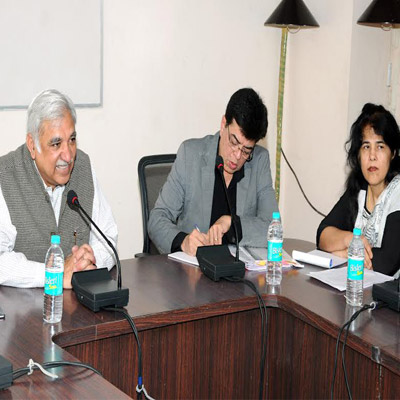
NEW DELHI: Ministry of Information and Broadcasting (MIB) Secretary Sunil Arora has urged the Directors in the Films Division to prepare a concept note on steps to be taken to promote quality documentary and short film making.
In a review meeting of the Division ahead of the 14th Mumbai International Film Festival in the western metropolis, he also stressed on the need for the Films Division to improve its distribution and reach.

Recalling the rich heritage and experience in filmmaking of the Films Division, he said, “The creative output of the media unit should be reinvigorated and sustained.“
Calling for greater cooperation in creative pursuits, Arora said, “People should not work in silos, creative organisations grow only when ideas and information sharing is as free as possible.“
The 14th Mumbai International Film Festival is to be held in the city from 28 January to 3 February.
Arora also asked Director General Mukesh Sharma to explore possibilities of utilising the social media platform. Stating that content is king, Arora promised that the Ministry would look into issues of granting operational flexibility.
The Films Division was set up in 1948, primarily to produce documentaries and news magazines focusing on cultural and development issues. Besides producing films in house, the Films Division also commissions documentaries and short films from outside producers. Sixty-six such short films and documentaries are now in various stages of production.
The Films Division also organises the biennial Mumbai International Film Festival for Documentaries, Animation & Short Films.
The 2016 edition of MIFF will feature 30 films in the international competition section and 27 films in the national competition section, besides 32 films in the New Media Competition.




I&B Ministry
Devinder Kumar appointed Prasar Bharati chief vigilance officer
Senior IOFS officer to serve three-year term with Level-13 pay scale
MUMBAI: The Centre has appointed Devinder Kumar as the chief vigilance officer of Prasar Bharati, formalising a key oversight role within India’s public broadcasting network.
The appointment was cleared through an official order issued by the Department of Personnel and Training under the Ministry of Information and Broadcasting. Kumar, a senior Indian Ordnance Factory Service officer, will initially serve a tenure of three years or until further government orders, whichever comes earlier.
As chief vigilance officer, Kumar will be responsible for overseeing vigilance and compliance functions within Prasar Bharati, ensuring transparency and accountability across the organisation’s operations.
The role carries a Level-13 pay scale under the central government structure, translating to a salary range between Rs 1,23,100 and Rs 2,15,900. The compensation aligns the position with other senior administrative roles across government departments.
Kumar’s appointment follows due process, including a recommendation from the Central Vigilance Commission, which vets candidates for such critical oversight positions.
Currently serving under the Department of Defence Production, Kumar has been directed to be relieved of his existing duties with immediate effect to assume his new role.
The move comes as Prasar Bharati continues to strengthen its governance framework, with the CVO position playing a central role in maintaining institutional integrity. Kumar’s appointment is expected to bolster internal oversight at a time when accountability remains firmly in focus across public sector organisations.







