I&B Ministry
MIB: No DPO request for infra sharing, DTH ops’ transponder demand up

NEW DELHI: Though there is a committed demand from DTH service providers for 68 more satellite transponders, Ministry of Information and Broadcasting (MIB) hasn’t yet received any proposal from any players to share amongst themselves satellite capacity or other distribution infrastructure.
MIB minister M Venkaiah Naidu yesterday informed Parliament that DTH operators were presently using 104 Ku-band transponders, while there were additional needs as, according to Department of Space, demand for transponder capacity for DTH services has gone up with increase in introduction of high definition (HD) TV channels.
The growth of usage of satellite transponders by DTH service providers in India, as listed out by MIB, over the last five years is as follows: March 2013 — 76; March 2014 — 77; March 2015 — 78; March 2016 — 87 March 2017 — 104.

The Minister, acknowledging that sector regulator TRAI had given a set of recommendations on sharing of broadcasting infrastructure amongst players on a voluntary basis by tweaking certain rules, added that his ministry had not received any proposal from platform operators for sharing of satellite transponders and/or earth station facilities.
The Telecom Regulatory Authority of India issued recommendations on sharing of infrastructure in television broadcasting distribution sector on 29 March 2017. These recommendations are available on TRAI’s website www.trai.gov.in.
The objectives of these recommendations are to enable a policy environment for facilitating sharing of infrastructure in TV broadcasting distribution sector, on a voluntary basis. The sharing of the infrastructure is expected to enhance available distribution network capacities leading to reduction in capital and operative expenditure for the service providers, thereby bringing down the price of broadcasting services to subscribers.
In addition, it would lower the entry barriers for new service providers and provide more space on broadcasting distribution networks for niche channels.
India’s six private-sector DTH operators uplink signals of TV channels to different Indian and foreign satellites located at different orbital slots. Majority of the channels transmitted by operators are replicated across multiple platforms. This creates capacity constraints and also is a significant cost for each operator, thus making the service expensive, TRAI had observed while pushing for infrastructure sharing amongst distribution platforms.
Hong Kong-based media industry advocacy group CASBAA in a report, issued in March 2016, had pointed that the DTH sector in India would grow in coming years as would demand for KU-band transponders and, while ISRO has been doing a commendable job, it’s unlikely to meet the market demands on Indian satellites, which will have to be provided for on foreign satellites.
In the report, titled `Capacity crunch continues: Assessment of satellite transponders’ capacity for the Indian broadcast and broadband market’, CASBAA, amongst other things, had observed that to keep the vibrancy in the Indian broadcast sector alive, foreign transponder contracts need to be of longer durations (10–15 years) to allow Indian companies to leverage on cost economics and provide cost protection to DTH operators and allowing direct contracting for DTH operators to secure incremental capacity with existing satellite providers already authorized (by ITU and ISRO) to provide them service.





I&B Ministry
India tightens anti-piracy law, blocks sites and Telegram channels
New rules bring jail terms, fines and faster takedowns of illegal content
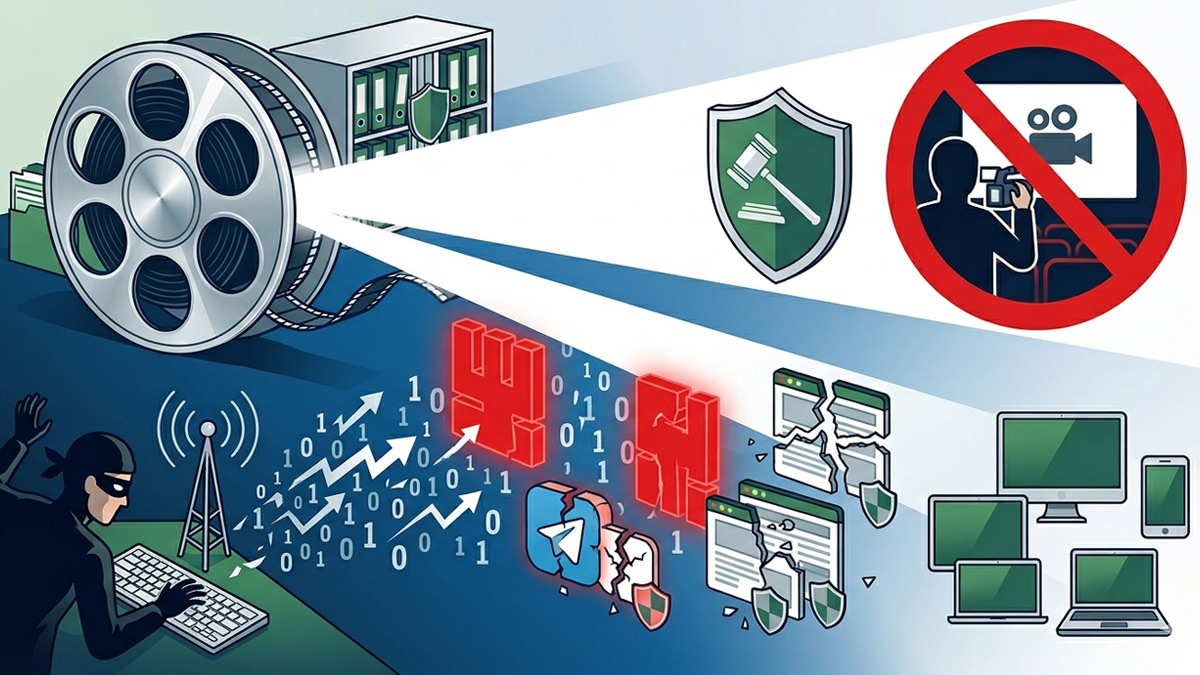
NEW DELHI: The Government of India has stepped up its fight against film piracy, invoking stricter provisions under the Cinematograph Amendment Act 2023 to crack down on unauthorised recording and distribution.
The law now imposes tougher penalties, including jail terms ranging from three months to three years and fines starting at Rs. 3 lakh, which can go up to 5 per cent of a film’s production cost. The provisions target both illegal recording in cinemas and unauthorised online transmission.
In a fresh enforcement push, authorities have notified the Telegram platform to act against piracy, leading to the identification of 3,142 channels allegedly distributing copyrighted content without permission. In parallel, access to around 800 piracy websites has been blocked through internet service providers.
The action has been taken under the Information Technology Act 2000, which empowers the government to direct intermediaries to remove unlawful content. The framework is further reinforced by the Information Technology Rules 2021, requiring platforms to act swiftly when notified of violations.
An institutional mechanism is also in place, allowing copyright holders and authorised representatives to file complaints through designated nodal officers. Once verified, these complaints trigger takedown notices to intermediaries for disabling access to infringing content.
The update was shared in Parliament by Government of India minister of state information and broadcasting l murugan in response to a query from Parimal Nathwani.
The government’s latest move signals a sharper, more coordinated approach to tackling piracy across both physical and digital channels. For the film industry, it is a step towards protecting revenues, while for viewers, it reinforces the shift towards legitimate content consumption.








