iWorld
Meet Tooter, the ‘swadeshi’ alternative to Twitter

NEW DELHI: As the ‘Vocal for Local’ initiative putters on and gathers steam, some enterprising individuals have seized the chance to create a swadeshi alternative to Twitter, one of the most popular microblogging platforms in India. Named Tooter (sound familiar?), the social network calls itself the “Swadeshi Andolan 2.0.” In look and feel, it appears to be modelled after Twitter and follows the same mechanics as its source of inspiration.
Just like one shoots off tweets on Twitter, users of Tooter can post ‘toots’. Users have a profile, can make lists, scroll down a news feed, follow people, and be followed back. Even the colour palette and app icon – a blue conch shell – bear a striking resemblance to Jack Dorsey’s brainchild.
In its Terms of Service, Tooter stresses that it has been created for 'free speech'. The platform declared it will make the best efforts to ensure that all content moderation decisions and enforcement of terms of service "does not punish users for exercising their god-given right to speak freely."

Tooter can be used on web browsers, and it has an Android app on the Google Play store, but is missing from the App Store for iOS devices as of now.
What's more, Tooter is already home to a number of high-profile faces. Prime minister Narendra Modi is already there with a verified account; home minister Amit Shah, Amitabh Bachchan, Virat Kohli, Sadhguru, and the Bharatiya Janata Party are also on the platform. It seems the site has been live since July 2020, but it’s only recently that Tooter went viral on Twitter, the social network it’s hoping to give a run for its money.
So it should come as no surprise that Tooter’s sudden popularity has catalysed Twitterati to do what they’re the best at – making memes. Some pointed out, tongue-in-cheek, the uncanny similarities between Twitter and Tooter…
Twitter Tooter pic.twitter.com/0QT0DFxsyU
— RebeLLiouS™️ (@flawsome_guy) November 24, 2020
Twitter Tooter pic.twitter.com/6uZTGHgUdU
— Saniya Sayed (@Ssaniya_) November 24, 2020
Twitter Tooter pic.twitter.com/Zc3I7Wmuhv
— Rabiya (@PhunnyRabia) November 24, 2020
Twitter Tooter pic.twitter.com/hq0xU8NkBd
— Memewala (@Memewala25) November 24, 2020
Final Meme on #Tooter vs #Twitter pic.twitter.com/d1WkWfRpMu
— Veer Sorry Worker (@VeeryaSorry) November 24, 2020
…Others wondered if certain noisy elements will leave the US-based platform in favour of the Swadeshi alternative:
Does it mean all Bhakts will shift to #Tooter and make #Twitter free of all its negativity and toxicity??
Yay
— Atul Khatri (@one_by_two) November 25, 2020
Can all Sanghis switch to this swadeshi echo chamber called Tooter please?
I want to see people making provocative jokes again without getting an FIR filed against them. https://t.co/Ap1e8SKXOB
— Meghnad (@Memeghnad) November 24, 2020
Though it’s perhaps this person who summed it up best:
We're Indians.
We copy TikTok. And call it TakaTak.
We copy PUBG. And call it FAU-G.
We copy Twitter. And call it Tooter.
And then we laugh at China for being copycats.— PuNsTeR™ (@Pun_Starr) November 24, 2020
While it will be interesting to see whether Tooter makes it in the long run, or fizzles out like Kimboh, the desi counterpart to WhatsApp, for the moment it has succeeded in creating a buzz.





e-commerce
Instamart gold dig event at Hussain Sagar goes viral
Hyderabad activation ties to gold price lock offer ahead of Akshaya Tritiya
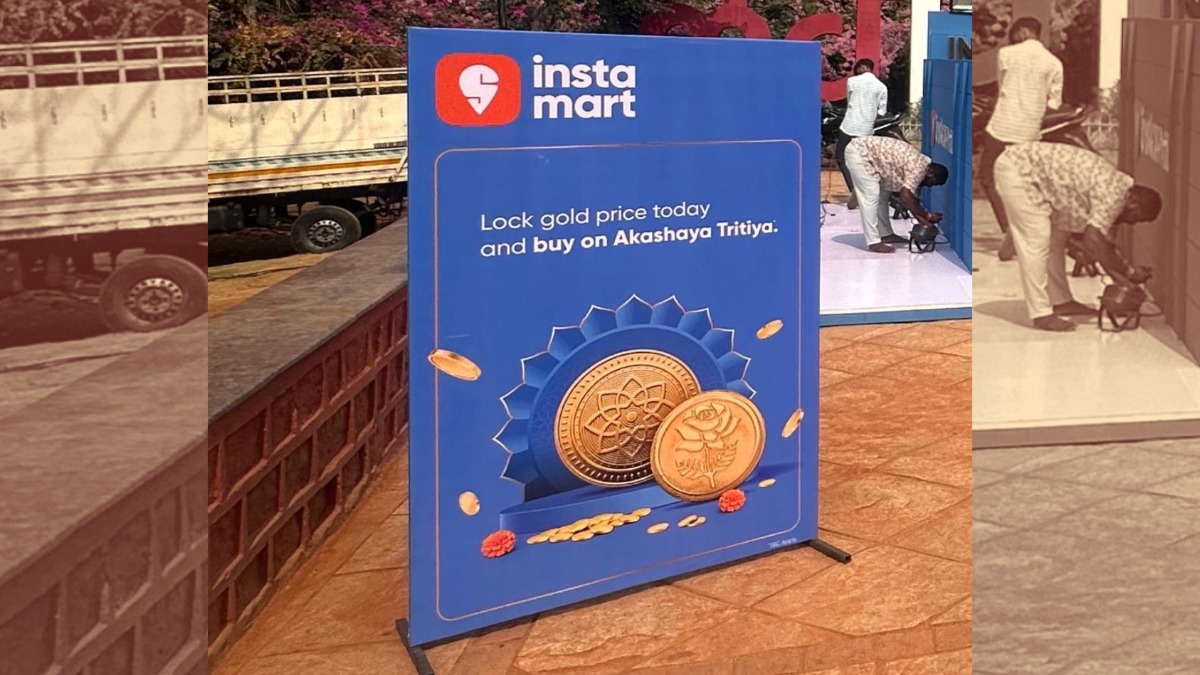
MUMBAI: All that glitters isn’t just gold, it’s also great marketing. A quirky on-ground activation by Instamart at Hussain Sagar Lake has turned into a viral spectacle, with videos of people digging for gold coins flooding social media feeds this week. The campaign, executed in collaboration with Moms, transformed a patch of the city’s iconic lakefront into what online users quickly dubbed a “mini gold rush”. Armed with spades, participants dug through a mud-filled pit in search of hidden gold coins, an activity that drew crowds, cameras and plenty of commentary online, ranging from amused disbelief to outright fascination.
At the heart of the frenzy was a promotional push for Instamart’s ‘Gold Price Lock’ feature, which allows users to secure prevailing gold rates between April 10 and April 16 and complete their purchase later during Akshaya Tritiya, a period traditionally associated with high gold buying. The mechanic cleverly blended physical participation with digital conversion, turning curiosity into a potential transaction.
Branded as ‘Gold Diggers’, the activation leaned into gamified engagement. Those who struck lucky walked away with coins, those who didn’t were nudged with a simple message: lock the price now, buy later. The result was a steady stream of footfall and a surge in user-generated content, as onlookers and participants alike documented the spectacle.
The timing is significant. India remains one of the world’s largest consumers of gold, with demand peaking around Akshaya Tritiya. Data from the World Gold Council suggests the festival alone accounts for roughly 25–30 tonnes of gold purchases annually, making it a high-stakes window for brands looking to tap into consumer sentiment.
As the ‘Gold Price Lock’ feature remains live until April 16, the campaign has already done its job turning a simple product feature into a citywide moment. Because sometimes, the quickest way to get people talking about gold isn’t to sell it, it’s to make them dig for it.