iWorld
Media maverick Uday Shankar on risk, AI and reinvention

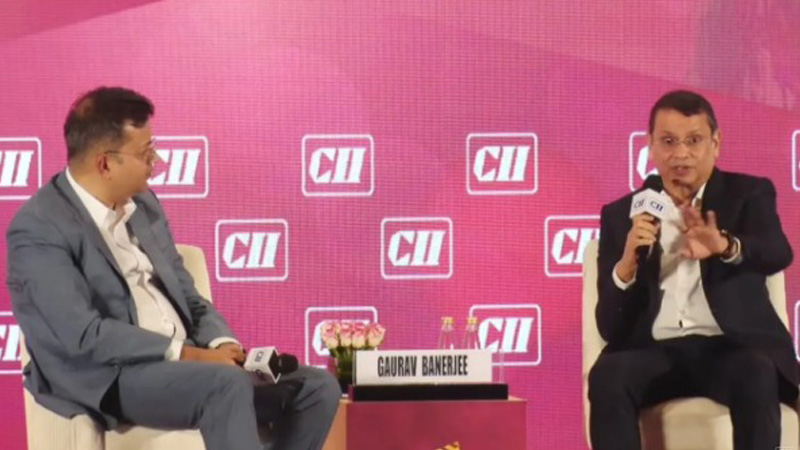
MUMBAI: Twenty-five years ago, Uday Shankar was planning a 24-hour Hindi news channel that didn’t exist anywhere in the world. Ten years ago, as Star TV’s CEO, he bet big on streaming when data cost over 50 rupees per gigabyte and WiFi was virtually non-existent. Today, he’s got his sights set on artificial intelligence.
Speaking candidly at the CII Big Picture Summit 2025, the media veteran who transformed Indian entertainment shared what drives his legendary risk appetite and how he’s built some of India’s most successful content businesses.
“I’ve always believed that skills are not important,” Shankar declared, catching many off guard. “I’m a huge believer in developing the skill to acquire skills. Skills have finite lifespans.”

The liberal arts student turned political journalist has never been trained for anything he eventually mastered. From television to entertainment, sports, streaming and profit-and-loss statements, Shankar admits he wasn’t prepared for any of it. His secret? Learning how to learn and surrounding himself with the best people.
When his CFO once suggested he should study financial dashboards more closely, Shankar’s response was characteristic: “Even if I try, maybe in one year’s time I’ll be a third-class student of the dashboard. But I believe you are the first-class student. You better read it and make sure I don’t miss out on anything.”
His hiring philosophy rejects cookie-cutter approaches. “I don’t need someone who has 85 per cent in all ten subjects. Give me a person who has 100 per cent in one subject and maybe has failed in every other subject. Then I know that for this particular subject, this is the best person I can find.”
He compares his method to how cricket coaches build teams, specifying exactly what they need rather than asking for generic talent. The result? Teams of rockstars who excel in specific areas. “They’re difficult people,” he admits. “But they elevate the quality of discussion.”
His track record speaks volumes. From Aaj Tak’s 24-hour coverage to creating Hotstar years before Disney Plus, to producing the groundbreaking Satyamev Jayate, Shankar has consistently disrupted the status quo.
The Satyamev Jayate story is particularly telling. Star Plus was thriving when Shankar decided to shake things up. “There is an innate restlessness in me. If everything is working fine, I get very restless and tinker around with it.”
The show broke every rule. Instead of prime-time slots, it aired Sunday mornings. It wasn’t candyfloss entertainment but intense social documentary. And it commanded ad rates more expensive than IPL. “All my successes have come from this commitment to disrupt status quo,” Shankar reflected.
Failures? He’s had plenty. His first big show, Panchvi Pass, bombed spectacularly. Convinced he might have to buy his own return ticket after presenting it to Rupert Murdoch, Shankar was surprised when nobody mentioned it. Unable to bear the tension, he brought it up himself. Murdoch’s response? “That’s the nature of the beast. Don’t allow it to haunt you. Go and do the next experiment.”
His optimism about the industry remains undimmed, though he challenges how it defines itself. People consume more content than ever, he notes. The problem is self-imposed limitation. “We’ve got obsessed around distribution and formats. The whole world is making billions with small-size content and we’re saying no, we’re premium.”
But what keeps him restless now? “I’m feeling incredibly excited about what AI can do. We’ve been limited by talent, production capacity and money. Now if there’s technology that makes all this more accessible, it’s a liberating force.”
The possibilities thrill him. Even actors shouldn’t fear the technology, he argues. “An actor could do only one show at a time. Now you can do six shows simultaneously.”
For Shankar, the choice is stark: “You either swim or you try to hold on to the ground and get swept away. There is no third option.”
Drawing from advice his first editor gave him, Shankar concluded: “Treat every day as the last day of your life. I don’t think too much about successes and failures. I think about doing something that’s not been done before. And I think there’s a lot of power in that.”




iWorld
Crocs India ropes in Rakesh Bedi for quirky new digital campaign
Veteran actor brings humour and nostalgia to brand’s latest ‘Crocshake’ film.
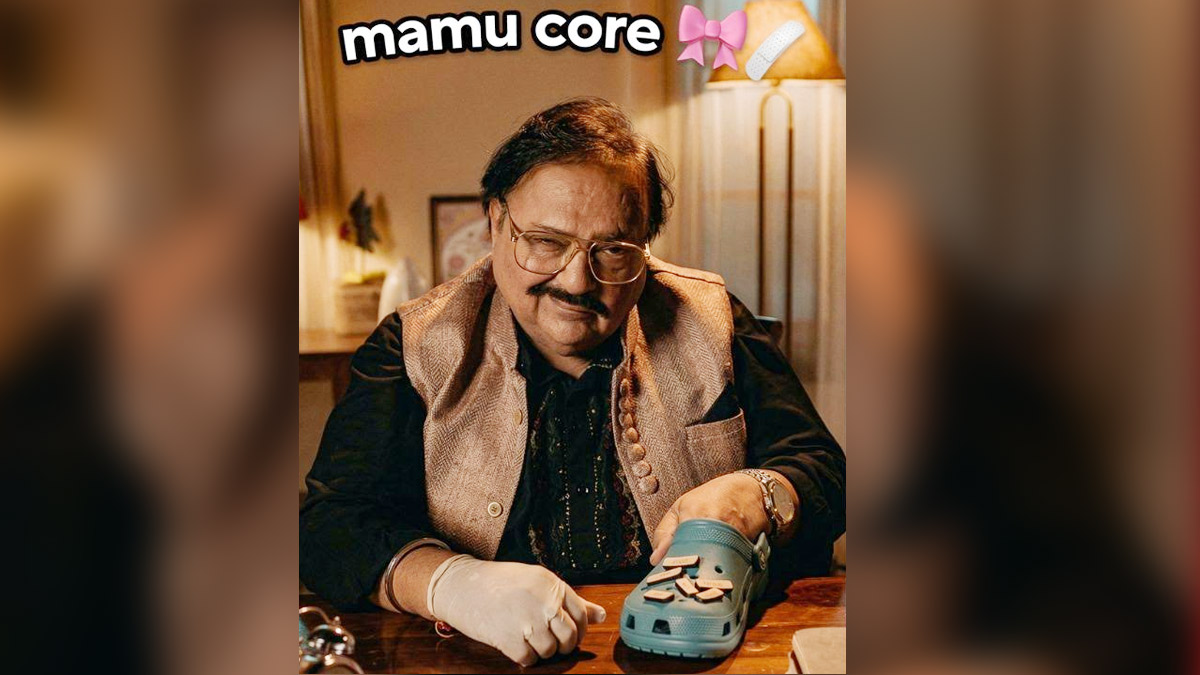
MUMBAI: Crocs has decided to shake things up quite literally by teaming up with veteran actor Rakesh Bedi for its latest digital campaign. The campaign, conceptualised by One Hand Clap, cleverly taps into the current wave of nostalgia and character-led content. It features Rakesh Bedi, who is currently enjoying renewed popularity after Dhurandhar, in a series of increasingly chaotic yet humorous everyday situations.
At the centre of the film is a simple handshake that spirals into a chain of unexpected twists, culminating in the fun “Crocshake.” The light-hearted narrative highlights how ordinary social moments can turn into memorable ones, perfectly aligning with Crocs’ brand ethos of individuality, comfort, and self-expression.
Crocs India country manager Manoj Juneja said the campaign reflects the brand’s desire to stay culturally relevant. “This collaboration with Rakesh Bedi blends humour, nostalgia, and contemporary trends to create content that entertains and sparks conversations,” he noted.
Rakesh Bedi added, “What I loved about this campaign was how naturally the humour came through. It takes a simple, everyday situation and turns it into something completely unexpected. It’s always exciting to be part of something audiences can instantly connect with.”
The campaign builds on Crocs India’s ongoing strategy of creating relatable, digital-first storytelling that resonates with a wide audience while staying true to the brand’s playful personality.
In a crowded footwear market, Crocs continues to stand out by keeping things fun, comfortable, and conversation-worthy proving once again that sometimes all you need is a good shake (or Crocshake) to make your mark.







