Cable TV
MCOF to hold seminar for LMOs

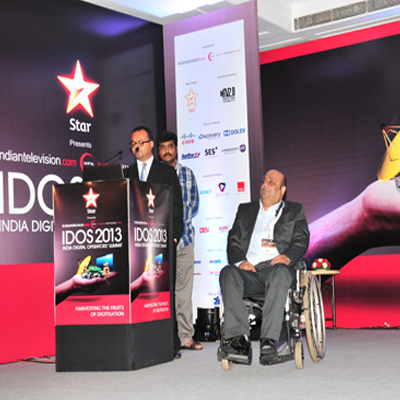
MUMBAI: With Last Mile Operators (LMOs) viewing digitisation as a threat and legal tussles between them and Multi System Operators (MSOs) on the rise, the Maharashtra Cable Operators Federation (MCOF) has organised an educational and business seminar on ‘challenges and opportunities post DAS’ to address their growing concerns.
To be held on 23 November at the Prabhodhankar Thakarey Krida Sankool in Vile Parle, Mumbai, the seminar will see the who’s who of the industry educate LMOs about the kind of business opportunities lying in wait.
Addressing operators from Maharashtra, Andhra Pradesh, Gujarat and Goa will be Castle Media director Vynsley Fernandes, who will speak on ‘global industry standards and trends’; HSBC Securities (Telecom and Media) lead analyst Rajiv Sharma, who will touch upon the financial aspects; former Sun group CEO Tony D’Silva, who will discuss HITS (Headends in the Sky) technology, UPASS managing director Ravindra Deshmukh and PING Network founder Prashanto Das, who will talk about global trends in broadcasting.

Also among the invitees are small scale industries and the State Bank of India (SBI) regional head.
Says MCOF president Arvind Prabhoo: “There is a lot of confusion about digitisation and LMOs feel the business is going out of their hands but if you understand what digitisation is and how to go about it as well as reorient yourself to the changing scenario, then you don’t look at it as a challenge but as an opportunity. I want LMOs to know that digitisation is not a threat and remove the fear factor from their mind.”
A few women cable operators are also expected to attend the seminar that will be conducted in both Hindi and English. Nearly 500 to 600 LMOs are likely to participate with registration fees fixed at Rs 500 per head. Leading Marathi and Gujarati newspapers will be carrying advertorials tomorrow and day after to promote the event.
Apart from challenges and opportunities post DAS, the seminar will also cover topics such as maximizing broadband penetration, optimised network architecture in DAS and future proof, Value Added Services (VAS), identifying right equipment and spares, supply tie ups and employee training.






MUMBAI: When margins wobble, liquidity talks and in Q3 FY25-26, cash did most of the talking. Den Networks Limited closed the December quarter with consolidated revenue of Rs.251 crore, marginally higher than the previous quarter but down 4 per cent year-on-year, even as profitability stayed resilient on the back of strong cash reserves and disciplined cost control.
Subscription income softened to Rs.98 crore, slipping 3 per cent sequentially and 14 per cent from last year, while placement and marketing income offered some cheer, rising 15 per cent quarter-on-quarter to Rs.148 crore. Total costs climbed faster than revenue, up 7 per cent QoQ to Rs.238 crore, driven largely by higher content costs and operating expenses. As a result, EBITDA dropped sharply to Rs.13 crore from Rs.19 crore in Q2 and Rs.28 crore a year ago, pulling margins down to 5 per cent.
Yet, the bottom line refused to blink. Profit after tax stood at Rs.40 crore, up 15 per cent sequentially and only marginally lower than last year’s Rs.42 crore. A healthy Rs.57 crore in other income helped cushion operating pressure, keeping profit before tax at Rs.48 crore, broadly stable quarter-on-quarter despite the tougher cost environment.
The real headline-grabber, however, sits on the balance sheet. The company remains debt-free, with cash and cash equivalents swelling to Rs.3,279 crore as of December 31, 2025. Net worth rose to Rs.3,748 crore, while online collections accounted for 97 per cent of total receipts, underscoring strong cash discipline across operations, including subsidiaries.
In short, while Q3 showed signs of operating strain, the financial backbone remains solid. With zero gross debt, steady profits and a formidable cash war chest, the company enters the next quarter with flexibility firmly on its side proving that in uncertain markets, balance sheet strength can be the best growth strategy.








