News Broadcasting
Max says cricket thrusts it ahead of Star Plus at top in channel share

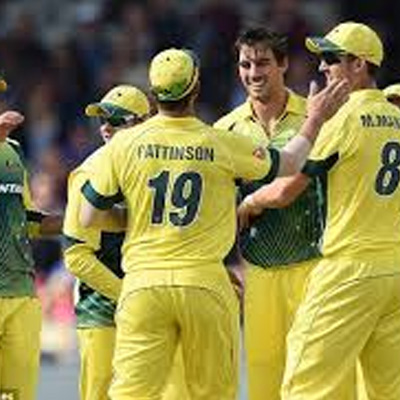
MUMBAI: The Indian team may be giving its fans ulcers by its up and down displays at the ongoing ICC World Cup 2003 but viewers just cannot seem to drag themselves away from the action if the TAM ratings data generated from the first week’s action is anything to go by.
Max, quoting TAM Media data, says it has displaced Star Plus at the top in terms of all-India channel share with 16.8 per cent as against 11.1 per cent for the flagship channel of the Star Network.
SET India CEO Kunal Dasgupta was quoted in a company release as saying: “Twenty of the Top 100 programs of the week were from MAX. There were four MAX programs in the Top 20, 12 in the Top 50, and 20 in the Top 100. In the Top programs category of the same week, the Live India-Australia match was placed 3rd. Apart from this, MAX captured one more position with the India-Holland match amongst the Top 10 shows.”

MAX business head Rajat Jain was also quoted in the same release as saying: “From the seven matches played till 15 February 2003, India matches pegged a high average of 8.6 despite India’s unimpressive showing in the first week. Similarly, the non-India matches too pegged a very impressive average rating of 4.2, which is an unheard of figure for non-India Cricket matches telecast in the past. The average of all seven matches was an excellent 5.5.”
The city which MAXed in terms of ratings was sports-crazy Kolkata which had an average rating of 10.3 for all seven matches, 20.2 for the India-Australia match and 17.6 for the India-Holland encounter.
“Similarly, Mumbai too pegged a good high of 10-plus for both, the India-Australia and the India-Holland matches,” said Jain, adding, “Hyderabad, Delhi and Bangalore too pegged highs of 9-plus for the India-Holland match, while Chennai gave us a high of 7.2 for the same,” Jain said.
Extraa Innings, MAX’s wrap-around programming, meanwhile, averaged 1.4 for all matches and 2 for the India matches. Looks as if Charu Sharma, Mandira Bedi and gang have something to crow about. And the critics be damned.







News Broadcasting
UDF poised to return to power in Kerala, says Manorama-CVoter survey
Massive opinion poll projects shift in Kerala politics ahead of 2026 Assembly elections.

MUMBAI: The winds of change appear to be blowing through Kerala’s political landscape and this time, they seem to favour the United Democratic Front. A comprehensive mega opinion survey conducted by Manorama News in partnership with CVoter projects a potential comeback for the UDF in the upcoming Kerala Legislative Assembly Elections 2026. The survey, covering all 140 constituencies with a massive sample size of nearly 90,000 respondents, predicts the UDF could win between 69 and 81 seats.
The ruling Left Democratic Front (LDF) is expected to secure 57 to 69 seats, a significant drop from the 99 seats it won in the 2021 elections. This would mean the LDF losing 30 to 42 of its sitting seats. Meanwhile, the National Democratic Alliance (NDA), which drew a blank in 2021, is projected to open its account with 1 to 5 seats.
Region-wise, the UDF is expected to make strong gains in Malabar, winning 25 to 34 out of 48 seats, and in Central Kerala, where it could bag 29 to 33 out of 53 seats. In South Kerala, the LDF is likely to retain an edge with 21 to 25 seats, while the UDF may improve to 12 to 16 seats. The NDA could pick up 1 to 3 seats in the southern region.
The survey was conducted between 14 and 26 March 2026, with additional tracker and snap polls carried out from December 2025 to March 2026. A total of 89,693 respondents participated, ensuring representation across all demographics and social segments.
Manorama News has a strong track record of accuracy, with its previous projections closely matching the actual results of the 2019 and 2024 Lok Sabha elections as well as the 2021 Kerala Assembly polls.
In Kerala’s famously fierce political battles, this survey suggests the pendulum may be swinging back. Whether the final verdict matches these numbers or throws up another surprise, one thing is clear, the 2026 Assembly elections are shaping up to be one of the most keenly watched contests in the state’s history.






