News Broadcasting
Marvel, Microsoft hatch video games alliance

MUMBAI: Software major Microsoft has struck a deal with Marvel Comics which owns the rights to characters like Spiderman. The deal will put Spidey, the Incredible Hulk and some 5,000 other superheroes, villains and ordinary mortals on to Microsoft’s next-generation games console, the Xbox 360.
Although the games will not be released until 2008 media reports state that Marvel worldwide president of consumer media Tim Rothwell has indicated that it will be the only such MMO deal the company will make – ensuring that no Marvel MMO can appear on the PlayStation 3 or Revolution.
This is Marvel’s first Multiplayer online game (MMOG) agreement with Microsoft’s first title due in 2008. Microsoft Xbox corporate VP worldwide marketing and publishing Peter moore said, “Online gaming is reaching a point of acceptance. We will use as many of the Marvel characters as we can.”

Rothwell says, “The alliance with Microsoft catapults us into the games category in an unprecedented way. Microsoft is an acknowledged leader in the interactive game space, and backed by their technology, creative and marketing clout, Marvel will establish a strong presence in the burgeoning online gaming arena. We are very excited to be working with Microsoft to bring our fans what we expect will be a world-class online gaming experience. We also believe that online gaming will provide valuable, global exposure to our character brands.”







News Broadcasting
UDF poised to return to power in Kerala, says Manorama-CVoter survey
Massive opinion poll projects shift in Kerala politics ahead of 2026 Assembly elections.
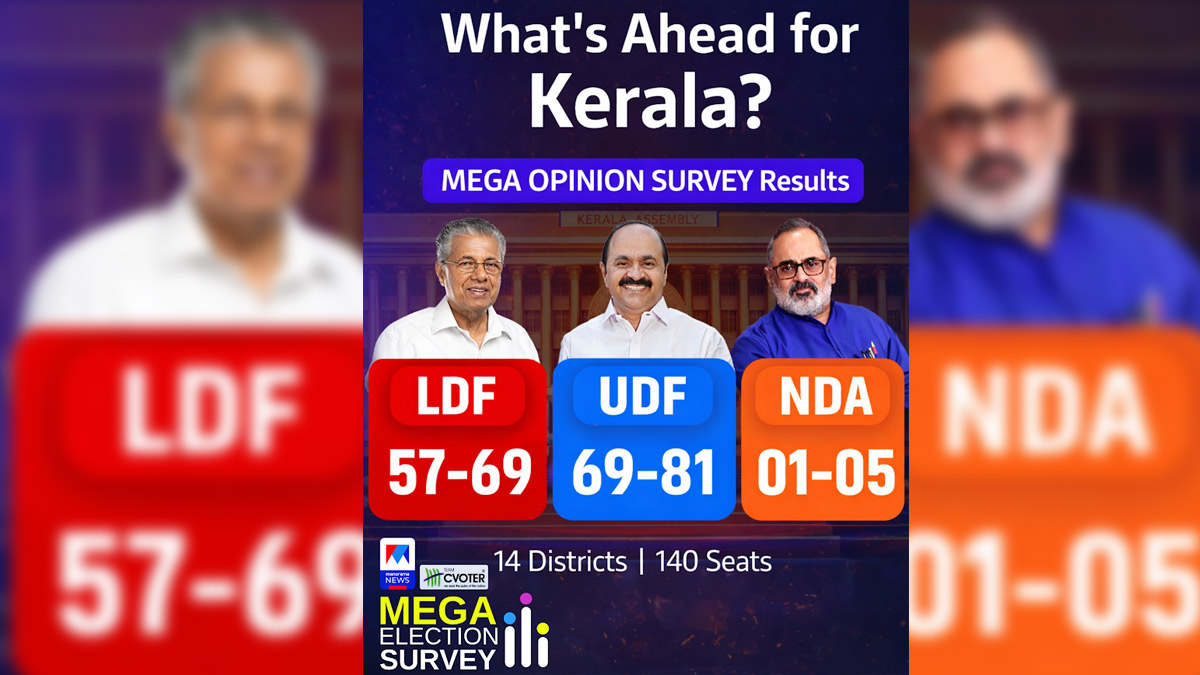
MUMBAI: The winds of change appear to be blowing through Kerala’s political landscape and this time, they seem to favour the United Democratic Front. A comprehensive mega opinion survey conducted by Manorama News in partnership with CVoter projects a potential comeback for the UDF in the upcoming Kerala Legislative Assembly Elections 2026. The survey, covering all 140 constituencies with a massive sample size of nearly 90,000 respondents, predicts the UDF could win between 69 and 81 seats.
The ruling Left Democratic Front (LDF) is expected to secure 57 to 69 seats, a significant drop from the 99 seats it won in the 2021 elections. This would mean the LDF losing 30 to 42 of its sitting seats. Meanwhile, the National Democratic Alliance (NDA), which drew a blank in 2021, is projected to open its account with 1 to 5 seats.
Region-wise, the UDF is expected to make strong gains in Malabar, winning 25 to 34 out of 48 seats, and in Central Kerala, where it could bag 29 to 33 out of 53 seats. In South Kerala, the LDF is likely to retain an edge with 21 to 25 seats, while the UDF may improve to 12 to 16 seats. The NDA could pick up 1 to 3 seats in the southern region.
The survey was conducted between 14 and 26 March 2026, with additional tracker and snap polls carried out from December 2025 to March 2026. A total of 89,693 respondents participated, ensuring representation across all demographics and social segments.
Manorama News has a strong track record of accuracy, with its previous projections closely matching the actual results of the 2019 and 2024 Lok Sabha elections as well as the 2021 Kerala Assembly polls.
In Kerala’s famously fierce political battles, this survey suggests the pendulum may be swinging back. Whether the final verdict matches these numbers or throws up another surprise, one thing is clear, the 2026 Assembly elections are shaping up to be one of the most keenly watched contests in the state’s history.






