News Broadcasting
Maharashtra cable ops plan statewide entertainment tax protest

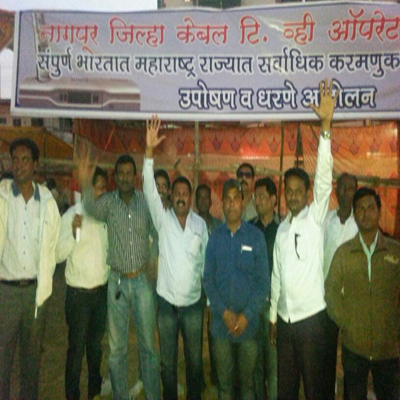
MUMBAI: Maharashtra is in for a major rally and cable TV blackout come 16 December if the state’s operators have their way. The reason for the strike: it is their way of protesting against the Rs 45 per subscriber entertainment tax that the state levies on them.
The rumblings of the current agitation began in the city of Nagpur. On 9 December around 600 cable operators across 11 districts of the Vidarbha region got together at Patwardhan ground, Sitabuldi raising their ire against the “harsh government tax”. Simultaneously, the cable ops switched off their signals to their subscribers in the region.
“Approximately, 12-15 lakh STBs were switched off between 9 am to 7 pm. Our intention was not to deprive consumers of their entertainment, but to inform them about the tax regime,” says Nagpur District Cable TV Operators’ Association president Subhash Bante. “We had earlier asked the government to inform consumers about entertainment tax, which wasn’t done, so we have taken the baton in our hand.”

Even this did not get a revert from the Maharashtra government; hence they intensified their agitation with at least two cable TV operators going on a hunger strike from 10 December onwards. “We want to meet Maharashtra revenue minister Balasaheb Thorat and express our view point,” informs Bante.
And even if this does not get them an audience, Bante says the protest will spread throughout the state with the rally that is being planned for next week. The exact date has not been fixed “but associations from across the state will participate in the rally. We are in talks with the Maharashtra Cable Operators’ Federation and others for the same. Also, there will be state level switch off on the day,” he reveals.
5000 cable operators are expected to participate in it along with 50 consumer associations. Supporting the cable operators are consumer associations like Maratha Seva Sang, Sambhaji Brigade and Mulnivasi Mukti Manch among others.
So what are the LCOs demanding? For starters, the LCOs feel that the quantum of entertainment tax is too high, as compared to other states. “Then we want a centralised system for entertainment tax. Consumers should be made aware that they need to pay Rs 45 per TV as entertainment tax. Many are not aware that they have to pay it, and those who have become aware are unwilling to make the payments,” elaborates Bante. “Finally, the backlog of entertainment tax for the past 10 months should be waived off.”
Bante reveals that most cable TV operators have expressed that taxes on cable TV should be a central government prerogative which should be imposed uniformly nationally, and not be left to the states. He explains: “The central government can form a committee which includes cable operators from all over India. They can decide on an entertainment tax amount which is uniform for all states and that it collects just like it does with income tax. It can later re-distribute the amount to the states.”
However, what is troubling the cable ops the most is the backlog of entertainment tax. “No revenue was generated from April-June 2013, since we were seeding STBs.”
Also, according to the circular issued on 7 March by the state government, the multi-system operators (MSOs) were asked to pay the entertainment tax. This was seen by the LCOs as a move to deny them the ownership of their consumers. However, since it was the LCOs who had been paying the entertainment tax since the start, the move was resisted by the LCOs who then under the leadership of MCOF and Nashik District Cable Operators Federation moved to the Bombay High Court, seeking a stay on the circular. In the interim, the Maharashtra government in November again issued a circular asking the LCOs to pay entertainment tax directly to the district collector.
 |
|
Nagpur’s cable TV ops have been striking since 10 December
|
It was during this period that the LCOs did not collect any entertainment tax from the consumer. “Now, this has led to an outstanding amount running into crores over the past 10 months,” says Bante. His estimate is that the backlog for Nagpur alone is at Rs 22 crore. “If Nagpur city alone has such a huge outstanding, one can only imagine the amount of backlog for eight districts which includes: Nagpur, Thane, Pune, Pimpri-Chinchwad, Nasik, Kalyan-Dombivali, Mumbai city and Solapur,” he says.
Though the voices of the striking LCOs have not yet been heard, Bante is hopeful. “We are currently waking up the consumer. I am sure, the state government will surely lend its ear to us,” he opines.
“The winter session is on right now. Though the operators are on strike, no one seems to be bothered about them. I will be presenting their issues to the assembly session next week regarding the same,” Cable Operators Distributors Association president Anil Parab told indiantelevision.com when we contacted. Parab, a Sena activist, has in the past made unsuccessful attempts to get Maharashtra’s revenue minister to lower the amount levied as entertainment tax.
The key question, however is will the Nagpur cable ops, along with consumer organisations, and the MCOF be successful? Watch this space!




News Broadcasting
WITT Summit 2026 concludes in New Delhi
Babar Azam’s comical diving attempt goes viral as league introduces anti-dew measures.
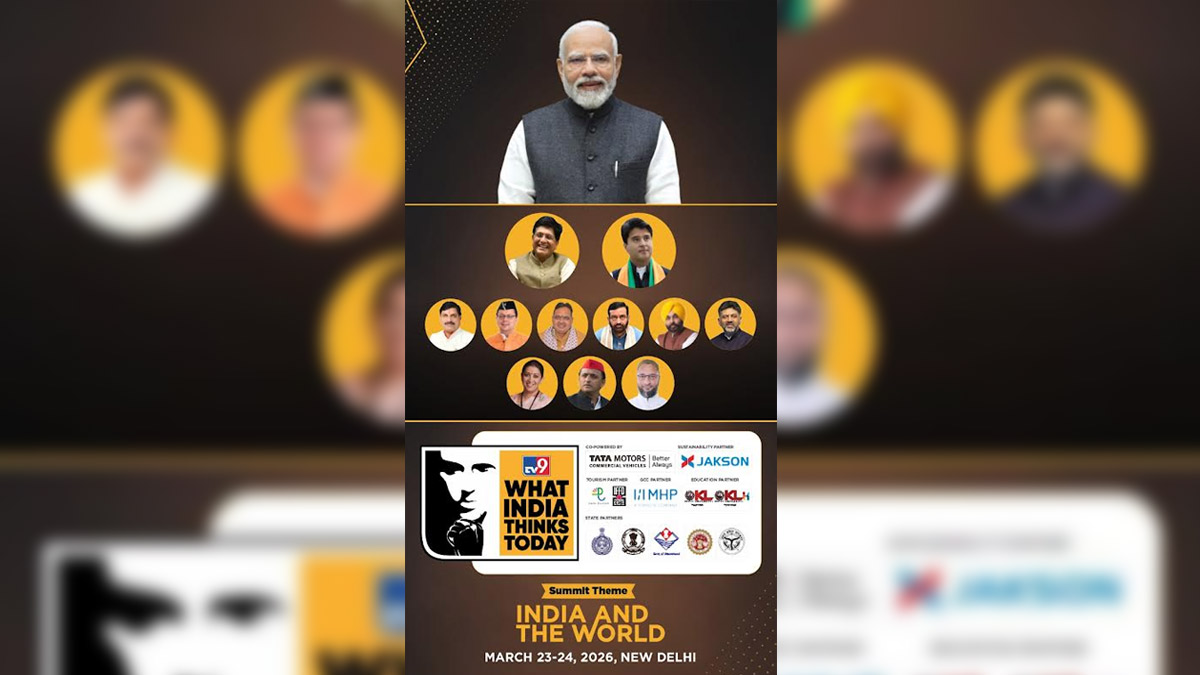
MUMBAI: The WITT Summit just wrapped up with enough big ideas to fill a policy playbook because when India’s leaders, thinkers and icons gather under one roof, even the conversations hit sixes. The eighth edition of TV9 Network’s flagship What India Thinks Today (WITT) Summit 2026 concluded on Saturday after two days of dynamic discussions at its New Delhi venue. India’s largest multi-domain public policy and culture summit brought together political leaders, policymakers, sports icons, artists and technology innovators to examine the forces shaping contemporary India and its global standing.
Prime minister Narendra Modi delivered the keynote address on the theme “India and the World” for the third consecutive year. In a wide-ranging speech, he addressed the ongoing conflict in West Asia, calling for restraint and compassion while highlighting India’s continued development trajectory despite global turmoil.
The summit featured candid conversations with state leaders. Telangana Chief Minister A. Revanth Reddy articulated a people-first governance model and contrasted it with other development approaches. Madhya Pradesh Chief Minister Mohan Yadav declared that Left-wing extremism had been effectively eliminated in his state and highlighted preparations for the upcoming Kumbh Mela. Punjab Chief Minister Bhagwant Mann defended his government’s record, citing the closure of 19 toll plazas and creation of the Sadak Suraksha Force. Karnataka Deputy Chief Minister D.K. Shivakumar expressed confidence in Congress prospects in Assam and addressed recent allegations against him.
On geopolitics and national security, Union Minister Jyotiraditya Scindia outlined India’s ambition to become a builder of trusted digital infrastructure for the world, citing the rapid 5G rollout and village-level 4G connectivity.
Cricket received significant attention. Former India captain Sourav Ganguly praised player freedom and trust as hallmarks of great leadership and named MS Dhoni as the greatest captain due to his World Cup successes. India women’s team bowling coach Aavishkar Salvi credited the BCCI and Women’s Premier League for building a pipeline of world-class talent behind the team’s recent ODI World Cup triumph.
The summit also hosted the inaugural AI² Awards 2026, celebrating the convergence of human creativity and machine intelligence in storytelling and content creation. Poet and kathavachak Kumar Vishwas delivered a nuanced take on India’s concept of Dharma and criticised the recent arrest of an 80-year-old Shankaracharya. Veteran lyricist Sameer Anjaan and storyteller Neelesh Misra reflected on changing music trends and artistic responsibility in the wake of a recent controversy involving Nora Fatehi.
In a country where conversations often run as deep as the Ganges, the WITT Summit proved once again that when leaders, thinkers and storytellers come together, the real winner is public discourse lively, layered and refreshingly unafraid to tackle the big questions shaping India’s tomorrow.








