News Headline
Live events boost viewing of TV, but need newer digital technologies


NEW DELHI: It is the live events covered by television that boost ratings and help encourage innovation and establish new services, despite the popularity of on-demand content and the proliferation of over-the-top services.
In fact, television viewership has remained near record levels in part because of the popularity of coverage of big events, said panelists in the session “Cisco Presents: The Transition from Live to Event TV” on the concluding day of the National Association of Broadcasters Show in Las Vegas.

“The broadband world is growing and people are watching more programmes on demand,” said Globo, CTO & general director of ENG Fernando Bittencourt.
“But in the world of broadcasting, I think the future is live programming. I do not think movies will be in primetime broadcast in the next five or 10 years. People will watch those on demand. … There will be more news, more sports and live content like our tele-novelas that are designed to be watched at a specific time.”
“They drive a lot of viewer and social interaction, but they have also been an important driver for the development of TV Everywhere and authenticated services,” said IDC research manager of consumer markets, video Greg Ireland.
He noted that big events like the Olympic Games have encouraged consumers to set up authenticated apps, making it more likely that they would later use the apps for regular programming.
Cisco Systems, VP & GM of ESBI Charles Stucki said, “Big live events have bigger budgets, so you can have a lot of innovation.” He mentioned the recent Summer and Winter Olympics, from which NBC streamed a record amount of coverage to online and mobile platforms.
This innovation also helped boost the popularity of the linear live broadcast, with NBC posting record ratings for its summer games coverage. During the Winter Olympics, viewers who watched content online tended to watch more live games programming on TV.
But finding the right technologies for the digital applications that viewers increasingly demand with big live events can be challenging.
Globo’s Bittencourt said popular programmes on the Brazilian broadcaster regularly pull in 30 million to 40 million viewers. “If only half of those go to the second screen, it is very difficult for the network to support it.”
Such concerns were highlighted right before the NAB Show, when the HBO Go app went down during the season premiere of its hit series Game of Thrones.
“Consumers now have the expectation that a big event will have a live streaming component, but the experience is not always optimal,” Ireland said.
“A lot of extra engineering has to go into creating and surviving big events that require a lot of additional resources beyond those needed to simply produce live programming,” Stucki explained.
He said Cisco sees a growing number of broadcasters building staff to manage CDNs used for big events, in order to assure the best architecture and redundancy.
The general trend toward IT and IP infrastructures raises additional issues of reliability.
Bittencourt revealed while Globo’s viewers would not tolerate the network going off the air, the quality of online streaming can be quite variable. In addition, the lag between the live broadcast and the mobile stream causes complaints. “During the World Cup, viewers will want to watch the Brazilian games on a TV,” he said. “If they watch on the Internet, they will see the goal 30 seconds after it happens” – after their neighbors have already started celebrating.
But for 4K production, he said that IT and IP technologies would be necessary. “You can’t do that with traditional technologies,” said Bittencourt, adding that Globo planned a test 4K broadcast during the World Cup.
Stucki argued that the growing importance of video on digital platforms, where video traffic now accounts for half of all mobile traffic, is forcing the IT and IP worlds to become more reliable.
“They are starting to figure this out,” Bittencourt agreed. “Right now we have very specific vendors for broadcast and different ones for IT and IP. We have to create a third world where there is a combination of IT and broadcast that would be specific for broadcast to get the high reliability we are used to.”






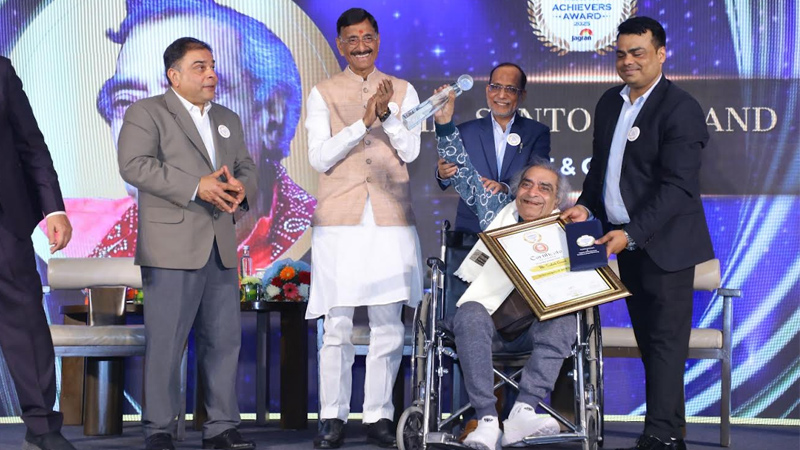
NEW DELHI: Hamdard Laboratories gathered a cross-section of India’s achievers in New Delhi on Friday, handing out the Hakeem Abdul Hameed Excellence Awards to figures who have left their mark across healthcare, education, sport, public service and the arts.
The ceremony, attended by minister of state for defence Sanjay Seth and senior officials from the ministry of Ayush, celebrated individuals whose work blends professional success with a sense of public purpose. It was as much a roll call of achievement as it was a reminder that influence is not measured only in profits or podiums, but in people reached and lives improved.
Among the headline awardees was Alakh Pandey, founder and chief executive of PhysicsWallah, recognised for turning affordable digital learning into a mass movement. On the sporting front, Arjuna Awardee and kabaddi player Sakshi Puniya was honoured for her contribution to the game and for pushing women’s participation onto bigger stages.
The cultural spotlight fell on veteran lyricist and poet Santosh Anand, whose songs have echoed across generations of Hindi cinema. At 97, Anand accepted the honour with characteristic humility, reflecting on a life shaped by perseverance and hope.
Healthcare honours spanned both modern and traditional systems. Manoj N. Nesari was recognised for strengthening Ayurveda’s place in national and global health frameworks. Padma shri Mohammed Abdul Waheed was honoured for his research-backed work in Unani medicine, while padma shri Mohsin Wali received recognition for his long-standing contribution to patient-centred care.
Education and social development also featured prominently. Padma shri Zahir Ishaq Kazi was honoured for decades of work in education, while former Meghalaya superintendent of Police T. C. Chacko was recognised for public service. Goonj founder Anshu Gupta received an award for his dignity-centred rural development initiatives, and the Hunar Shakti Foundation was honoured for empowering women and young girls through skill development.
The Lifetime Achievement Award went to former IAS officer Shailaja Chandra for her long career in public healthcare and governance, particularly in the traditional systems under Ayush.
Speaking at the event, Hamdard chairman Abdul Majeed said the awards were a tribute to those who combine excellence with empathy. “These awardees reflect Hakeem Sahib’s belief that healthcare, education and public service must ultimately serve humanity,” he said.
Minister Seth struck a forward-looking note, saying India’s young population gives the country a unique opportunity to become a global destination for learning, health and wellness by 2047.
The ceremony also featured the trailer launch of Unani Ki Kahaani, an upcoming documentary starring actor Jim Sarbh, set to premiere on Discovery on 11 February.
Instituted in memory of Unani scholar and educationist Hakeem Abdul Hameed, the awards have grown into a national platform that celebrates those building a more inclusive and resilient India. For one evening at least, the spotlight was not just on success, but on service with substance.






