Movies
Lights, camera, pause! Karnataka high court halts penalty on PVR over ad drama


MUMBAI: In a twist worthy of a courtroom thriller, the Karnataka high court has put the brakes on a Rs one lakh penalty slapped on PVR Cinemas and PVR Inox Ltd for their allegedly marathon-length advertisements. The cinema giants were ordered to deposit the sum with the consumer welfare fund, alongside compensation to a miffed moviegoer.
The plot thickened when justice M Nagaprasanna granted a stay order until 27 March, responding to a petition by the Multiplex Association of India and its stakeholder Shantanu Pai. Legal heavyweights Mukul Rohatgi and Uday Holla stepped into the spotlight to argue their case.
The original drama kicked off when Abhishek MR settled in to watch Sam Bahadur on 6 January 2024. What should have been a tidy 2 hours and 25 minutes turned into an extended sitting, as he endured what he called an “unnecessary” 25-minute pre-show advertisement marathon.

The Bengaluru Urban District Consumer Commission, playing hero to the movie-going masses, ordered PVR to compensate Abhishek for mental agony and legal costs. The commission went full director’s cut, attempting to dictate how cinema halls should run their shows and banned advertisements altogether.
The petitioners argued that the consumer forum had overstepped its mark by treating a personal grievance like a public interest litigation.
The high court, giving the consumer forum’s ruling two thumbs down, noted that their directions appeared to be “without jurisdiction.”
While the state government suggested an appeal to the state consumer forum, justice Nagaprasanna wasn’t about to let legal technicalities steal the show, invoking Article 226 of the Constitution.
For now, it seems the credits haven’t quite rolled on this legal blockbuster. The next hearing is scheduled for 27 March where the future of pre-show adverts hangs in the balance. As they say in the business: to be continued…







Hindi
Zee5 and Applause Entertainment team up for whodunnit ‘Everybody Loves Sohrab Handa’
Rajat Kapoor directs star-studded murder mystery streaming from 10 April.
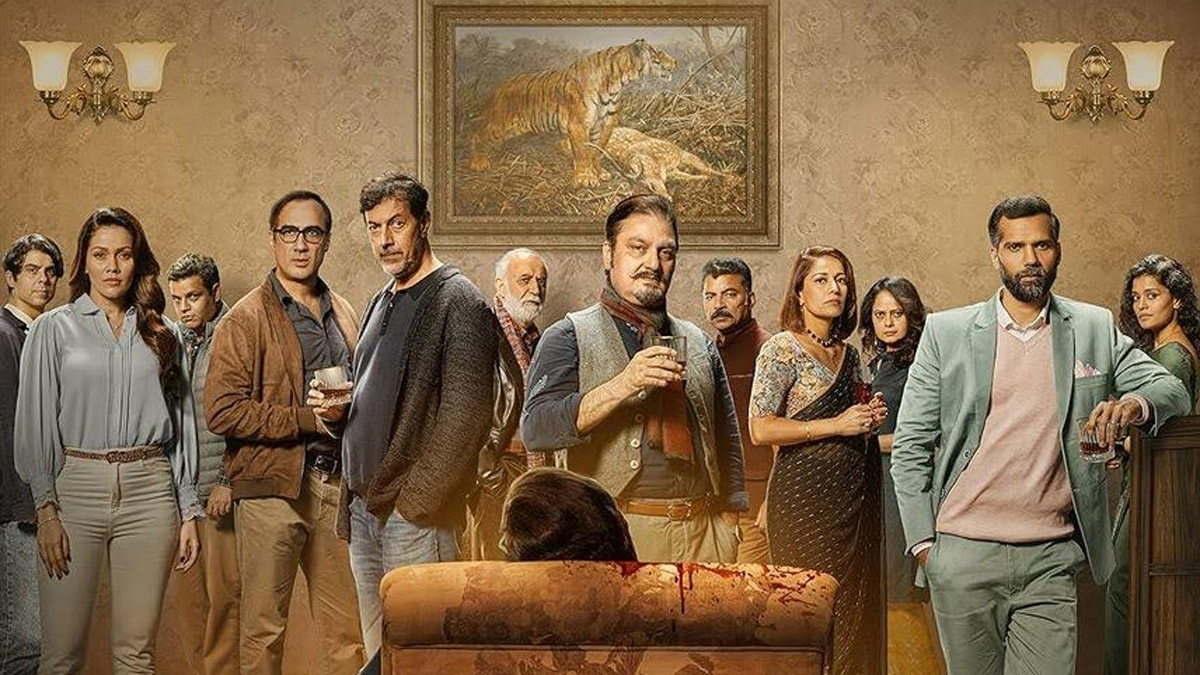
MUMBAI: Zee5 is serving up another killer collaboration and this time, the murder mystery comes with a generous side of dark humour and family dysfunction. The streaming platform has partnered with Applause Entertainment and Mithya Talkies to bring Everybody Loves Sohrab Handa, a fresh, twisted whodunnit written and directed by acclaimed filmmaker and actor Rajat Kapoor. The film will stream exclusively on Hindi Zee5 from 10 April.
The movie reimagines the classic murder mystery genre with a contemporary, darkly comic edge. It revolves around a group of friends and family who smile, drink, and celebrate together until the silence snaps and long-buried secrets spill out. The stellar ensemble cast includes Vinay Pathak, Ranvir Shorey, Waluscha De Sousa, Saurabh Shukla, Chandrachoor Rai, Neil Bhoopalam, Koel Purie, Palomi Ghosh, and Rajat Kapoor himself.
This latest offering continues the successful partnership between Zee5 and Applause Entertainment, which has previously delivered diverse hits such as Mithya, Bloody Brothers, and Jab Khuli Kitaab.
&TV Business Head of hindi Zee5 and chief channel officer Kaveri Das said, “Our collaboration with Applause Entertainment has consistently delivered distinct, high-impact storytelling. Everybody Loves Sohrab Handa is a natural progression, reinforcing our focus on genre-led content with a compelling whodunnit premise and a strong ensemble cast.”
Applause Entertainment business head for movies Sunil Chainani added, “This film adds yet another compelling layer to our slate with Rajat Kapoor’s unmistakable voice.”
Rajat Kapoor shared, “What interested me was not just the mechanics of a whodunnit, but the emotional violence that precedes physical violence. These are people who smile at each other, but there’s so much that is not said.”
The film promises razor-sharp writing, layered performances, and simmering tension, inviting viewers not just to solve the crime but to unravel the complex relationships at its heart.
If you love a good murder mystery served with wit and emotional depth, Everybody Loves Sohrab Handa looks set to be your next addictive watch. Mark your calendars, the whodunnit drops on Hindi Zee5 from 10 April.






