Gaming
Lenovo sets up camp to call out campers in clever gaming crackdown

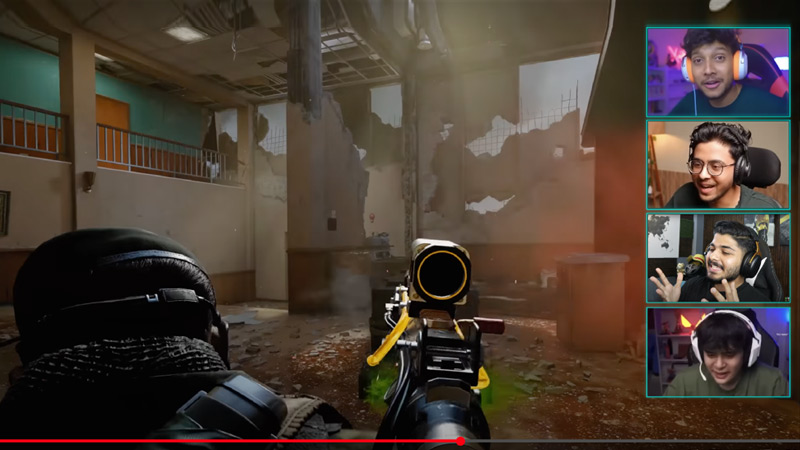
MUMBAI: Gamers hiding in corners just got cornered by a laptop upgrade. In a cheeky ambush inside one of India’s most popular shooter games, Lenovo India, with Intel and Leo Burnett, has launched Gamers on Duty, a guerrilla-style campaign that calls out “campers” mid-battle and offers them a shot at redemption: a discount on Lenovo Legion laptops.
For the uninitiated, “camping” in gaming lingo is the much-despised strategy of hiding in one spot and picking off opponents from cover, much to the annoyance of serious players. But Gamers on Duty flips the script recognising that many Indian gamers aren’t camping by choice, but by compulsion. Outdated hand-me-down laptops, dad’s office machine, or just old tech struggling to keep up with today’s graphic-heavy games are pushing players into passive play.
So Lenovo and Intel assembled a squad of undercover operatives 12 of India’s top gaming influencers, wielding a cumulative reach of 20 million. These “agents” infiltrated live games, hunted down campers using an in-game feature that allows a brief 15-second chat when a player is caught and used that vulnerable moment to serve up an unexpected offer: ditch the lag, grab a Lenovo Legion.

By turning a niche in-game mechanic into a pop-up sales pitch, the campaign reached players right when their frustration peaked slow machines, melting keyboards, and sluggish gameplay. The result? A deluge of hilarious, shareable content and a savvy new way to turn gameplay into advertising without feeling like advertising.
“At Lenovo, we believe gamers deserve to experience every moment of their gameplay at its absolute best. With this campaign, we wanted to connect with them not just through screens, but in the heat of action at the very moment when outdated devices hold them back. Lenovo Legion is engineered to deliver uncompromised performance, so gamers can play fearlessly and experience their full potential. By meeting players exactly where they feel the need for better performance, we’re not just showcasing our technology – we’re empowering them to level up, quite literally.” said Lenovo India CMO, Chandrika Jain.
Publicis Groupe CCO for South Asia and Leo chairman for South Asia Rajdeepak Das added “This is a great example of how data and tech come together to create a hyper-personalized campaign targeting campers who have been at the receiving end of hate from the entire gaming community. Our idea was to reach out to gamers while they were hiding because of slow laptops and put the brand’s message and offers in the right place, at the right time, and to the right audience.”
In short, Gamers on Duty proves that when it comes to clever marketing, it pays to play dirty, especially if you’re cleaning up the camping mess along the way.







Gaming
Dream Sports sees 100 plus exits after gaming ban forces overhaul
Company splits into eight units as real money gaming law hits revenue.

MUMBAI: For a company built on fantasy leagues, reality has suddenly rewritten the rulebook. More than 100 employees have exited Dream Sports, the parent of Dream11, after the company reorganised its operations following India’s ban on real money online gaming. The shake up came after the Promotion and Regulation of Online Gaming Act, 2025 came into force in August 2025, prohibiting games where users deposit money expecting winnings. The regulation struck at the heart of the fantasy gaming industry and dramatically affected Dream Sports’ core business, wiping out about 95 percent of its revenue and all of its profits.
In response, the Mumbai based company shifted into what chief executive officer Harsh Jain described as “startup mode”, splitting its operations into eight independent business units in December.
Around 700 employees were reassigned across these newly formed ventures based on their experience and interests. However, roughly 15 percent opted to leave the company.
A spokesperson for Dream Sports said many of those who exited were experienced professionals accustomed to running scaled businesses rather than early stage ventures.
“Since some of these employees were experienced with running high scale businesses and not startups, around 15 percent chose to leave and join other scaled companies or start ventures of their own,” the spokesperson said.
Despite the departures, the company noted that the attrition rate is only slightly higher than its earlier level of around 10 percent before the ban. Dream Sports now has close to 950 employees and is not currently hiring, choosing instead to focus on stabilising its existing workforce.
The restructuring has transformed Dream Sports from a fantasy gaming company into a broader sports entertainment platform. The eight units now operate independently, each focusing on different segments of the sports and technology ecosystem.
These include Dream11, sports streaming platform Fancode, sports travel service DreamSetGo, mobile game Dream Cricket and artificial intelligence initiative Dream Sports AI, which includes sports analytics platform Dream Play.
Other ventures include fintech product Dream Money, open source initiative Dream Horizon and the philanthropic arm Dream Sports Foundation.
As part of cost saving efforts, Dream Sports also relocated its headquarters from Bandra Kurla Complex to Worli earlier this year. The new office, called Dream Sports Stadium, brings teams from its various brands together under one roof to improve collaboration and operational efficiency.
Jain had earlier said the company removed bonus lock in timelines for employees hired in recent years, allowing those who wished to leave to exit with pro rata payouts.
“We want people who are fully into the startup mode and willing to work for it, and we will share that reward if it comes,” he said.
Founded in 2008 by Harsh Jain and Bhavit Sheth, Dream Sports was last valued at 8 billion dollars after raising 840 million dollars in 2021 from investors including Falcon Edge Capital, DST Global, D1 Capital Partners, RedBird Capital Partners, Tiger Global Management, TPG and Footpath Ventures.
The new gaming law has forced several companies in the fantasy gaming sector to either shut down or pivot their business models, signalling a significant reset for one of India’s fastest growing digital entertainment industries.