Hindi
Ledure lightings limited associates as media partner with movie “Fighter”


Mumbai: Ledure Lightings Limited, dedicated lighting technology brand, providing a range of specialty lighting, luminaires, and lighting solutions has announced its media partnership with Bollywood movie FIGHTER starring Hrithik Roshan, Deepika Padukone, Anil Kapoor, Karan Singh Grover and Akshay Oberoi, Sanjeeda Sheikh, Talat Aziz, Ashutosh Rana, among others.
Fighter revolves around the members of Air Dragons, an elite unit commissioned by Air Headquarters to combat militant activities that begin to go out of control in the Srinagar Valley. These Air Dragons are willing to give it their all for the nation while going through the highs and lows of their internal and external battles.
Commenting on Ledure Lightings Limited association with Fighter, Ledure Lightings Limited director Pranav Aggarwal says, “There is synonymy between Ledure Lightings and Fighter movie’s plot. Just like the movie’s plot which unfolds their camaraderie, brotherhood and battles, Ledure Lightings Limited journey is no less similar. To bring the state-of-the-art high-tech and diverse range of lighting solutions involves working together as a team aware of each member’s diverse opinions and views yet working together towards a common objective and goal”.

Ledure Lightings Limited as media partner for Fighter movie, the association involves publicity in newspapers announcing about the movie through newspaper advertisements, television commercials, outdoor hoardings and social media campaigns.
Ledure Lightings Limited one of the social media post says, ‘‘Fighter Ki Tezi Aur Ledure Ki Roshni Pe Desh Kare Bharosa” In another invigorating post, the lead actor of Fighter movie, Hrithik Roshan can be seen endorsing Ledure Lightings in a “Aasman Mein Udhar Dushmanon Se Ladkar Hum Karte Hain Apne Desh Ka Naam Roshan Aur Hamare Desh Ke Gharon Ko Roshan Karte Hain Ledure Lightings That Go Beyond Innovation”.
Ledure Lightings also has an exciting contest on its social media pages that promises Fighter movie vouchers worth Rs 300 for an entertaining cinematic experience.






Hindi
Zee5 and Applause Entertainment team up for whodunnit ‘Everybody Loves Sohrab Handa’
Rajat Kapoor directs star-studded murder mystery streaming from 10 April.
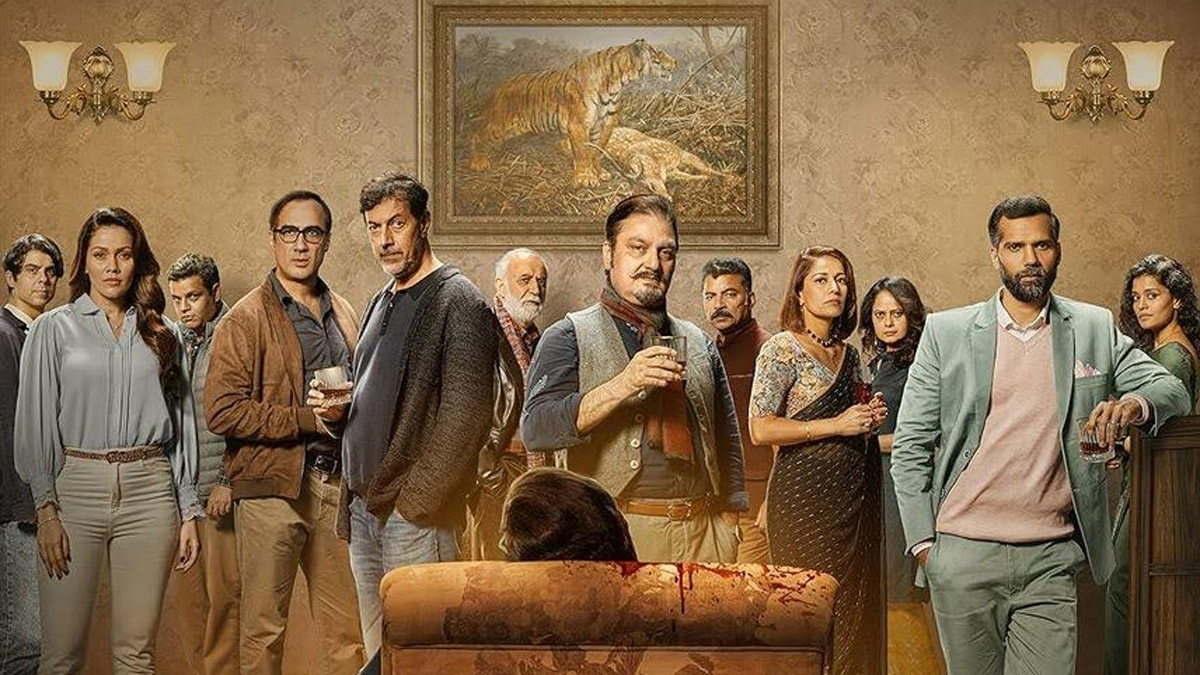
MUMBAI: Zee5 is serving up another killer collaboration and this time, the murder mystery comes with a generous side of dark humour and family dysfunction. The streaming platform has partnered with Applause Entertainment and Mithya Talkies to bring Everybody Loves Sohrab Handa, a fresh, twisted whodunnit written and directed by acclaimed filmmaker and actor Rajat Kapoor. The film will stream exclusively on Hindi Zee5 from 10 April.
The movie reimagines the classic murder mystery genre with a contemporary, darkly comic edge. It revolves around a group of friends and family who smile, drink, and celebrate together until the silence snaps and long-buried secrets spill out. The stellar ensemble cast includes Vinay Pathak, Ranvir Shorey, Waluscha De Sousa, Saurabh Shukla, Chandrachoor Rai, Neil Bhoopalam, Koel Purie, Palomi Ghosh, and Rajat Kapoor himself.
This latest offering continues the successful partnership between Zee5 and Applause Entertainment, which has previously delivered diverse hits such as Mithya, Bloody Brothers, and Jab Khuli Kitaab.
&TV Business Head of hindi Zee5 and chief channel officer Kaveri Das said, “Our collaboration with Applause Entertainment has consistently delivered distinct, high-impact storytelling. Everybody Loves Sohrab Handa is a natural progression, reinforcing our focus on genre-led content with a compelling whodunnit premise and a strong ensemble cast.”
Applause Entertainment business head for movies Sunil Chainani added, “This film adds yet another compelling layer to our slate with Rajat Kapoor’s unmistakable voice.”
Rajat Kapoor shared, “What interested me was not just the mechanics of a whodunnit, but the emotional violence that precedes physical violence. These are people who smile at each other, but there’s so much that is not said.”
The film promises razor-sharp writing, layered performances, and simmering tension, inviting viewers not just to solve the crime but to unravel the complex relationships at its heart.
If you love a good murder mystery served with wit and emotional depth, Everybody Loves Sohrab Handa looks set to be your next addictive watch. Mark your calendars, the whodunnit drops on Hindi Zee5 from 10 April.







