News Broadcasting
Leaders from across the spectrum converge at TV9 Bharatvarsh Satta Sammelan

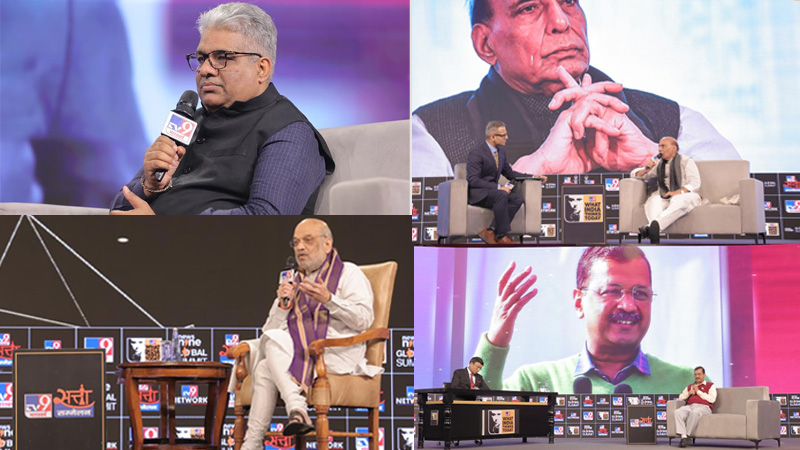
Mumbai: The TV9 Bharatvarsh Satta Sammelan, held as part of the ‘What India Thinks Today’ Global Summit, witnessed a gathering of prominent leaders, thinkers, and influencers from various spheres of Indian politics and leadership. Over the course of several interviews and panel discussions, the Satta Sammelan, held at The Ashok on the 27 February, provided a platform for robust discussions and insightful deliberations on pressing issues shaping the nation’s trajectory.
Rajnath Singh
Union defence minister Rajnath Singh’s address focused on India’s commitment to national security and territorial integrity. Emphasizing the readiness of the armed forces to defend the nation’s borders, Singh stated, “Our armed forces are prepared to defend our borders against any threat.” He reiterated the government’s resolve to strengthen India’s defence capabilities and ensure peace and stability in the region.

Amit Shah
Union home minister Amit Shah delivered a powerful speech at the end of the evening, culminating the events of the TV9 Bharatvarsh Satta Sammelan. Launching a scathing attack on the INDIA bloc, he accused it of being a coalition of “power-hungry and dynastic parties”, and defended the BJP’s governance record, emphasizing the government’s commitment to national security, economic reforms, and social justice. The Home Minister reaffirmed the importance the government places on inclusive governance and development, stating, “We are dedicated to building a strong and prosperous India where every citizen has the opportunity to fulfill their potential and contribute to the nation’s progress.”
As the nation prepares for the upcoming Lok Sabha elections, the TV9 Bharatvarsh Satta Sammelan provided a platform for diverse voices from across the political spectrum to engage in constructive dialogue and debate.
Bhupendra Yadav
Union minister Bhupendra Yadav accused the Congress party of being directionless and criticized its stance on key policy issues. He emphasized the BJP’s commitment to inclusive growth and governance reforms, stating, “People want to see PM Narendra Modi in power for a third time.” Yadav highlighted the government’s achievements in promoting economic growth and social justice, stating, “Under the leadership of PM Modi, India has made significant strides towards becoming a global powerhouse.”
Gajendra Singh Shekhawat
Union minister Gajendra Singh Shekhawat highlighted the BJP’s commitment to national progress and governance reforms. He criticized dynastic politics in opposition parties, stating, “BJP is hungry for the country’s growth, not for power.” Shekhawat emphasized the government’s focus on development and inclusive governance, stating, “We are dedicated to building a New India where every citizen has the opportunity to thrive and succeed.”
Dharmendra Pradhan
Union minister Dharmendra Pradhan outlined the government’s efforts to promote energy security and sustainable development. He highlighted initiatives aimed at expanding renewable energy sources and reducing carbon emissions to combat climate change. Pradhan reaffirmed the government’s commitment to environmental stewardship and economic growth, stating, “We are working towards building a greener and more prosperous India for future generations.”
Arvind Kejriwal
Delhi chief minister Arvind Kejriwal highlighted his government’s initiatives to provide free education, healthcare, and electricity to the people of Delhi. He criticized the BJP’s alleged misuse of central agencies and called for greater autonomy for Delhi, stating, “We are working towards building a Delhi where every resident has access to basic amenities and opportunities for a better life.”
Lieutenant Governor of Jammu and Kashmir Manoj Sinha
Lieutenant Governor Manoj Sinha outlined the government’s efforts to promote development and peace in Jammu and Kashmir. He emphasized initiatives aimed at empowering local communities and fostering economic opportunities in the region. Sinha reaffirmed the government’s commitment to ensuring inclusive growth and restoring normalcy in Jammu and Kashmir, stating, “We are working tirelessly to create a conducive environment for progress and prosperity in the region.”
Bhagwant Mann
Punjab chief minister Bhagwant Mann called for dialogue with protesting farmers and highlighted his government’s initiatives to provide free electricity, education, and healthcare services. He emphasized the importance of addressing farmers’ concerns and promoting inclusive governance, stating, “We are committed to creating a Punjab where every farmer can prosper and thrive.”
Pramod Tiwari and Gaurav Bhatia
Congress leader Pramod Tiwari and BJP spokesperson Gaurav Bhatia engaged in a spirited debate on key policy matters, reflecting the diversity of opinions within India’s political landscape. Tiwari emphasized the need for inclusive growth and social justice, advocating for policies that uplift marginalized communities. In contrast, Bhatia underscored the government’s focus on economic development and governance reforms, highlighting initiatives aimed at driving growth and prosperity across the nation.
Swami Ramdev
Renowned yoga guru Swami Ramdev shared insights on holistic health and wellness, advocating for the integration of traditional Indian practices with modern healthcare approaches. He emphasized the importance of yoga and Ayurveda in promoting physical and mental well-being, stating, “The ancient wisdom of yoga and Ayurveda offers profound solutions to the health challenges of our times.”
Aamir Khan and Kiran Rao
Bollywood icons Aamir Khan and Kiran Rao offered perspectives on their upcoming film ‘Laapataa Ladies’ and discussed their approach to handling controversies in the entertainment industry. Khan quipped, “I deal with controversies by staying quiet,” highlighting the challenges of navigating public scrutiny. Rao emphasized the importance of creative freedom and artistic expression, stating, “As filmmakers, we strive to tell meaningful stories that resonate with audiences.”
Asaduddin Owaisi
AIMIM chief Asaduddin Owaisi criticized the BJP for what he termed as “imposing Hindu morality on Muslims” and emphasized the importance of upholding secular principles. He called for a more inclusive approach to governance and condemned the politicization of religious issues, stating, “We must strive to build a society where every individual is treated with dignity and respect, regardless of their religious beliefs.”
Pawan Khera, Atishi Marlena and Nawal Kishore
Congress spokesperson Pawan Khera and AAP leaders Atishi Marlena and Nawal Kishore presented their respective party’s visions for India’s future. Khera emphasized the need for social justice and equality, advocating for policies that uplift the most vulnerable sections of society. Atishi and Nawal Kishore outlined AAP’s initiatives for inclusive development and good governance, stating, “We are committed to building a New India where every citizen has access to quality education, healthcare, and opportunities for growth.”
Mallikarjun Kharge
Congress leader Mallikarjun Kharge criticized the BJP for what he termed as “damaging democracy” and neglecting key issues affecting the country. He emphasized the importance of upholding democratic principles and addressing the concerns of marginalized communities, stating, “We must strive to build a nation where every citizen has a voice and is treated with dignity and respect.”




News Broadcasting
Kamlesh Singh receives Haldi Ghati Award from MMCF
India Today Group editor honoured for three decades of journalism at Udaipur ceremony.
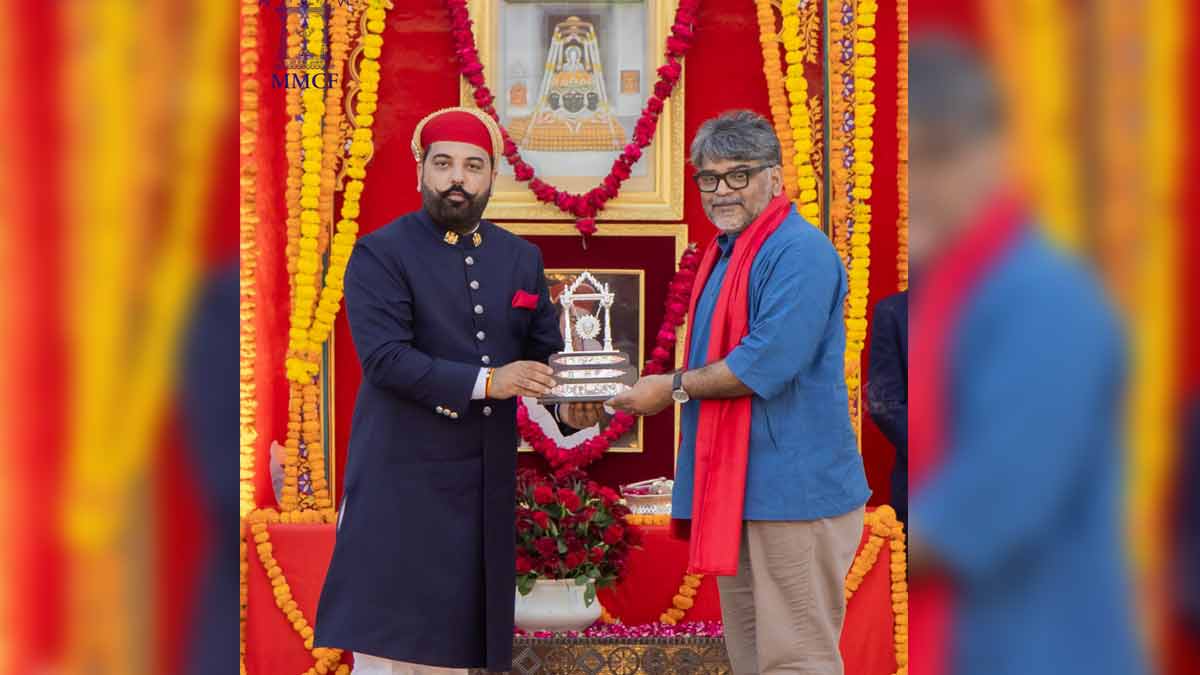
MUMBAI- Kamlesh Singh just turned a lifetime of sharp words into a shiny shield because when journalism wakes up a society, even the Maharana of Mewar wants to pin a medal on it.
The Maharana of Mewar Charitable Foundation (MMCF) conferred its prestigious Haldi Ghati Award on Kamlesh Singh, a senior editor at the India Today Group, during a ceremony in Udaipur on 15 March 2026. The national award, instituted in 1981-82, recognises “work of permanent value that initiates an awakening in society through the medium of journalism.”
Singh, who leads several editorial initiatives including Aaj Tak Radio, the Teen Taal community and The Lallantop, was presented the honour by Lakshyaraj Singh Mewar, Managing Trustee of MMCF. The citation highlighted his three decades of contributions to Indian media, innovations in digital journalism, mentoring young reporters, and his popular podcast persona “Tau” on Teen Taal, which fosters thoughtful public discourse.
The Haldi Ghati Award, named after the historic Battle of Haldighati symbolising valour and resilience, is one of four national awards given annually by MMCF. Past recipients include Tavleen Singh, Piyush Pandey and Raj Chengappa.
Other honourees this year included Padma Vibhushan Pt Hari Prasad Chaurasia, Vedamurti Devvrat Rekhe, Treeman of India Marimuthu Yoganathan, Vir Chakra Capt Rizwan Malik, and US-based researcher Molly Emma Aitken, who received the Colonel James Tod Award for contributions to understanding Mewar’s spirit and values.
In an era where headlines often shout louder than substance, the MMCF quietly reminded everyone that real journalism isn’t about noise, it’s about the quiet, persistent work that stirs society awake, one thoughtful story at a time.