Cable TV
LCOs give their views to parliamentary committee on IT

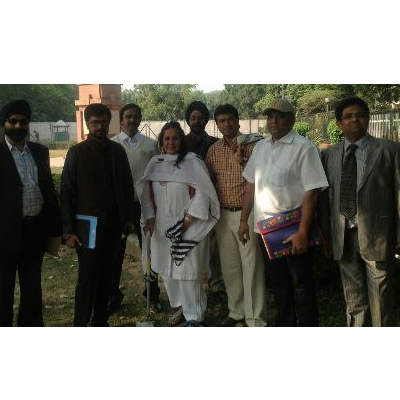
MUMBAI: If one thought that the local cable operators (LCOs) would give up without a good fight for their rights, one was surely mistaken. When around 10 LCOs from across states met the Parliamentary Committee on Information and Technology today in New Delhi, they ensured that their voices were heard on digital addressable systems (DAS). The meeting that went on for two and half hours was attended by 20 members of parliament.
While each LCO was heard by the committee, it was ABS 7 Star CMD Atul Saraf who said that the LCOs were not against digitisation, but against mandated digitisation. “Digitisation should be voluntary,” he said in the meeting.

The LCOs represented the trials and tribulations of the cable TV consumer to the committee. “We spoke on consumer interest and what they had gained with digitisation,” informed Cable Operators Federation of India president Roop Sharma. The operators opined that the consumer should be able to choose his set top box (STB).
Apart from Saraf and Sharma, the others who were a part of the committee included: Pramod Pandya, Swapan Chowdhary, Jeevan Khanna, Ajeet Singh, Sudhish Kumar, GS Oberoi, Gaurav Gupta, Chandradeep Bhatia and Paramjit Singh.
“The consumer should be able to buy portable STBs which gives him access to internet, video-on-demand and other facilities. Why should every consumer be burdened with the same quality of STB. There should be a provision that if someone wants to buy an expensive STB they should be able to do so,” said Sharma.
The operators also suggested that since it is the consumer who pays for the STB, they should be allowed to own it. “Also consumer should have the option to change STBs and his service provider. Currently if Hathway seeds a STB in a consumer’s house, they cannot switch to another MSO,” said Sharma to the committee.
The LCOs also raised concern over their own existence. Many in the meeting felt that the LCOs have been left at the mercy of the MSOs. They also said that the process of billing and the power to switch off STBs should be with the LCOs and not MSOs.
The operators put a point stating that TRAI should first successfully complete digitisation of phase I and II and then start the work in phase III and IV.
On the issue of entertainment tax, the LCO representatives opined that there should be uniformity in taxation throughout. “Also we told them that entertainment tax should be collected per household and not per TV set,” informed Sharma.
The MPs asked the LCOs for solutions to the issues with digitisation, to which the LCOs suggested that the long pending Broadcasting Bill and the DTH Act needs to be brought in to regulate and control the the broadcasters and DTH players respectively.
Also a point on implementation of vertical monopoly and cross media holding on immediate basis, before going ahead with further digitisation was made.
The committee will also be meeting Information and Broadcasting Minister Manish Tewari in a couple of days, after which they will come out with a recommendation which will be submitted to the I&B Ministry.






MUMBAI: When margins wobble, liquidity talks and in Q3 FY25-26, cash did most of the talking. Den Networks Limited closed the December quarter with consolidated revenue of Rs.251 crore, marginally higher than the previous quarter but down 4 per cent year-on-year, even as profitability stayed resilient on the back of strong cash reserves and disciplined cost control.
Subscription income softened to Rs.98 crore, slipping 3 per cent sequentially and 14 per cent from last year, while placement and marketing income offered some cheer, rising 15 per cent quarter-on-quarter to Rs.148 crore. Total costs climbed faster than revenue, up 7 per cent QoQ to Rs.238 crore, driven largely by higher content costs and operating expenses. As a result, EBITDA dropped sharply to Rs.13 crore from Rs.19 crore in Q2 and Rs.28 crore a year ago, pulling margins down to 5 per cent.
Yet, the bottom line refused to blink. Profit after tax stood at Rs.40 crore, up 15 per cent sequentially and only marginally lower than last year’s Rs.42 crore. A healthy Rs.57 crore in other income helped cushion operating pressure, keeping profit before tax at Rs.48 crore, broadly stable quarter-on-quarter despite the tougher cost environment.
The real headline-grabber, however, sits on the balance sheet. The company remains debt-free, with cash and cash equivalents swelling to Rs.3,279 crore as of December 31, 2025. Net worth rose to Rs.3,748 crore, while online collections accounted for 97 per cent of total receipts, underscoring strong cash discipline across operations, including subsidiaries.
In short, while Q3 showed signs of operating strain, the financial backbone remains solid. With zero gross debt, steady profits and a formidable cash war chest, the company enters the next quarter with flexibility firmly on its side proving that in uncertain markets, balance sheet strength can be the best growth strategy.