News Headline
Karunanidhi opposes SC rule against ban of politicians’ pictures in govt ads


NEW DELHI: DMK chief and former Tamil Nadu chief minister M Karunanidhi has lashed out at the Supreme Court’s ban on the photos of politicians in government ads.
The veteran politician has said that this takes away the rights of the states.

He was quoted in media reports as saying, “The PM and CMs are of same status in a federal set-up. In states, people give more importance to the CMs than the PM. A picture of a CM is inevitable in state govt advertisements. There are few educated people. The pictures help people understand ads better.”
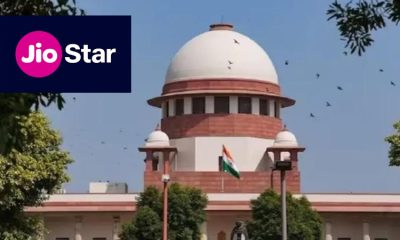
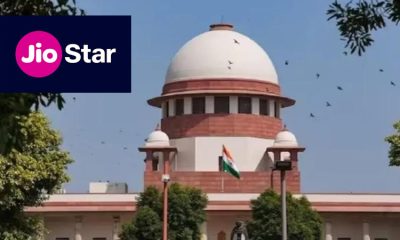
Holding that taxpayers’ money cannot be spent to build “personality cults” of political leaders, the Supreme Court restrained ruling parties from publishing photographs of political leaders or prominent persons in government-funded advertisements.
The Court said such photos divert attention from the policies of the government, unnecessarily associate an individual with a government project, and pave the way for cultivating a “personality cult.”
A bench of Justices Ranjan Gogoi and N.V. Ramana said the photos of only three constitutional authorities – the Prime Minister, the President and the Chief Justice of India – can be used in such ads. However, the personal approval of these three authorities will be necessary before publication.
The observations of the Court were based on examination of the findings of a Committee led by Bangalore’s National Law University Director N.S. Madhava Menon set up in May last year, which had submitted its report in October. The Committee was set up by the Information and Broadcasting Ministry pursuant to an order of 23 April last year. Other members were former Lok Sabha secretary general T K Vishwanathan, and senior advocate Ranjit Kumar. Bimal Julka, secretary in the I&B Ministry, was the member secretary of the Committee.
The court passed the order on a public interest litigation (PIL) filed by the NGOs Common Cause represented by counsel Meera Bhatia and the Centre for Public Interest Litigation (CPIL) represented by advocate Prashant Bhushan pleading it to frame guidelines.
The petitions sought issuance of guidelines for curbing ruling parties from taking political mileage by projecting their leaders in official advertisements.
The Menon panel had recommended a complete ban on publishing of photos in the ads. It had further said that no ads should be allowed on election eve.
However, Justice Gogoi made changes in four cases. Instead of a complete ban on publishing of photos of all individuals, it said pictures of PM, President and CJI can be used provided they personally clear it – thus, in a way, making them also accountable for the publication.
Secondly, the court improvised on the Menon committee recommendations to direct the government to appoint a three-member Ombudsman body of persons with “unimpeachable integrity.”
The bench disagreed with the panel’s suggestion for a performance audit on such government ads.
Holding that there had been “misuse and abuse” of public money on such advertisements, the three-member committee headed by eminent academician Professor Menon had framed guidelines to regulate expenditure and contents of such ads.
The report had said only pictures and names of the President, the Prime Minister, Governor and Chief Ministers be published.
The apex court bench had then said that the existing guidelines of the Directorate of Advertising and Visual Publicity (DAVP) do not cover such ads. There was therefore a need for substantive guidelines to be issued by the Court until the legislature enacts a law in this regard.
The three members of the committee recommended that the governments must prepare a list of personalities whose birth or death anniversaries will be marked with ads in advance.
The government must then specify which Ministry should release the ad to avoid different departments and state-run companies from paying tribute to the same leader with a multitude of ads. “There should be a single advertisement only,” the Committee said.
The committee said that its recommendations are to prevent “the arbitrary use of public funds for advertising… to project particular personalities, parties or governments without any attendant public interest.”
As was reported earlier by Indiantelevision.com, the move is likely to impact the revenues of some media groups as television channels will no longer be able to run TVCs by state governments featuring Chief Ministers and other local political leaders.






NEW DELHI: Hamdard Laboratories gathered a cross-section of India’s achievers in New Delhi on Friday, handing out the Hakeem Abdul Hameed Excellence Awards to figures who have left their mark across healthcare, education, sport, public service and the arts.
The ceremony, attended by minister of state for defence Sanjay Seth and senior officials from the ministry of Ayush, celebrated individuals whose work blends professional success with a sense of public purpose. It was as much a roll call of achievement as it was a reminder that influence is not measured only in profits or podiums, but in people reached and lives improved.
Among the headline awardees was Alakh Pandey, founder and chief executive of PhysicsWallah, recognised for turning affordable digital learning into a mass movement. On the sporting front, Arjuna Awardee and kabaddi player Sakshi Puniya was honoured for her contribution to the game and for pushing women’s participation onto bigger stages.
The cultural spotlight fell on veteran lyricist and poet Santosh Anand, whose songs have echoed across generations of Hindi cinema. At 97, Anand accepted the honour with characteristic humility, reflecting on a life shaped by perseverance and hope.
Healthcare honours spanned both modern and traditional systems. Manoj N. Nesari was recognised for strengthening Ayurveda’s place in national and global health frameworks. Padma shri Mohammed Abdul Waheed was honoured for his research-backed work in Unani medicine, while padma shri Mohsin Wali received recognition for his long-standing contribution to patient-centred care.
Education and social development also featured prominently. Padma shri Zahir Ishaq Kazi was honoured for decades of work in education, while former Meghalaya superintendent of Police T. C. Chacko was recognised for public service. Goonj founder Anshu Gupta received an award for his dignity-centred rural development initiatives, and the Hunar Shakti Foundation was honoured for empowering women and young girls through skill development.
The Lifetime Achievement Award went to former IAS officer Shailaja Chandra for her long career in public healthcare and governance, particularly in the traditional systems under Ayush.
Speaking at the event, Hamdard chairman Abdul Majeed said the awards were a tribute to those who combine excellence with empathy. “These awardees reflect Hakeem Sahib’s belief that healthcare, education and public service must ultimately serve humanity,” he said.
Minister Seth struck a forward-looking note, saying India’s young population gives the country a unique opportunity to become a global destination for learning, health and wellness by 2047.
The ceremony also featured the trailer launch of Unani Ki Kahaani, an upcoming documentary starring actor Jim Sarbh, set to premiere on Discovery on 11 February.
Instituted in memory of Unani scholar and educationist Hakeem Abdul Hameed, the awards have grown into a national platform that celebrates those building a more inclusive and resilient India. For one evening at least, the spotlight was not just on success, but on service with substance.






