iWorld
Kantar Media to commence TV audience engagement on Twitter in UK


NEW DELHI: Audience measurement specialist Kantar Media, which also has a stake in TAM in India, has unveiled Britain’s official Twitter metric for measuring Twitter TV audience engagement.
Developed with Twitter as part of a global partnership announced last year, the new Kantar Twitter TV Ratings tools will be available from mid-October.

The new tool, bringing together geo-filtered UK Twitter data with the audience research expertise of Kantar Media, enables broadcasters, media agencies and advertisers to track exactly how Twitter amplifies the power of television.
Kantar Twitter TV Ratings will include new metrics that have never been available before in the UK including:
• Unique authors (people Tweeting) and their affinity to brands, channels and programmes
• Unique audience – using data only available to Kantar Media, the firm is able to measure the number of individuals who viewed Tweets related to individual programmes/shows
• Impressions – the total number of times that a Tweet or Retweet has been seen about a particular programme
This is in addition to existing metrics including:
• number of Tweets and Retweets about a programme before, during and after transmission;
• average Tweets per minute and the highest volume of Tweets per minute ascribed to the programme in question
According to Kantar Media global CEO and chairman Andy Brown, the launch of the first official Twitter TV metrics in the UK gives the broadcast industry official insight for social TV engagement to complement the BARB gold-standard TV measurement currency. “Using the Kantar Twitter TV Ratings, broadcasters, planners and advertisers will be able to assess programmes and series, plan programme promotions more effectively and assist media buyers and sellers to integrate social data more comprehensively into the TV component of their media mix,” he advised.
In addition to these new metrics, Kantar Media has also developed an intuitive dashboard, Instar Social, that broadcasters, media agencies and advertisers can use to view and analyse data alongside their existing TV analysis tools. Instar Social will include a live, real-time leaderboard, providing a snapshot of the top Tweeted programmes as they happen, with the ability to drill down and view actual content of the Tweets in real-time.
Further enhancements scheduled for release include trending topics that are driven by a programme, integration of BARB gold-standard ratings data into the dashboard enabling data overlays, as well as API data feeds.






iWorld
Asha Bhosle, the unforgettable voice that sang a thousand emotions
The melody that defined generations has fallen silent, but her songs will echo forever.
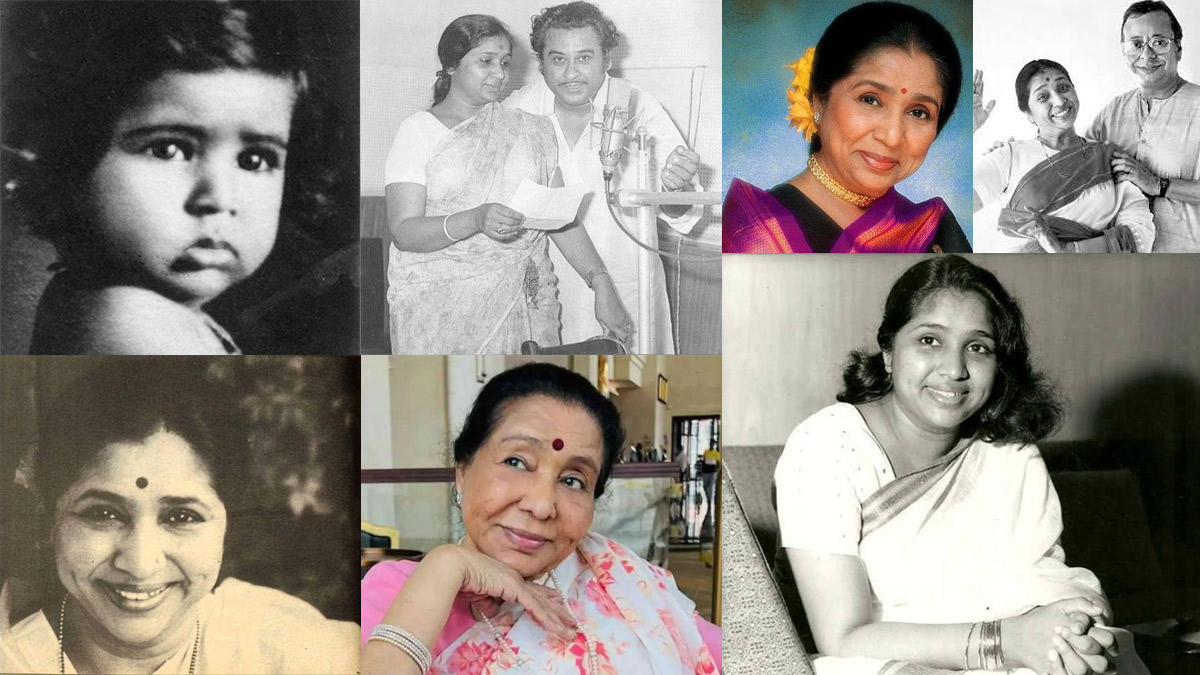
MUMBAI: The voice that once lit up countless silver screens and brought rhythm to millions of hearts has stilled. Legendary singer Asha Bhosle, one of the most versatile and prolific vocalists in Indian film music, passed away at the age of 92 in Mumbai on Sunday. She was admitted to Breach Candy Hospital on Saturday night after suffering cardiac and respiratory issues and had reportedly been unwell for several months.
Her son, Anand Bhosle, confirmed the news on Sunday afternoon. The last rites will be performed on Monday.
Born in 1933 into the illustrious Mangeshkar musical family, Asha began her journey in the golden era of Hindi cinema. She recorded her first film song at the age of nine in 1943 and, by the 1950s, had already carved a distinct space for herself in Bollywood. While her elder sister Lata Mangeshkar often took the more melodic, heroine-centric numbers, Asha quickly became the go-to voice for energetic cabaret tracks, dance numbers, and later, the full spectrum of emotional expression.
The 1950s–60s: Rise of the Cabaret Queen In the early decades, Asha was frequently typecast for “item songs” and Western-style numbers. Yet even within those constraints, she delivered unforgettable hits such as “Aaja Aaja” from Teesri Manzil and “O Haseena Zulfon Wali” from the same film. Her playful, sassy delivery gave these tracks a magnetic energy that still feels fresh today.
The 1970s: Peak Versatility This was the decade that cemented her legendary status. Songs like “Dum Maro Dum” (Hare Rama Hare Krishna), “Piya Tu Ab To Aaja” (Caravan), “Chura Liya Hai Tumne” (Yaadon Ki Baaraat), and “Yeh Mera Dil” (Don) became cultural touchstones. Asha proved she could swing from seductive to soulful with equal ease, working with almost every major composer of the era.
The 1980s: Emotional Depth and Ghazals After marrying composer R.D. Burman in 1980, Asha explored more nuanced, introspective territory. Her National Award-winning performances in Umrao Jaan (“Dil Cheez Kya Hai”) and Ijaazat (“Mera Kuch Saamaan”) showcased a matured, velvety voice capable of profound emotion. These tracks remain among the most cherished ghazals in Indian cinema.
The 1990s–2000s: Global Collaborations and Reinvention Even as newer voices emerged, Asha refused to fade. She collaborated internationally with the Kronos Quartet and released experimental albums. Later in her career, she lent her voice to younger composers and continued performing live, often sharing the stage with her granddaughter Zanai Bhosle.
A Life Beyond the Microphone Asha’s personal journey was as dramatic as her filmography. At 16, she eloped with Ganpatrao Bhosle, her personal secretary. The marriage ended in separation in 1960 after they had three children. In 1980, she married R.D. Burman in a union that faced family opposition but brought creative synergy. RD passed away in 1994.
Throughout her life, Asha remained grounded, often crediting classical music and ghazals for keeping her voice sharp. In a 2023 interview, she admitted she rarely listened to contemporary film songs, preferring the timeless works of Bhimsen Joshi and classic ghazals to stay inspired.
Her seven Filmfare Awards and two National Film Awards are merely numbers; the true measure of her legacy lies in the thousands of songs that still play in homes, cars, and hearts across generations. From the foot-tapping energy of “Dum Maro Dum” to the haunting beauty of “Mera Kuch Saamaan”, Asha Bhosle gave Indian cinema a voice that was simultaneously bold, tender, playful, and profound.
The golden era has lost one of its brightest stars, but the music she created will continue to refresh souls for decades to come. As the final notes of her extraordinary journey fade, India bids farewell to a voice that truly defined an era.







