High Court
Kantar argues TV ratings regulation requires legislative action

NEW DELHI: Kantar Market Research Services, a promoter of India’s only television ratings agency TAM Media Research, said today that any action relating to fundamental rights had to be done through an act of Parliament and not by an executive order.
Harish Salve, counsel for Kantar, said during the hearing on his client’s petition in the Delhi High Court against regulations for television ratings agencies that the government should have issued an ordinance and then replaced it with an act of Parliament since any attempt to regulate television ratings agencies was tantamount to interfering with the freedom of speech and expression under Article 19(1)(a). Any order curtailing fundamental rights must have statutory backing, he claimed.

He said even the Telecom Regulatory Authority of India which had earlier given a report on TV ratings in 2008 and the Parliamentary Standing Committee which had considered the issue later in the same year had been of the view that the government could not tamper with the content. In any case, Salve argued that TRAI was only concerned with carriage and not content and can only make recommendations.
He wondered why the Government did not act after it received the TRAI report in 2008 to push through legislation on this issue.
He said the executive order under Article 73 was part of the government’s agenda to push for control of content.
He said there will be a complete blackout of television viewership ratings under new government regulations since the Broadcast Audience Research Council (BARC) was still in the planning stage.
He also said that the law was in any case clear that the government was a licensor for broadcasting and not TAM which was a private rating agency. As a private agency, it could not be told not to have cross-media holding.
While still not granting a stay on the regulations that come into effect from 15 February, Justice Manmohan said he will continue hearing the case tomorrow but may consider ‘interim arrangements’ if the hearing lingers on.
The Judge also asked Kantar to place on its website the shareholding pattern of various shareholders in TAM since the primary objection taken by Kantar is to the reference to cross-media holding in the proposed regulations.
The three respondents Union of India, the Telecom Regulatory Authority of India (TRAI) and the News Broadcasters Association (NBA) have filed their affidavits and will present their views tomorrow on Kantar’s petition for an interim stay.
Salve, who concluded his arguments today, said Kantar did not have any cross-holding in the broadcasting sector. He claimed that TAM was operational in 37 countries.
Senior counsel Mukul Rohatgi, who also represented Kantar, said the committee that recommended BARC had itself admitted that TAM was the best rating agency in the country, and had not made any recommendations with regard to cross-media holdings.
During the last hearing, the judge had wanted to know why TAM was not present itself, and Salve said that the issue of cross-media holdings mentioned in the guidelines affected Kantar which was a major shareholder and not TAM.






High Court
Delhi HC blocks illegal IPL 2026 streams, backs JioStar rights
Court orders swift takedowns, expands crackdown on piracy apps
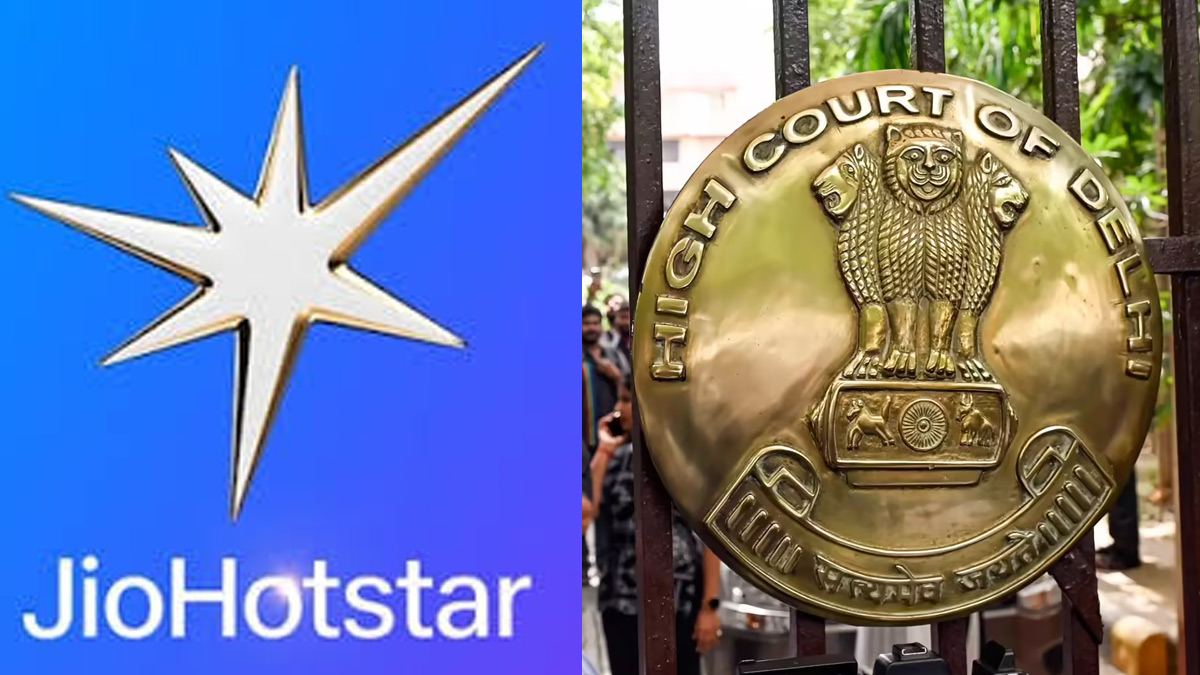
NEW DELHI: In a timely move ahead of the cricketing season, the Delhi High Court has granted interim relief to JioStar India Private Limited, clamping down on illegal streaming of the TATA Indian Premier League 2026.
The court passed ex parte ad interim injunctions in two separate suits, restraining rogue websites and mobile applications from broadcasting IPL matches without authorisation. The tournament is set to begin on 28 March, making the timing of the order particularly significant.
Recognising JioStar’s exclusive digital and broadcast rights for the IPL cycle from 2023 to 2027, the court observed that unauthorised streaming would infringe its statutory and proprietary rights, potentially causing irreparable losses.
In one case, the court directed several identified websites to immediately stop hosting or streaming IPL content. It also issued a dynamic injunction, allowing JioStar to flag new infringing platforms in real time, which must then be blocked swiftly by domain registrars and internet service providers.
In a parallel order, the court turned its attention to piracy through mobile apps, particularly Android-based platforms distributing content via APK files. A broader dynamic+ injunction was granted, extending to future variants, mirror links and related interfaces, signalling a tougher stance on evolving piracy tactics.
The court also directed domain name registrars to suspend offending domains and share registrant details, including KYC and payment information. Internet service providers and telecom operators have been instructed to block access within strict timelines, in some instances within 36 hours. Both the Department of Telecommunications and the Ministry of Electronics and Information Technology have been asked to facilitate enforcement through necessary notifications.
Noting the fast-changing nature of digital piracy, the court emphasised the need for real-time enforcement tools to keep pace with anonymous and constantly shifting networks. It also underlined the commercial impact of piracy on legitimate rights holders.
The ruling reinforces the judiciary’s firm stance on protecting intellectual property in the digital age. For viewers, it is a reminder to stick to official platforms as the IPL season kicks off under tighter watch.







