News Broadcasting
Kalli Purie urges RSS to boost women’s role in leadership at book launch

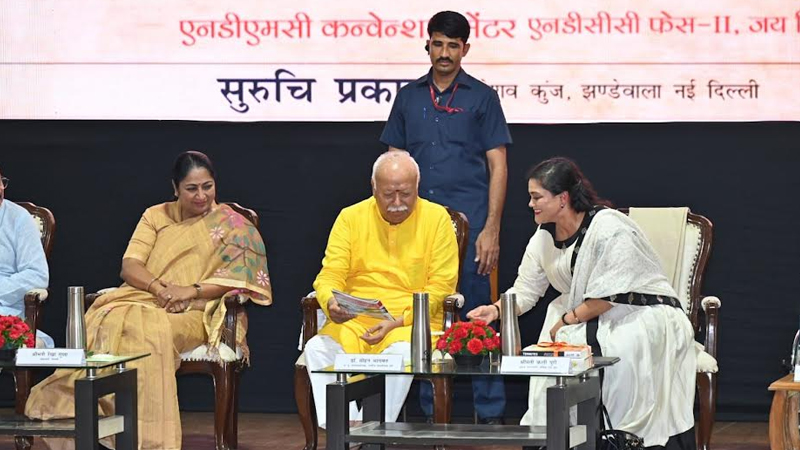
MUMBAI: When Kalli Purie took the mic, she made sure the Sangh heard more than just polite applause. Speaking in the presence of RSS chief Mohan Bhagwat at the launch of Tan Samarpit, Man Samarpit, a biography of swayamsevak Ramesh Prakash India Today group vice chairperson called for women to find stronger footing in the Rashtriya Swayamsevak Sangh’s leadership structures.
Purie praised the Sangh’s famed simplicity, discipline, and its unusual ability for century-long planning, referencing its centennial blueprint and Panch Parivartan vision. But she also pushed the envelope, noting that corruption must not be normalised as “a way of life”. She spotlighted India Today’s experiment with Gross Domestic Behaviour (GDB), a metric designed to gauge civic discipline, inclusivity, gender balance, and attitudes towards corruption.
Her candour drew a direct response from the Sarsanghchalak himself. Bhagwat stressed that true social transformation cannot come from ideas alone: “Knowledge is not enough. Change comes only when it reflects in the swayamsevak’s life through discipline, example, and practice.”

On the question of women’s representation, he pointed to the Rashtra Sevika Samiti, the women’s wing founded in 1936, which he described as running in parallel to the RSS. “Wherever there are swayamsevaks, women are alongside,” he said, adding that in many regions, women are invited into core meetings, their proposals are included, and their role in decision-making is expanding. “Fifty per cent of society cannot be kept outside,” he underlined, while noting that processes differ across states, which he framed as a mark of the Sangh’s evolving nature.
Yet Bhagwat also added a note of balance: “Rashtra seva should never come at the cost of family duties. The two are complementary, not contradictory.”
Between Purie’s call for parity and Bhagwat’s emphasis on gradual adaptation, the evening turned into more than just a book launch, it became a mirror to the Sangh’s ongoing conversation about gender, governance, and the path to social change.





News Broadcasting
Kamlesh Singh receives Haldi Ghati Award from MMCF
India Today Group editor honoured for three decades of journalism at Udaipur ceremony.
MUMBAI- Kamlesh Singh just turned a lifetime of sharp words into a shiny shield because when journalism wakes up a society, even the Maharana of Mewar wants to pin a medal on it.
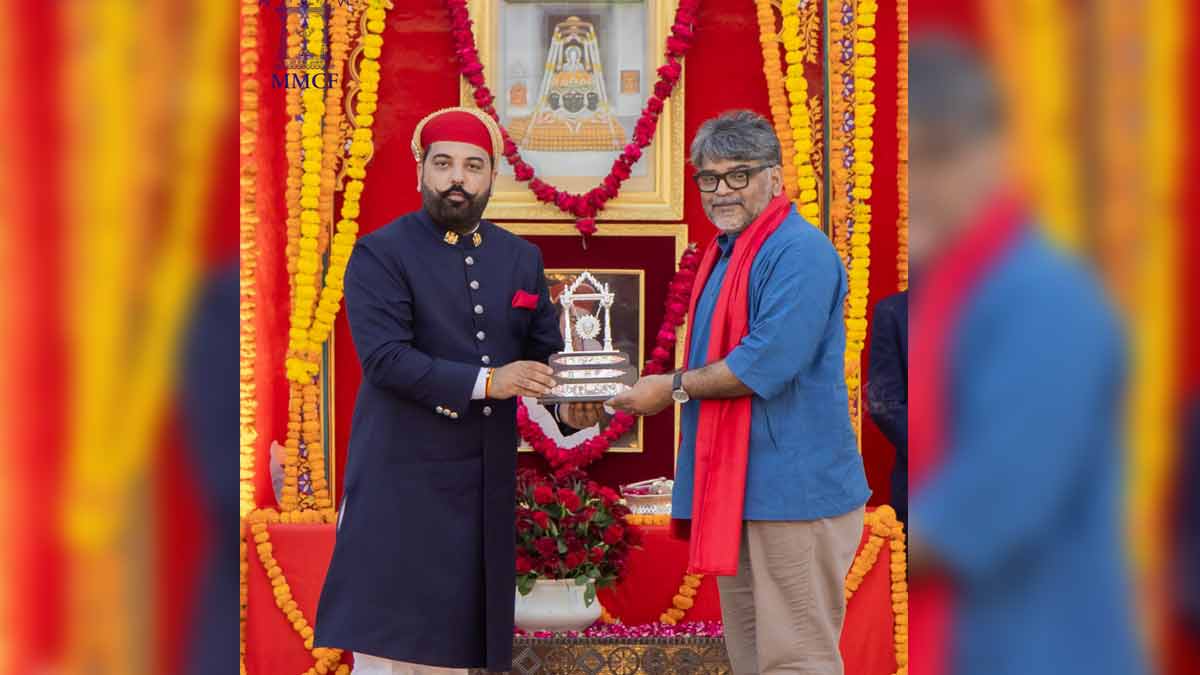
The Maharana of Mewar Charitable Foundation (MMCF) conferred its prestigious Haldi Ghati Award on Kamlesh Singh, a senior editor at the India Today Group, during a ceremony in Udaipur on 15 March 2026. The national award, instituted in 1981-82, recognises “work of permanent value that initiates an awakening in society through the medium of journalism.”
Singh, who leads several editorial initiatives including Aaj Tak Radio, the Teen Taal community and The Lallantop, was presented the honour by Lakshyaraj Singh Mewar, Managing Trustee of MMCF. The citation highlighted his three decades of contributions to Indian media, innovations in digital journalism, mentoring young reporters, and his popular podcast persona “Tau” on Teen Taal, which fosters thoughtful public discourse.
The Haldi Ghati Award, named after the historic Battle of Haldighati symbolising valour and resilience, is one of four national awards given annually by MMCF. Past recipients include Tavleen Singh, Piyush Pandey and Raj Chengappa.
Other honourees this year included Padma Vibhushan Pt Hari Prasad Chaurasia, Vedamurti Devvrat Rekhe, Treeman of India Marimuthu Yoganathan, Vir Chakra Capt Rizwan Malik, and US-based researcher Molly Emma Aitken, who received the Colonel James Tod Award for contributions to understanding Mewar’s spirit and values.
In an era where headlines often shout louder than substance, the MMCF quietly reminded everyone that real journalism isn’t about noise, it’s about the quiet, persistent work that stirs society awake, one thoughtful story at a time.







