News Broadcasting
K Sera Sera looks to launch music channel; eyes buyout of Jhankar

MUMBAI: K Sera Sera is putting its expansion plans in place. One among them: the launch of a music channel, for which it is in advanced negotiations with Jhankar TV to acquire a controlling stake.
The company is also working out output deals which will allow it to have a strong movie production pipeline. On the agenda is a presence in international distribution and an entry into the home video segment. “Lining up movie production contracts is a high priority area. Discussions are on with several parties in this area,” says a source close to the company.
K Sera Sera is in talks with Eros International Plc for a deal that in value terms could be around Rs 2 billion over a longer period, the source adds. Eros, which globally distributes Bollywood content, recently floated an initial public offering and is listed in the London Stock Exchange (LSE).

“While the deal with Sahara was for just satellite TV rights, the talks with Eros are much broader in scope. Eros has entered into music rights and has a wide international movie distribution network. K Sera Sera has produced many movies. If the deal sails through, it will help the company scale up its movie pipeline,” says the source.
K Sera Sera senior executives were not available for comment on both the music channel and the movie deal with Eros.
On the music channel front, K Sera Sera plans to run it through a subsidiary company. By being producers of Bollywood movies, the channel will have a synergistic relationship.
“We are in advanced talks with K Sera Sera for diluting majority stake. Since they have movie software, Jhankar TV stands to gain. But no conclusive agreement has been reached yet,” says Hamara Samay TV News Network Pvt Ltd president Zaheer Ahmad. Hamara Samay is the company that owns and operates Jhankar TV.
K Sera Sera is, however, weighing other options including the possibility of launching the music channel on its own. “The company, though, realises the distribution problems of a new channel,” says the source.



News Broadcasting
CNN-News18 to host Fury in the Gulf conclave on West Asia crisis
Three-hour summit to unpack geopolitical fallout and impact on India
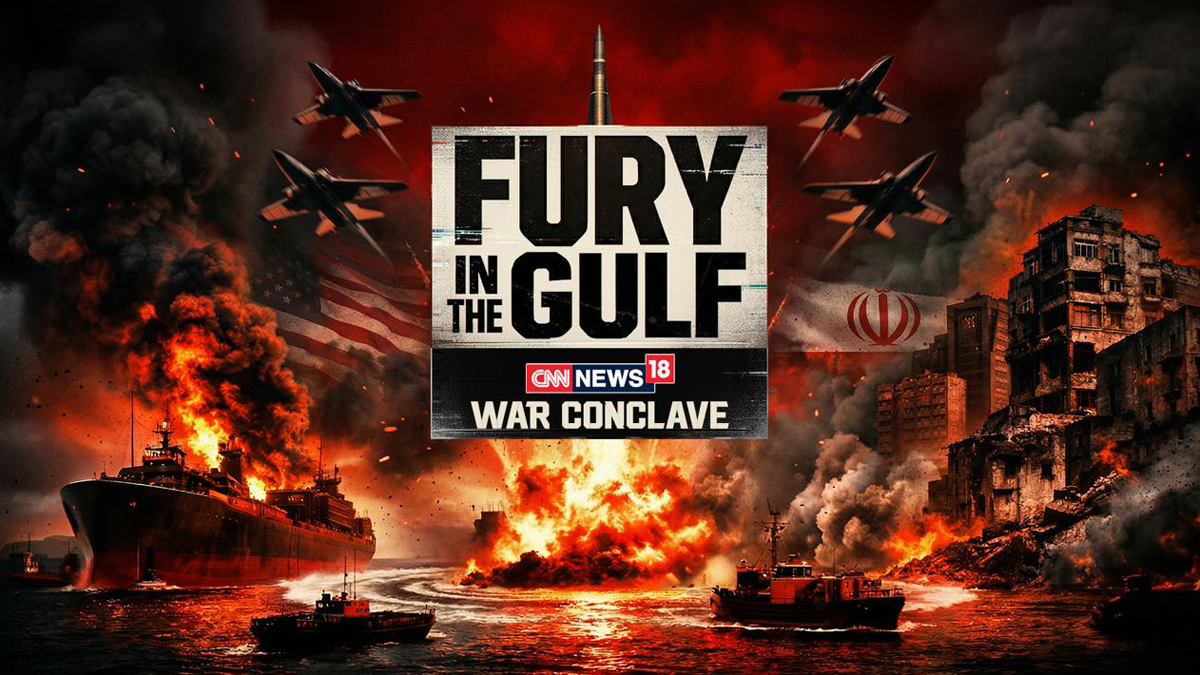
MUMBAI: CNN-News18 is set to host a special three-hour broadcast, Fury in the Gulf – War Conclave, on April 7, aiming to decode the escalating West Asia crisis and its far-reaching implications for India.
Scheduled from 4:00 PM to 7:00 PM, the conclave comes at a time when tensions between Iran and the United States are reshaping global geopolitics and triggering economic uncertainty. With India’s deep energy ties, trade links and large diaspora in the Gulf, the developments carry significant domestic relevance.
Built around the theme ‘Conflict, Consequences, and The Future,’ the programme will feature six curated sessions combining one-on-one interviews and panel discussions. The focus is to cut through the clutter and offer viewers a clearer understanding of the fast-evolving situation.
Key sessions include ‘Diplomacy in Times of War’ featuring Shashi Tharoor, and ‘World After the Iran Conflict’ with voices such as Ram Madhav, Reuven Azar, representatives from the European Union and the Iranian Deputy Envoy. Another session titled ‘Another Dunkirk?’ will bring together K. J. S. Dhillon and Jitin Prasada among others.
CNN-News18 editorial affairs director Rahul Shivshankar said, “In times of war, clarity becomes the most powerful tool. Fury in the Gulf – War Conclave brings together credible voices to address the questions and confusion that arise amid an overwhelming influx of information.”
He added that the initiative is aimed at delivering “facts, perspective, and insight” at a time when misinformation can easily cloud public understanding.
Echoing the sentiment, CNN-News18 CEO– English and business news Smriti Mehra said the conflict marks a defining global moment, with consequences that extend well beyond the region. She noted that the conclave seeks to present the crisis with “depth, nuance and responsibility” so audiences can better grasp its real-world impact.
As geopolitical tensions continue to dominate headlines, the conclave positions itself as an attempt to bring order to the noise, offering viewers a structured, insight-led look at a complex and rapidly shifting global situation.






