iWorld
Jio says Ookla has admitted to flaws in speed measurement system

NEW DELHI: This is one ad war that refuses to die. Even after Jio on the one hand and Airtel and Ookla on the other have had their say, the argument goes on.
In yet another statement by Reliance Jio, it has been stated that Ookla has now admitted to ‘limitations in its application and that it “does not always indicate the actual data provider in devices with multiple SIMs.”
Jio has already filed a complaint with the Advertising Standards Council of India about the ad by Airtel claiming on the basis of Ookla to be the fastest network.

Both Bharti Airtel and Ookla had issued statements seeking to defend the claim.
Jio said: “Jio had been repeatedly pointing out this flaw in Ookla’s Speedtest methodology.”
It added: “This admission by Ookla reinforces Jio’s submission that there is a clear contamination in primary data collected by Ookla in India, where nearly 90 percent of smartphones are dual SIM devices.”
“Any results that are based on incorrect and contaminated primary data cannot be definitive, only probabilistic. It is a travesty that such results are being passed off as “official” results by a market-leading operator. We will continue to expose such misleading practices and raise it at suitable forums”, Jio added.
Ookla had said, “The carrier displayed in the Speedtest Android application is based on the “Active Carrier” value returned by the device. Due to limitations of the Android platform, the “Active Carrier” does not always indicate the actual data provider in devices with multiple SIMs. In these situations, Ookla applies additional data sources and mechanisms during post-processing to help determine the actual data carrier being tested.
Jio in a statement yesterday had said: “The core issue is that the speedtest results are attributed to the primary sim even though the sim for which the data speedtest is conducted is the secondary sim in the case of dual-sim phones. In India, more than 90% of 4G phones are dual-sim. Therefore, there is no guarantee that the speed which is attributed to Airtel is of the Airtel data network. We are surprised that Ookla in its press release has not talked about this issue even though they had acknowledged the blunder to us earlier. Ookla has baldly stated that they stand by their results and has skirted the main issue. We will initiate actions as we deem fit at appropriate forums. The public should not be misled by these false claims based on the Ookla results.”
Earlier yesterday morning, Speedtest (Ookla’s app) COO Jamie Steven said in a statement: “When analysing markets like India, we take many factors into consideration, including dual SIM devices, network technology, device types, and more. In addition to what the user sees on their mobile application as they take a test in real-time, we apply a rigorous methodology when aggregating the data which uses a variety of internal data sources that control for potential variability in the market.”
Also Read:
Airtel hits back at Reliance Jio, Ookla stands by its findings







Gaming
Nodwin Gaming partners with Runestone for esports data and integrity solutions
South Asian esports leader joins forces with Czech tech firm to enhance tournament operations.
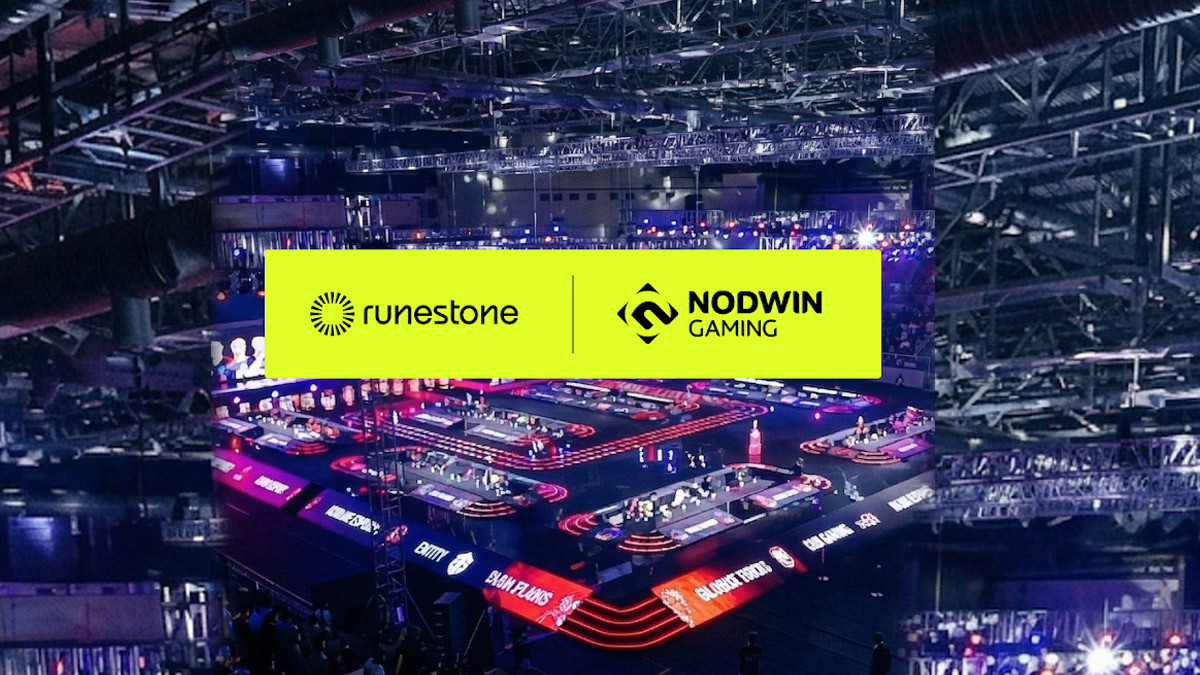
MUMBAI: Nodwin Gaming has just levelled up its game by bringing in a specialist to keep the scoreboard honest and the fans fully engaged. The leading South Asian esports and gaming company has announced a strategic partnership with Runestone, a Prague-headquartered esports technology firm specialising in real-time data and engagement solutions for tournament organisers and publishers.
The collaboration aims to strengthen competitive integrity, improve operational oversight, and deliver more interactive viewing experiences across Nodwin’s properties. It will initially focus on the Nodwin Clutch Series for Counter-Strike 2, a Tier 2 tournament that provides emerging teams with consistent competitive opportunities and helps build the talent pipeline.
The latest edition of the series recently concluded with Big defeating ECSTATIC 2–1 in the grand final of the $50,000 online event.
Nodwin Gaming chief business officer at MENA and global head of data monetization Teemu Koski said, “Integrity and transparency are fundamental to sustainable esports ecosystems, especially in Tier 2 competition where the next generation of talent emerges. Runestone’s expertise complements our experience in building scalable esports IPs.”
Runestone head of partnerships Michael Schwartz added, “Nodwin Gaming has built one of the most dynamic esports ecosystems across emerging markets. We’re thrilled to collaborate on supporting tournaments with greater transparency, deeper fan interaction, and scalable tools.”
Both companies are exploring opportunities to extend the partnership across additional titles, including mobile-first competitive ecosystems, and to develop new products for publishers, tournament operators, and event promoters.
In the rapidly growing world of esports, where fair play and fan excitement are equally crucial, Nodwin Gaming and Runestone are teaming up to ensure every match is not only competitive but also transparent and engaging. This alliance could well become a game-changer for Tier 2 tournaments across South Asia and beyond.







