News Broadcasting
James Murdoch is BSkyB CEO

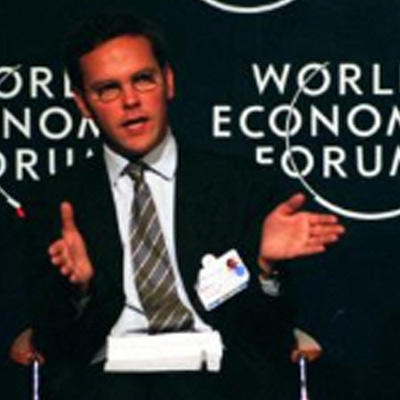
LONDON: In the end, the plot went just about according to script for News Corp chairman Rupert Murdoch.
After over a month of speculation, Murdoch’s youngest son James was yesterday appointed CEO of Britain’s pay television giant British Sky Broadcasting Group (BSkyB) on “the unanimous recommendation” of a four-member nomination committee, a company statement said. And despite all the brouhaha around father and son holding the chairman’s and CEO’s post simultaneously, Murdoch Sr will continue in his present position on the BSkyB board.
James Murdoch, 30, who currently heads News Corp’s Asian satellite network Star Group, officially takes charge today from Tony Ball, who stepped down in September. Ball also resigns as a director of the company with effect from today. Murdoch Jr will now now resign from the boards of News Corp. and its technology arm NDS Group immediately to clear the way for taking up the chief executive’s post at BSkyB.

As there is no word to the contrary, Murdoch Jr will continue to hold on to his present position as chairman and CEO of Star. It however, looks likely that Star will sooner rather than later appoint a chief executive to run the company while Murdoch Jr retains the chairman’s post.
Murdoch’s appointment is due to be rubber-stamped next week at BSkyB’s annual general meeting on 14 November.
Meanwhile, in a move to allay shareholder fears, Jacob Rothschild was appointed to a new role of non-executive deputy chairman. The satcaster has also appointed Royal Mail chairman Allan Leighton, who sits on the nominations committee, as chairman of the audit committee and said it would appoint a further additional independent non-executive director.
Rupert Murdoch last month publicly backed his son as the best candidate to take over from Ball. Murdoch was quoted yesterday in a company statement as saying: “The board and I are pleased that the nomination committee has completed its task and it is unanimous in its conviction that James is the right man for this job. He follows a series of successful chief executives Sam Chisholm, Mark Booth and Tony Ball. I feel confident that James will carry on their work and continue the company’s success. It is a mark of BSkyB’s stature that the board has been able to attract a man of Lord Rothschild’s calibre and we are delighted that he has accepted the post of deputy chairman.”
James Murdoch was quoted as saying: “It is a privilege to have the opportunity to play a part in the company’s future. I particularly look forward to working with the people at Sky who have played such a key role in its success, and to working for all the shareholders to deliver even greater value.”
But the BSkyB CEO tale is not expected to all go Murdoch Sr’s way. One person who will almost certainly have to go is is Lord St John, the former Conservative minister who is up for re-election.
According to British newspaper The Independent , a powerful shareholder group, the National Association of Pension Funds (NAPF) is convinced that after 12 years on the Sky board, Lord St John cannot be considered independent. The newspaper quotes the NAPF as saying it “would have expected such a fundamentally important task (as filling the chief executive job) to be led by a director whose independence was not open to question.”
A spokesman for the NAPF however, had only this to say last night: “It’s an interesting development and we will have to look at the explanation and go back to our members to see what they have to say.”
In its report on the company issued on Friday, the NAPF had also urged BSkyB to appoint new independent non-executive directors and recommended that shareholders also vote against the company’s remuneration report at the 14 November AGM.






News Broadcasting
News18 India launches Command Centre war explainer with Arya
New show shifts from debates to decoding global conflicts and impacts

MUMBAI: News18 India has rolled out a new war-focused programme, Command Centre, featuring Gaurav Arya, as it looks to offer viewers a sharper, more grounded take on global conflicts amid rising tensions in West Asia.
Positioned as an “insider war room”, the show moves away from conventional panel debates and instead focuses on explaining military developments, decoding strategy and connecting global events to their everyday impact, from fuel prices to economic shifts.
The format leans heavily on visuals and data. The studio has been designed like a command hub, complete with large LED war maps, real-time graphics and an alert system to track developments as they unfold.
At the centre of it all is Arya, who brings his military background to simplify complex war strategies for viewers. His signature line, “Seedhi baat samjhiye”, anchors the show’s promise of clarity over noise.
News18 India managing editor Jyoti Kamal said, “Command Centre, featuring Major Gaurav Arya is designed to deliver accurate insights and a clear perspective on how evolving conflicts impact everyday life, from household budgets to national security. With expert voices analysing every development in real time, the show goes beyond headlines to decode what’s happening now, what it means, and what could come next.”
Echoing the intent, Gaurav Arya added, “In times of war, confusion is the biggest threat. With News18 India’s Command Centre, we are bringing viewers inside the war room, decoding strategies, tracking every escalation, and explaining, in the simplest terms, what it means for India and for every household. Seedhi baat samjhiye, this is where you understand not just what is happening, but what happens next.”
The weekday show will air in the afternoon slot and will also feature Gaurav Shukla, adding to its editorial depth.
With its mix of analysis, visuals and a clear focus on impact, the show reflects a broader shift in news consumption. Viewers are no longer just watching events unfold, they are looking to understand what those events mean for them.







