I&B Ministry
Jaipal Reddy vows to push ‘unfinished agenda’

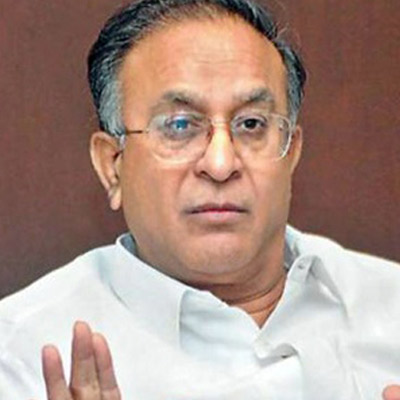
NEW DELHI: New information and broadcasting minister Jaipal Reddy on his first day at the office tread the usual line: that his endeavour would be to complete the unfinished agenda from the last time, including setting up an autonomous regulatory body for the broadcast sector.
He, however, did not specify a time frame for his agenda, as a “consensus” needs to be evolved amongst the various allies of the Congress-led government.
“When I was a minister (of I&B in 1997), I took two important initiatives. Our sincere endeavour would be to take forward these initiatives,” Reddy told journalists immediately after taking over office at Shastri Bhawan earlier this evening.

The initiatives that the minister was referring to were to operationalise the Prasar Bharati Act envisaging an autonomous Doordarshan and All India Radio and to introduce in Parliament a broadcast bill that aimed at setting up a regulatory framework for the sector.
Reddy, however, ruled out any “hasty implementation” of CAS – not at least before the United Progressive Alliance partners are consulted on the issue – as also over-zealous moral policing, saying such things are best left to society to take care of, though the government “would not encourage obscenity.”
Here are excerpts from Reddyspeak during his first interaction with the media in his second stint as I&B minister after almost six years:
On his return to the I&B ministry
I am back after a long while. When I was minister last time, I took two important initiatives. They were to operationalise the Prasar Bharati Act with an aim to give functional autonomy to DD and AIR and introduce a broadcast bill, envisaging a full time autonomous regulator fro the sector. I would not like to comment on what happened to these two initiatives in the interim as this is not the right occasion to strike a critical note. But our sincere endeavour would be to take forward these initiatives.
On his vision of making Prasar Bharati like BBC
When we gave shape to the Prasar Bharati Act, it was done to give autonomy to DD and AIR on the lines of BBC. I’m still inspired by that model and hope that the (Indian) public service broadcaster would become like that. I’d like DD and AIR to have the same sort of autonomy so as to give the type of coverage on Iraq like BBC did. It cannot happen in one day. But I too am less innocent now than six years ago.
Apart from giving non-partisan coverage to stormy political stories, the public service broadcaster’s role is different in the sense that it should keep the larger social goal in view. A public service broadcaster has to be different from the private channels.
On a regulatory authority for the broadcasting sector:
I had envisaged a broadcasting authority on the lines of the FCC (of the US). For a variety of reasons, it hasn’t come about. At the moment some of the functions are being performed by the Telecom Regulatory Authority of India (Trai) on a temporary basis. But I’d like to create a full-time independent regulatory body for the sector.
I understand there are various contentious issue relating to the broadcasters, cable operators and also FM radio. Ideally, these issues should be looked into by the regulator and not the government, but I still cannot give a time frame for setting up the body. It would be our endeavour to do so as early as possible.
On the possibility of reviving the enactment of a convergence law:
There is no denying that one model is to have different regulatory bodies for sectors like IT, telecom and broadcasting. Another model would be to have a convergence authority. These are matters of details and policy. My endeavour would be to evolve a bi-partisan consensus (within the ruling party and its allies) on such issues.
On the controversial CAS:
Whether it is CAS or DTH, I have not have enough time to study the matter. I’d have to consult the various constituents of the UPA on this. There is a law (regarding CAS) and we need to look into it. But no hasty implementation (of CAS) is warranted.
On government as a moral police:
I am a liberal and a libertian. I don’t think moral policing is the job of the government. It’s an issue that society should take care of. While we don’t want encourage obscenity, we would not like to interfere too much also.
On the possible de-saffronisation of Prasar Bharati and changes effected in DD News:
I am not so much interested in change of personnel as in change of attitude.
On the possibility of a media policy:
That should be a broad one. I firmly believe that the media should be allowed to function on its own.
On possible review of foreign investment norms in media:
It’s a sensitive issue. Already 26 per cent foreign investment is allowed in the media. I would not like to get into that issue now.





I&B Ministry
MeitY extends deadline for feedback on digital media rules overhaul
Government gives stakeholders more time to respond to proposed changes in intermediary guidelines.
MUMBAI: When the rulebook gets a rewrite, even the internet needs a little extra time to read the fine print. Regulators have extended the deadline for public feedback on a proposed overhaul of India’s digital media and intermediary liability framework, giving stakeholders until April 29 to submit their views. In a notice issued on April 10, the Ministry of Electronics and Information Technology (MeitY) said it was extending the consultation period for draft amendments to the Information Technology (Intermediary Guidelines and Digital Media Ethics Code) Rules, 2021, following representations from several stakeholders.
At the heart of the proposals is a significant shift in how social media platforms and other intermediaries must respond to government communications. A new provision would make compliance with official “clarifications, advisories, directions, standard operating procedures and guidelines” a formal part of the due diligence obligations required to retain safe harbour protection under Section 79 of the Information Technology Act.
The amendments would also expand the scope of content oversight under Part III of the rules. The digital media ethics code would now apply not only to publishers but also to intermediaries hosting or transmitting user-uploaded news and current affairs content. This could bring user-generated news more directly under regulatory scrutiny.
Additionally, the Inter-Departmental Committee’s powers would be broadened, allowing it to take up matters referred directly by the ministry rather than waiting for formal complaints. This signals a more proactive approach to content monitoring.
The existing IT Rules already impose strict requirements on intermediaries, including timely removal of unlawful content, grievance redressal mechanisms, and traceability in certain cases. Recent updates have also introduced obligations around labelling synthetically generated content.
Officials have described the amendments as necessary to create an “Open, Safe, Trusted and Accountable Internet” while improving legal clarity and enforceability.
With the extended deadline now set for April 29, the government has given industry bodies, civil society, and digital platforms additional time to respond to changes that could significantly reshape how online platforms operate and are governed in India.
In the fast-scrolling world of digital regulation, a little extra time to read the small print might just prevent bigger headaches down the line.







