Applications
Jain-Modi’s Almonds Ai reveals 2025 Channel Loyalty Report

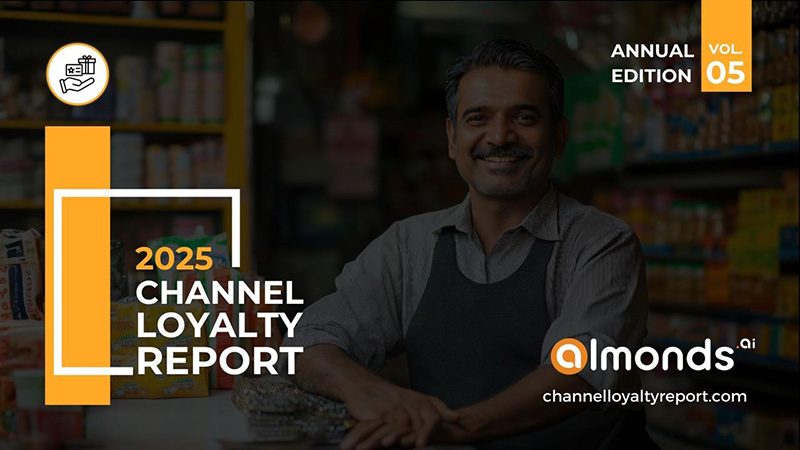
MUMBAI: The loyalty game is changing, and brands need to keep up. Almonds Ai, a leader in channel loyalty, rewards, and engagement solutions, has released the highly anticipated fifth edition of the Channel Loyalty Report 2025—the only in-depth research of its kind focused on India’s channel loyalty ecosystem. With insights revealing technology’s growing role, sustainability’s rising influence, and personalisation’s increasing demand, this report paints a vivid picture of where loyalty programs are headed.
The Indian channel loyalty market has soared to a whopping Rs 25,400 crore, growing at a robust 14 per cent CAGR. As competition tightens, brands must evolve beyond traditional rewards to retain loyalty, foster deeper engagement, and drive long-term growth. The message is clear: adapt or get left behind.
Key findings:

. 94 per cent of channel partners now prefer mobile-based redemption, making digital-first loyalty solutions the new norm.
. 58 per cent of partners remain unclear about Section 194R tax compliance, underscoring the need for greater transparency and education.
. 64 per cent of respondents believe eco-friendly rewards will take centre stage as sustainability becomes a key driver of engagement.
. 72 per cent of partners cite gamification as the defining trend, proving that interactive, experience-driven programs are the future.
. AI-powered loyalty solutions boost partner retention by up to 28 per cent, with brands increasingly leveraging data-driven engagement strategies.
Almonds Ai’s co-founders Abhinav Jain and Apurv Modi weighed in on the findings, stating, “The loyalty landscape is changing fast. Today’s channel partners don’t just want rewards; they seek engagement, recognition, and value beyond transactions. Businesses must embrace AI, hyper-personalisation, and sustainability-driven loyalty frameworks to stay ahead in an increasingly competitive market. This report serves as a blueprint for businesses looking to innovate, personalise, and future-proof their loyalty strategies.”
With loyalty programs evolving at breakneck speed, the risks of a one-size-fits-all approach have never been clearer. As partners participate in multiple programs simultaneously, brands must prioritise flexibility, personalisation, and technology-driven frameworks to stay ahead of the curve. The future of loyalty is digital, interactive, and AI-powered—and brands that fail to adapt may soon find themselves struggling for relevance.
For businesses looking to thrive in this fast-evolving space, the Channel Loyalty Report 2025 serves as an essential guide to navigating the shifting landscape, ensuring brands can engage, innovate, and retain their most valuable partners.





Applications
With 57 per cent single new users, Ashley Madison rebrands as discreet dating platform
Platform says majority of new members now identify as single

INDIA: Ashley Madison is shedding the “married-dating” label that defined it for two decades, repositioning itself as a platform for discreet dating in what it calls the post-social media age.
The rebrand, unveiled in India on 27 February, 2026, marks a structural shift in business model and identity. Once synonymous with married dating, the company now describes itself as the “premier destination for discreet dating” under a new tagline: Where Desire Meets Discretion.
The pivot is data-driven. Internal figures show that 57 per cent of global sign-ups between 1 January and 31 December, 2025 identified as single: a notable departure from the platform’s married core. The company argues that its community has already evolved beyond its original positioning.
“In an age where our lives have been constantly put on public display, privacy has become the new luxury,” said Ashley Madison chief strategy officer Paul Keable. He framed the platform’s offering as “ethical discretion” for singles, separated, divorced and non-monogamous users seeking private connections.
The shift also taps into wider digital fatigue. A global survey conducted by YouGov for Ashley Madison, covering 13,071 adults across Australia, Brazil, Canada, Germany, India, Italy, Mexico, Spain, Switzerland, the UK and the US, found mounting discomfort with hyper-public online lives.
Among dating app users, 30 per cent cited constant swiping and messaging as a source of fatigue, while 24 per cent pointed to pressure to curate public-facing profiles and early personal disclosure. Some 27 per cent said fears of screenshots or information being shared contributed to exhaustion; an equal share cited unwanted attention.
The retreat from oversharing appears broader. According to the survey, 46 per cent of adults actively try to keep most aspects of their life private online. Only 8 per cent feel comfortable sharing most aspects publicly, while 35 per cent say they are becoming more selective about what they disclose.
Ashley Madison is betting that this cultural recalibration towards controlled visibility can be monetised. By doubling down on privacy infrastructure and reframing itself around discretion rather than infidelity, the company is attempting to convert reputational baggage into a premium proposition.






