News Broadcasting
Jackson verdict: US news channel ratings rocket 5-fold


MUMBAI: Monday’s total legal victory for Michael Jackson on charges of child molestation, conspiracy and other counts was a verdict that brought a huge cheer for not just the erstwhile “king of Pop” and his millions of diehard fans worldwide. Viewers across the globe were glued to their TV sets catching the latest on the story, skyrocketing the ratings for news channels worldwide.
In the US fo r example, on the night of 13 June, Fox News, CNN and MSNBC collectively had about 10 million viewers at a time when they would have normally had fewer than two million. On the other side of the Atlantic in the UK, nearly 8 million TV viewers hooked on to the BBC’s main evening news bulletin to watch the verdict of not guilty on all counts being read out.
The verdict came just in time for the evening news in the US. Helicopters beamed live video to the world as they tailed Jackson’s caravan of SUVs between his Neverland Ranch and the courthouse.
However, viewership of the overall trial in the US was affected because Judge Rodney S Melville denied media organisations the oportunity to televise all or parts of Jackson’s trial. Television stations had argued to no avail that their viewers should have been able to see the controlled seriousness of the courtroom in contrast to the unrestrained hoopla outside.
An AP report quoted Court TV CEO Henry Schleiff saying that televising the proceedings would have provided a public service and drawn more viewers. However, attorney Howard Weitzman, who had earlier represented Jackson in a child molestation claim that was settled, felt the televising of any trial could have had a negative effect on the proceedings.

In another report John Watson, a journalism professor at American University in Washington who is an expert on media coverage of the US court system laments the fact that the American media failed to take advantage of the Jackson situation to educate the public about the justice system. The Jackson case, according to him, should have been used as a litmus test to see how well one of the major institutions of the US government is functioning, or not functioning.






News Broadcasting
CNN-News18 to host Fury in the Gulf conclave on West Asia crisis
Three-hour summit to unpack geopolitical fallout and impact on India
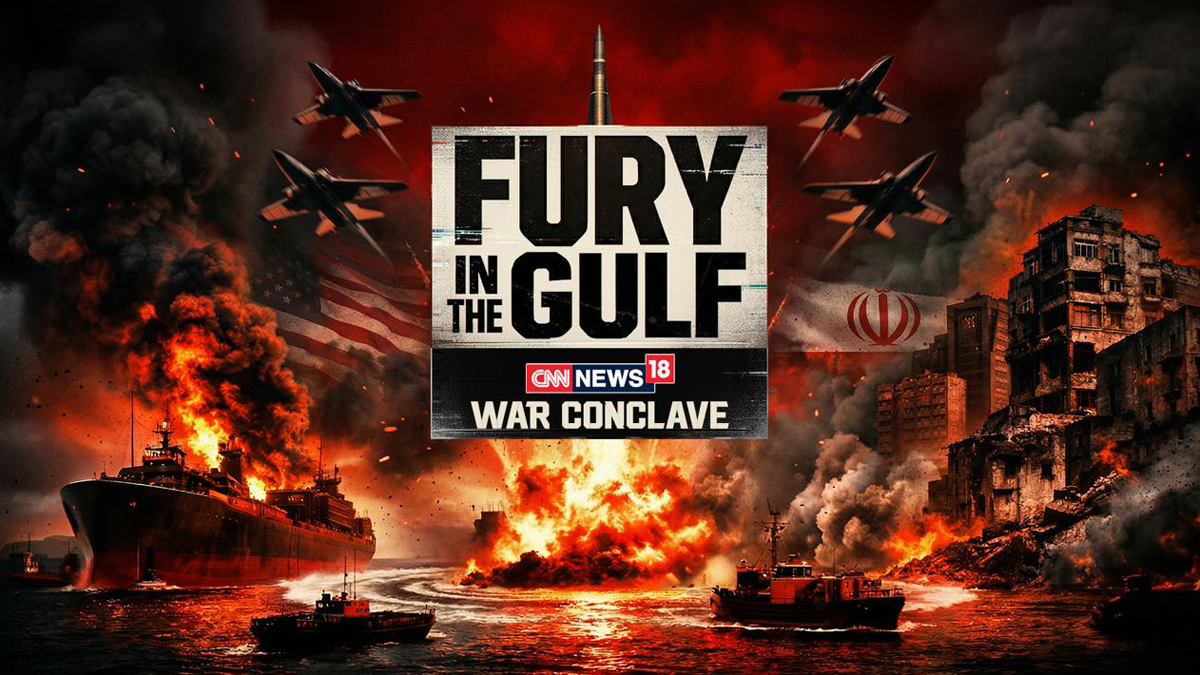
MUMBAI: CNN-News18 is set to host a special three-hour broadcast, Fury in the Gulf – War Conclave, on April 7, aiming to decode the escalating West Asia crisis and its far-reaching implications for India.
Scheduled from 4:00 PM to 7:00 PM, the conclave comes at a time when tensions between Iran and the United States are reshaping global geopolitics and triggering economic uncertainty. With India’s deep energy ties, trade links and large diaspora in the Gulf, the developments carry significant domestic relevance.
Built around the theme ‘Conflict, Consequences, and The Future,’ the programme will feature six curated sessions combining one-on-one interviews and panel discussions. The focus is to cut through the clutter and offer viewers a clearer understanding of the fast-evolving situation.
Key sessions include ‘Diplomacy in Times of War’ featuring Shashi Tharoor, and ‘World After the Iran Conflict’ with voices such as Ram Madhav, Reuven Azar, representatives from the European Union and the Iranian Deputy Envoy. Another session titled ‘Another Dunkirk?’ will bring together K. J. S. Dhillon and Jitin Prasada among others.
CNN-News18 editorial affairs director Rahul Shivshankar said, “In times of war, clarity becomes the most powerful tool. Fury in the Gulf – War Conclave brings together credible voices to address the questions and confusion that arise amid an overwhelming influx of information.”
He added that the initiative is aimed at delivering “facts, perspective, and insight” at a time when misinformation can easily cloud public understanding.
Echoing the sentiment, CNN-News18 CEO– English and business news Smriti Mehra said the conflict marks a defining global moment, with consequences that extend well beyond the region. She noted that the conclave seeks to present the crisis with “depth, nuance and responsibility” so audiences can better grasp its real-world impact.
As geopolitical tensions continue to dominate headlines, the conclave positions itself as an attempt to bring order to the noise, offering viewers a structured, insight-led look at a complex and rapidly shifting global situation.






