News Broadcasting
Issues that may come up at Zee AGM today

Subhash Chandra-promoted Zee Telefilms holds its annual general body meeting today in Mumbai. The meeting comes at a time when the company is organising a major revamp on the programming front and indicates a “genuine effort to get things working again,” seems to be the general view among a cross-section of financial analysts.
Although the issues that are listed on the agenda of the meeting are pretty tame (including approval of salaries to be paid out to the company’s directors), the topics that may come up for discussion, according to the analysts, are:
The positives first – 1) How has encryption of the Zee bouquet proceeded? No real problems there as it has gone off pretty well which augurs well for the company as far as fund flows are concerned.

2) What level have discussions reached to bring on board a strategic partner? While, there is a low likelihood of specifics being forthcoming, the industry seems to be taking the moves in that direction as a very good sign for the long-term as it would bring with it a more transparent and organised corporate ethic.
3) The moves to streamline operations within the group by merging the many companies under the Chandra umbrella into fewer entities will be welcomed.
4) How has the new programming strategy fared? Though some issues may be raised over why the over-all pick-up has not been as spectacular as Zee would have liked, there can be no quibble really as to the kind of effort that has gone into it so it is not expected to raise too many hackles. The fact that the revamp is still in its early phase naturally helps things.
The negatives – 1)The problems over the links with cornered bull operator Ketan Parekh are still to be sorted out. Especially since Zee has been specifically mentioned in the report prepared by market regulator Securities and Exchange Board of India (Sebi).
2) There is still some Rs1200 million that Chandra has to return to Zee Telefilms from the monies that were transferred to investment companies of Chandra’s Essel group which were meant to help bail out Parekh.
All-in-all the overall industry sentiment seems to be cautiously optimistic, with the rider that there is still a lot of work to be done.



News Broadcasting
CNN-News18 to host Fury in the Gulf conclave on West Asia crisis
Three-hour summit to unpack geopolitical fallout and impact on India
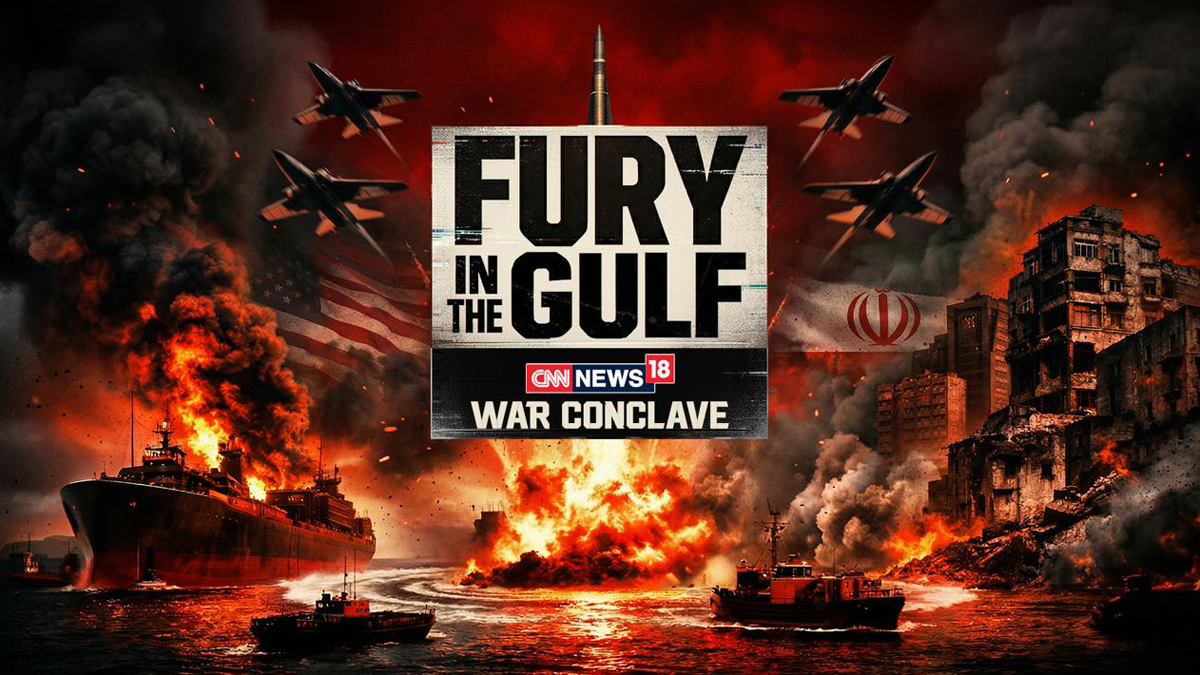
MUMBAI: CNN-News18 is set to host a special three-hour broadcast, Fury in the Gulf – War Conclave, on April 7, aiming to decode the escalating West Asia crisis and its far-reaching implications for India.
Scheduled from 4:00 PM to 7:00 PM, the conclave comes at a time when tensions between Iran and the United States are reshaping global geopolitics and triggering economic uncertainty. With India’s deep energy ties, trade links and large diaspora in the Gulf, the developments carry significant domestic relevance.
Built around the theme ‘Conflict, Consequences, and The Future,’ the programme will feature six curated sessions combining one-on-one interviews and panel discussions. The focus is to cut through the clutter and offer viewers a clearer understanding of the fast-evolving situation.
Key sessions include ‘Diplomacy in Times of War’ featuring Shashi Tharoor, and ‘World After the Iran Conflict’ with voices such as Ram Madhav, Reuven Azar, representatives from the European Union and the Iranian Deputy Envoy. Another session titled ‘Another Dunkirk?’ will bring together K. J. S. Dhillon and Jitin Prasada among others.
CNN-News18 editorial affairs director Rahul Shivshankar said, “In times of war, clarity becomes the most powerful tool. Fury in the Gulf – War Conclave brings together credible voices to address the questions and confusion that arise amid an overwhelming influx of information.”
He added that the initiative is aimed at delivering “facts, perspective, and insight” at a time when misinformation can easily cloud public understanding.
Echoing the sentiment, CNN-News18 CEO– English and business news Smriti Mehra said the conflict marks a defining global moment, with consequences that extend well beyond the region. She noted that the conclave seeks to present the crisis with “depth, nuance and responsibility” so audiences can better grasp its real-world impact.
As geopolitical tensions continue to dominate headlines, the conclave positions itself as an attempt to bring order to the noise, offering viewers a structured, insight-led look at a complex and rapidly shifting global situation.






