News Headline
ISRO to double annual satellite launch

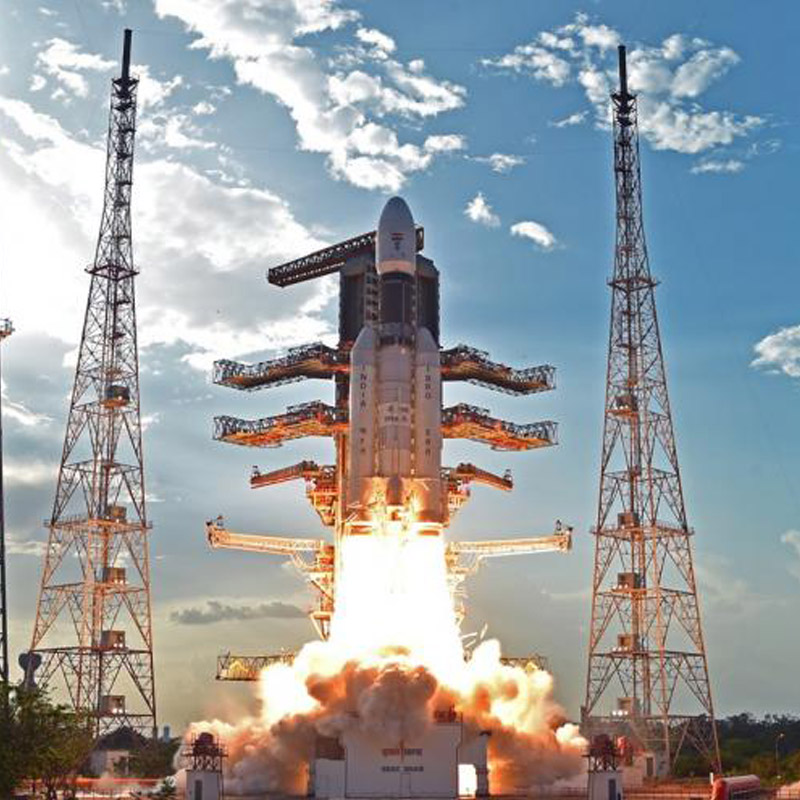
NEW DELHI: The Indian Space Research Organisation (ISRO) plans to increase its satellite capacity by upping launches from next year to keep pace with demands from users and is also releasing request for proposals (RFP) for 30 satellites, top Indian government officials said. Five of these will be communication satellites catering to the TV and radio industry.
According to ISRO chairman AS Kiran Kumar, who was speaking at a conference on the space industry eco-system here on Monday, the organisation would be doubling its launch frequency from 10 to approximately 20 in a year as the “space industry in India is significantly short of capacity” and behind “intended goals”.
One of the aims was to increase transponder capacity to transmit more TV channels. Currently, 15 communication satellites are in orbit.

He emphasised that with the increasing volumes, which are on offer by ISRO and other space agencies, it is an ideal opportunity for the industry to be a part of the global supply chain.
“The world of space is rapidly changing with technological advancements and disruptive innovation. The key to success is to significantly reduce the cost of access to space in what will prove to be an immense opportunity for the Indian and global industries,” Kumar said.
Pointing out that ISRO presently has 42 operational satellites and has set new benchmarks in lunar and Mars explorations, he said that in future the challenge will be to decrease the cost of access to space for optimal advantage of common people. Kumar added that India has demonstrated to the entire world its capabilities in satellite launch with comparative cost advantage compared to other foreign space agencies.
While Kumar dwelt on efforts to augment satellite capacity, his colleague and ISRO Satellite Centre director Dr Annadurai announced, “RFP for 30 satellites will be released today (Monday)”, laying stress on the role of space technology in achieving sustainable development goals, disaster management and improving important governance objectives.
Apart from other services, satellites are used by TV channels and telecoms service providers to beam their services to and fro from India. Though C-band satellite capacity is not so regulated, the KU-band capacity procurement on non-Indian satellites is restrictive. Indian direct to home operators at times have found it difficult to expand channel capacity in the absence of adequate KU-band transponders on Indian birds and long procedural delays encountered in acquiring capacity on foreign satellites – a scenario that has eased in recent times.
ISRO has come a long way from setting up its first independent communication satellite of foreign origin in 1981 to becoming indigenous today.
Japan Aerospace Exploration Agency (JAXA) president and Glavkosmos (Russia) deputy director-general also gave special addresses during the inaugural session reiterating their commitment to work with India in the space sector.
The event, organised by FICCI, is being attended by key players and representatives from ISRO, the Indian space industry, Commerce Ministry’s DIPP, Ministry of External Affairs, Department of Space and international agencies from Japan, Russia, Singapore, USA, Germany, France and Thailand.




NEW DELHI: Hamdard Laboratories gathered a cross-section of India’s achievers in New Delhi on Friday, handing out the Hakeem Abdul Hameed Excellence Awards to figures who have left their mark across healthcare, education, sport, public service and the arts.
The ceremony, attended by minister of state for defence Sanjay Seth and senior officials from the ministry of Ayush, celebrated individuals whose work blends professional success with a sense of public purpose. It was as much a roll call of achievement as it was a reminder that influence is not measured only in profits or podiums, but in people reached and lives improved.
Among the headline awardees was Alakh Pandey, founder and chief executive of PhysicsWallah, recognised for turning affordable digital learning into a mass movement. On the sporting front, Arjuna Awardee and kabaddi player Sakshi Puniya was honoured for her contribution to the game and for pushing women’s participation onto bigger stages.
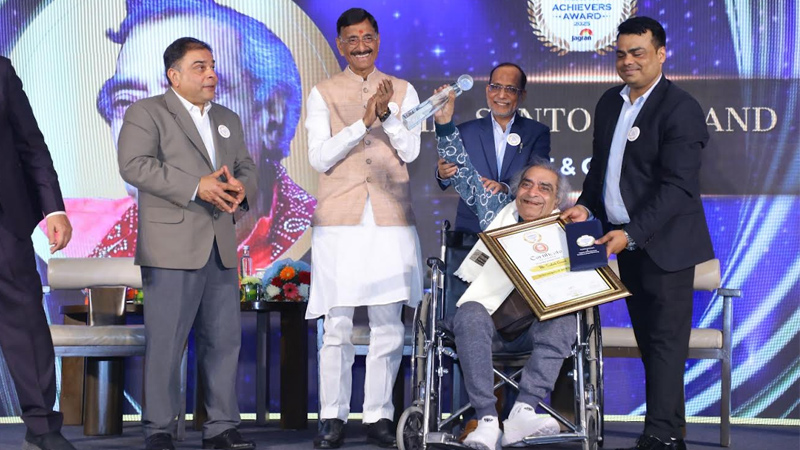
The cultural spotlight fell on veteran lyricist and poet Santosh Anand, whose songs have echoed across generations of Hindi cinema. At 97, Anand accepted the honour with characteristic humility, reflecting on a life shaped by perseverance and hope.
Healthcare honours spanned both modern and traditional systems. Manoj N. Nesari was recognised for strengthening Ayurveda’s place in national and global health frameworks. Padma shri Mohammed Abdul Waheed was honoured for his research-backed work in Unani medicine, while padma shri Mohsin Wali received recognition for his long-standing contribution to patient-centred care.
Education and social development also featured prominently. Padma shri Zahir Ishaq Kazi was honoured for decades of work in education, while former Meghalaya superintendent of Police T. C. Chacko was recognised for public service. Goonj founder Anshu Gupta received an award for his dignity-centred rural development initiatives, and the Hunar Shakti Foundation was honoured for empowering women and young girls through skill development.
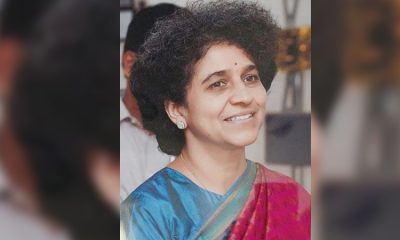
The Lifetime Achievement Award went to former IAS officer Shailaja Chandra for her long career in public healthcare and governance, particularly in the traditional systems under Ayush.
Speaking at the event, Hamdard chairman Abdul Majeed said the awards were a tribute to those who combine excellence with empathy. “These awardees reflect Hakeem Sahib’s belief that healthcare, education and public service must ultimately serve humanity,” he said.
Minister Seth struck a forward-looking note, saying India’s young population gives the country a unique opportunity to become a global destination for learning, health and wellness by 2047.
The ceremony also featured the trailer launch of Unani Ki Kahaani, an upcoming documentary starring actor Jim Sarbh, set to premiere on Discovery on 11 February.
Instituted in memory of Unani scholar and educationist Hakeem Abdul Hameed, the awards have grown into a national platform that celebrates those building a more inclusive and resilient India. For one evening at least, the spotlight was not just on success, but on service with substance.






