News Headline
ISL piggybacks on EPL’s popularity to gain viewership


MUMBAI: Football is attempting to kick up a storm in India. Though it has to withstand the might of cricket in the country, the staunch supporters aren’t backing off.
India’s successful hosting of the FIFA U-17 world cup has already delivered a massive attendance in the history of the tournament. As per Star Sports India Football Forum (IFF) 2017 data the event was witnessed by 1,347,143 spectators at the six host venues across the country, with average attendance at 25,906. But more than anything else, the WC U-17 has been about the youth getting connected on the ground and in the digital arena.
Sony Pictures Network India EVP & business head, Prasana Krishnan said, “The role of broadcasters in India moved away from being a broadcaster to an incubator. We need to expand the market, a country of 1.3 billion people can’t be serviced by a single sport and few select content that is available.”

Football is also expanding in India through the Indian Super League (ISL), which is believed to have given the sport the impetus it desperately needed.
English Premier League (EPL) is the most watched football league in the world in the current scenario. According to ESP Properties senior business director Subhamoy Das, there is a wide open area for ISL here. Says he, “45 per cent of the EPL audience tuned into ISL 2017-18, the remaining 55 per cent of the EPL viewers is the opportunity for ISL to win over.”
Broadcast Audience Research Council business head- television Rohit Sarma feels that there is a huge vacuum to fill for Indian broadcasters for sports viewership. He said, “While globally sports contributes 9 per cent of total TV viewership, in India the contribution is currently 3 per cent. This shows that there is immense headroom for growth in this genre on TV. In India, ISL contributes to 60 per cent of the total viewership in football.”
The digital numbers in terms of viewership in India for football are growing at 3x rate growing from 9 billion minutes in 2014 to 23 billion minutes in 2017 on digital platforms. “In Indian sports context, out of the overall population of 1.324 billion, sports consumption on TV is 741 million and in-stadium attendance is around 4 million,” Das added.
According to Local Organising Committee tournament director Javier Ceppi, the three building blocks for developing a sport are participation, incentivisation and commercialisation.
In India, the participation of kids for football is drastically less than that of the UK. According to All India Football Federation, 3.4 million kids play organised football in the UK as compared to a meagre 4000 in India. We have a coach per two lakh people in India and one coach per 55 thousand in the UK.
The audience of EPL and ISL are very different. EPL is watched by 4-30 years old and ISL attracts 22-50 years old. ISL season 2 and 3 was also watched by 45 per cent females.
The data provided by ESP Properties pointed out that as per Facebook audience insights, states like Maharashtra, Gujarat, UP, Punjab, Rajasthan and few more can potentially drive up cumulative interest levels towards ISL by 19 per cent.
Commercialisation in India works well, with around 40 brands regularly investing in sports which includes DHL, Amul, Bisleri, Apollo Tyres and many more.
La Liga country manager India Jose Antonio Cachaza is working to make the tournament popular in the country. He said, “We are here to bring a La Liga team to India. Indian football fans now don’t just support FC Barcelona or Real Madrid, but also other clubs of La Liga. Our motive is to get it to the number one league in Asia, by investing a lot in grassroots tournament, NGO programmes and academic activities to improve the quality. The main income in La Liga is from the TV rights.”
Also read:
Hero ISL S4 opening game saw 59% viewership growth
DHL renews partnership with Hero ISL
Mumbai City FC’s sponsorship amount up by 50 %







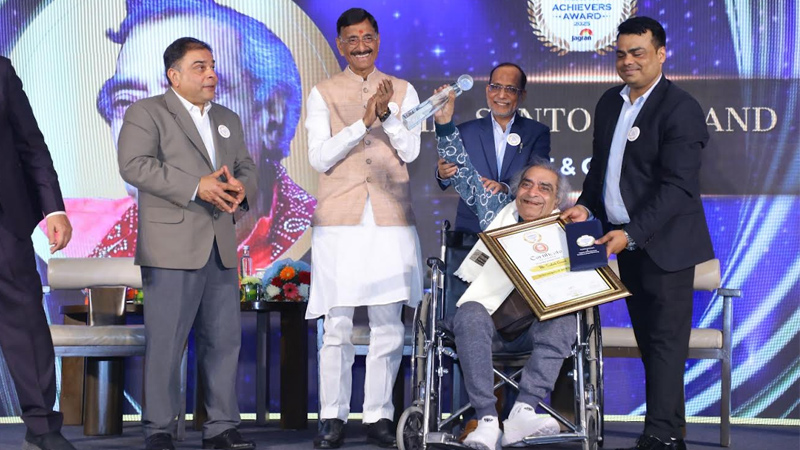
NEW DELHI: Hamdard Laboratories gathered a cross-section of India’s achievers in New Delhi on Friday, handing out the Hakeem Abdul Hameed Excellence Awards to figures who have left their mark across healthcare, education, sport, public service and the arts.
The ceremony, attended by minister of state for defence Sanjay Seth and senior officials from the ministry of Ayush, celebrated individuals whose work blends professional success with a sense of public purpose. It was as much a roll call of achievement as it was a reminder that influence is not measured only in profits or podiums, but in people reached and lives improved.
Among the headline awardees was Alakh Pandey, founder and chief executive of PhysicsWallah, recognised for turning affordable digital learning into a mass movement. On the sporting front, Arjuna Awardee and kabaddi player Sakshi Puniya was honoured for her contribution to the game and for pushing women’s participation onto bigger stages.
The cultural spotlight fell on veteran lyricist and poet Santosh Anand, whose songs have echoed across generations of Hindi cinema. At 97, Anand accepted the honour with characteristic humility, reflecting on a life shaped by perseverance and hope.
Healthcare honours spanned both modern and traditional systems. Manoj N. Nesari was recognised for strengthening Ayurveda’s place in national and global health frameworks. Padma shri Mohammed Abdul Waheed was honoured for his research-backed work in Unani medicine, while padma shri Mohsin Wali received recognition for his long-standing contribution to patient-centred care.
Education and social development also featured prominently. Padma shri Zahir Ishaq Kazi was honoured for decades of work in education, while former Meghalaya superintendent of Police T. C. Chacko was recognised for public service. Goonj founder Anshu Gupta received an award for his dignity-centred rural development initiatives, and the Hunar Shakti Foundation was honoured for empowering women and young girls through skill development.
The Lifetime Achievement Award went to former IAS officer Shailaja Chandra for her long career in public healthcare and governance, particularly in the traditional systems under Ayush.
Speaking at the event, Hamdard chairman Abdul Majeed said the awards were a tribute to those who combine excellence with empathy. “These awardees reflect Hakeem Sahib’s belief that healthcare, education and public service must ultimately serve humanity,” he said.
Minister Seth struck a forward-looking note, saying India’s young population gives the country a unique opportunity to become a global destination for learning, health and wellness by 2047.
The ceremony also featured the trailer launch of Unani Ki Kahaani, an upcoming documentary starring actor Jim Sarbh, set to premiere on Discovery on 11 February.
Instituted in memory of Unani scholar and educationist Hakeem Abdul Hameed, the awards have grown into a national platform that celebrates those building a more inclusive and resilient India. For one evening at least, the spotlight was not just on success, but on service with substance.






