News Broadcasting
INSAT 3C dedicated to the nation

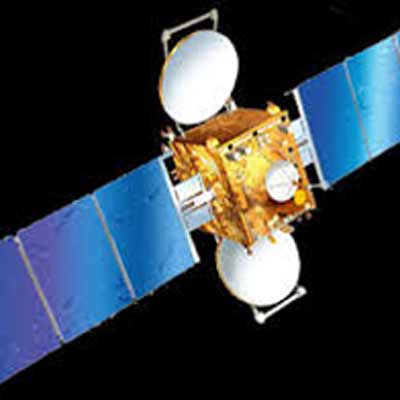
Prime minister Atal Behari Vajpayee this morning dedicated newly launched indigenous satellite INSAT 3C to the nation.
At a function at the Delhi Earth Station, Atal Behari Vajpayee also inaugurated the telemedicine project for the Andaman and Nicobar Islands. The function was telecast live on Doordarshan National at 11 am. ISRO chairman Dr K Kasturirangan also presented models of INSAT 3C to the prime minister and to minister of state for space Vasundhara Raje, also present on the occasion.
The INSAT 3C, that has strengthened India’s communication, broadcast and meterological capabilities and is currently positioned 36,000 km above Earth was also instrumental in carrying the event live on DD National today, officials said.

The Indian National Satellite(INSAT) is a multipurpose space system for communication, broadcasting and meteorological services. INSAT-3C, carrying Fixed Satellite Services (FSS) transponders, Broadcast Satellite Services (BSS) transponders and Mobile Satellite Services (MSS) transponders is intended to continue the services of the earlier INSAT-2DT and INSAT-2C, which are nearing the end of their life, besides improving and augmenting the Insat system capacity.
INSAT-3C, launched on 24 January this year is the second satellite of the INSAT-3 series; the first satellite, INSAT-3B was launched in March 2000. Another three satellites INSAT-3A, INSAT-3D and INSAT-3E are planned to be launched under INSAT-3 series in the coming years. Like all other INSAT satellites, INSAT-3C is controlled from the Master Control Facility at Hassan in Karnataka.
The telemedicine project for the Andaman and Nicobar Islands, on the other hand, will help provide expert medical services to rural and remote areas, helping link hospitals and remote areas through Insat satellites. The G D Pant Hospital in Port Blair will be linked to the SRNC in Chennai initially, officials announced at the function.







News Broadcasting
Network18 channels lead YouTube news viewership in March 2026
CNN-News18, News18 India and CNBC channels top categories with record views

MUMBAI: When the world hit refresh on breaking news, Network18’s channels were already streaming ahead. As geopolitical tensions and war-driven headlines fuelled a surge in global news consumption, the network’s digital playbook delivered big clocking record Youtube viewership across English, Hindi and business news categories in March 2026.
At the forefront was CNN-News18, which emerged as the clear leader in the English news segment with 130 million live and video-on-demand views. The channel edged past competitors such as Times of India (126.5 million), Times Now (101.1 million), India Today (88.2 million) and NDTV (77.5 million), according to Databeings data for March.
In the Hindi news arena, News18 India delivered a commanding performance, racking up a staggering 3,297 million views on YouTube. The channel comfortably outpaced NDTV India, which recorded 3,119 million views, underlining its deep reach and consistent engagement with mass audiences, as per Playboard data.
The network’s dominance wasn’t confined to general news. In the Hindi business segment, CNBC Awaaz topped the charts with 92 million views, narrowly ahead of Zee Business (90 million) and well ahead of ET Now Swadesh (57 million). Meanwhile, its English counterpart CNBC-TV18 posted a strong 58 million views, reinforcing the network’s cross-category strength.
The spike in viewership reflects a broader shift in audience behaviour, with viewers increasingly turning to digital platforms particularly Youtube for real-time updates and in-depth coverage during high-intensity news cycles. For Network18, the numbers signal more than just scale; they underline the effectiveness of a multi-platform strategy that blends speed, credibility and continuous coverage.
In a month where the news never paused, it seems viewers chose to stay tuned where the stream never stopped.






